
Propagation
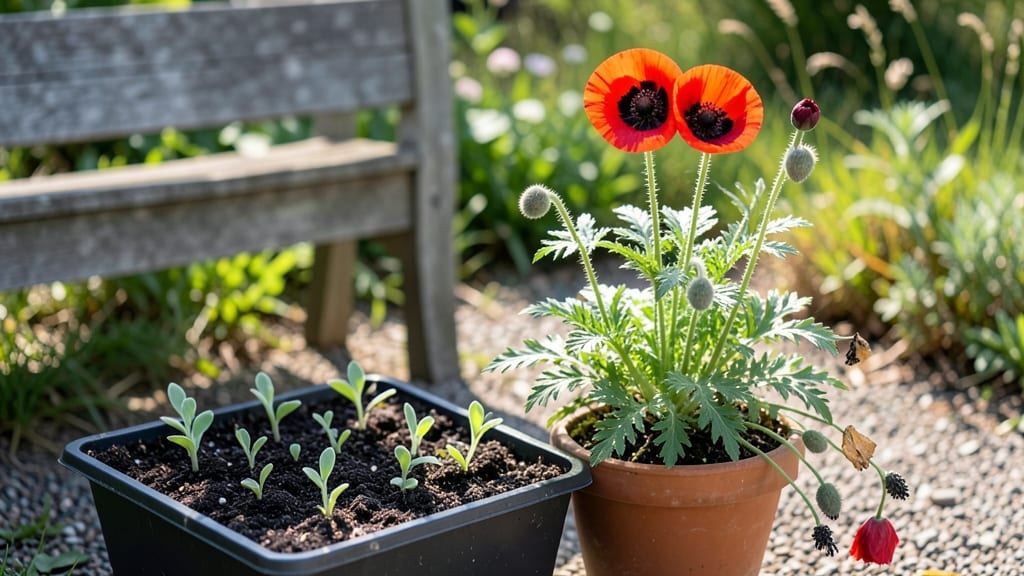
Growing wildflower poppy seeds from scratch starts with damp paper towels—this fast germination trick cuts weeks off the wait. 🌱 I learned it after struggling with slow starts from direct sowing, and now my poppies bloom weeks earlier than neighbors'.
The secret lies in mimicking nature's moisture cues while giving tiny seeds a head start indoors.
You'll need just three things: poppy seeds, damp paper towels, and a clear container with a lid. No fancy tools—just patience and a sunny windowsill. Poppies thrive in well-draining soil but demand consistent moisture during germination, which is why the paper towel method works so well.
Most seeds sprout within 3-7 days this way, compared to weeks in cold soil.
Once sprouted, transplant them into loose, sandy soil mix under bright light. Poppies love full sun but hate soggy roots, so water lightly when the top inch dries.
You'll see those delicate papery blooms by late spring, adding vibrant color to meadows or containers. The key? Don't rush the transplant—wait until seedlings have two true leaves.
This method works best when started 6-8 weeks before your last frost, but poppies are forgiving. Even if you miss the window, they'll self-seed reliably once established.
The trade-off? You'll sacrifice some of that wild, unpredictable charm that makes poppies special. Still worth it for the early blooms and pollinators they attract.
📚 In This Guide
- What you need
- Instructions
- Tips and common mistakes
- Wrapping up and next steps
What you need
- ● Wildflower poppy seeds: 1 packet (approx. 1,000–5,000 seeds, depending on variety). Opt for organic, non-GMO seeds for best results.
- ● Paper towels: 2–3 sheets (white or unbleached, seed-free). Cut into 4–6 equal squares (about 4x4 inches each).
- ● Spray bottle: 8–16 oz with a fine mist nozzle (for gentle hydration). Avoid soaking the towels.
- ● Plastic zip-top bag: 1 quart-sized (or a small container with a lid). Ensure it’s clean and free of moisture.
- ● Small plate or tray: 1 (to hold the paper towel squares during prep).
- ● Labeling tags: To mark seed varieties if mixing types.
- ● Ruler or measuring tape: For precise paper towel cutting.
- ● Gloves: If handling large quantities of seeds (to avoid skin irritation from poppy sap).
- ● Grow light or sunny windowsill: For post-germination care (if transplanting later).
- ● Patience: Poppy seeds germinate in 3–7 days—stay consistent with moisture checks!
- ● Warmth: Ideal germination temp: 65–75°F (18–24°C). Avoid drafts or cold spots.
- ● Space: A flat, stable surface for your setup (e.g., kitchen counter or desk).
How to germinate wildflower poppy seeds in damp paper towels
Here's the speedy method I swear by for breaking dormancy and getting those delicate poppy sprouts popping in record time.
🌱 Step 1: Prepare Your Seeds and Paper Towels
Start by placing 4 paper towels in a shallow tray or plate—folded to create a flat surface. Poppy seeds need moisture to trigger germination, but they can't handle soaking. Spritz the towels with lukewarm water until they're evenly damp but not dripping. You'll know it's right when water beads up slightly on the surface.
Here's the thing—poppy seeds have a tough outer coating that slows things down. Scatter them ¼ inch apart on the damp towels. I like to use a spoon to gently press them into the fibers so they stay in place. Cover the plate with another folded towel to maintain humidity, but leave a tiny gap for air circulation. Poppy seeds need both moisture and airflow to germinate properly.
💧 Step 2: Create the Ideal Germination Environment
Poppy seeds germinate fastest at 70-75°F, so if your home runs cooler, place the tray on top of a refrigerator or near a sunny window. I've seen germination slow dramatically in rooms below 65°F. Watch for condensation on the cover—if it's heavy, lift the cover for 10 minutes to prevent mold.
Keep the towels consistently moist but never soggy. I check them twice daily and spritz with water if the surface feels dry to the touch. You'll see the first signs of germination in 3-5 days—tiny white roots will emerge first, followed by the seedling's green shoot. This is the moment that matters: once roots appear, move the tray to a bright spot but keep it out of direct sunlight until the seedlings have 2-3 leaves.
☀️ Step 3: Transplant Seedlings into Soil
When seedlings reach 1-2 inches tall with 2-3 true leaves, they're ready to move to soil. Poppy seedlings are delicate, so handle them gently—grip the seed leaves, not the stems. I use a butter knife to carefully lift each seedling and transfer it to its own 2-inch pot filled with light, well-draining potting mix.
Press the soil lightly around the base to secure the seedling, but don't pack it down. Poppies hate compacted roots. Water gently from the bottom of the pot to avoid disturbing the soil surface. Place the pots in a spot with full sun (6+ hours daily) but protect them from harsh afternoon rays for the first week. You'll see new growth within days—that's your signal everything is working.
✂️ Step 4: Harden Off and Prepare for Outdoor Planting
Two weeks before your last frost date, start hardening off your poppies. Move the pots outside to a sheltered, shaded spot for 1-2 hours the first day. Gradually increase their outdoor time by 1 hour daily over 10-14 days. Poppies are frost-tolerant but need time to adjust to wind and temperature swings.
Real talk: Poppy seedlings can get leggy if they stretch toward light. If you notice stems growing thin and pale, they need more light. Bury the pots slightly deeper in the soil to stabilize them and reduce transplant shock. Once hardened off, plant them ½ inch deep in well-drained garden beds or containers. Water deeply at the base, and you'll have blooms in 8-10 weeks.
Tips & tricks for perfect wildflower poppy seed germination
Here's what nobody tells you about speeding up those stubborn poppy sprouts.
Moisture Precision: The key to Step 1 lies in that "evenly damp but not dripping" moment—this is where most people mess up. Use a spray bottle to mist the 4 paper towels until water just beads up on the surface. Too wet and you risk mold; too dry and germination stalls. I like to test by pressing my finger gently—it should feel like a wrung-out sponge, not a dripping washcloth. This balance is critical for breaking through that tough outer coating without suffocating the seeds.
Temperature Hack: Those 70-75°F instructions aren't arbitrary—they're the sweet spot for poppy seeds to activate their germination enzymes. If your home runs cooler, place the tray on top of your refrigerator (not inside) where it'll naturally hit that perfect zone. Pro move: Use a small thermometer to monitor the temperature if you're in a chilly space—below 65°F and you'll see dramatic slowdowns. I've had batches take twice as long when left in a 60°F room.
Light Strategy: The instructions mention moving seedlings to bright light after roots appear, but here's the secret: use a grow light for the first week if your natural light is weak. Poppy seedlings are sensitive to light deprivation and can develop that leggy, weak growth pattern. Position the light 6-8 inches above the tray and keep it on for 12-14 hours daily. This prevents the classic "stretching" problem while maintaining that crucial humidity balance.
Transplant Timing: Waiting for 1-2 inches with 2-3 true leaves might seem like a long wait, but this is when poppy seedlings develop the root strength needed for soil transition. The moment you see that second set of true leaves (not the initial seed leaves), they're ready. I've found using a toothpick to gently loosen the roots from the paper towel fibers before transplanting reduces shock—just slide the toothpick under the root ball and lift carefully. This small step makes all the difference in survival rates.
Pro Tips for Wildflower Poppy Seeds
- Here's what nobody tells you about speeding up those stubborn poppy sprouts.
- Moisture Precision: The key to Step 1 lies in that "evenly damp but not dripping" moment—this is where most people mess up.
- Temperature Hack: Those 70-75°F instructions aren't arbitrary—they're the sweet spot for poppy seeds to activate their germination enzymes.
Frequently asked questions
Got questions about growing wildflower poppy seeds? You’re not alone! Here are some of the most common concerns—and their easy solutions.
How long do wildflower poppy seeds take to germinate?
Most wildflower poppy seeds sprout within 7–14 days when using the damp paper towel method. For best results, keep them in a warm, dark place (like a sealed plastic bag) and check daily for tiny sprouts. Patience is key—some varieties may take up to 3 weeks! Pro tip: Avoid overwatering; damp (not soggy) is ideal.
Can I plant poppy seeds directly outdoors instead of using paper towels?
Yes! While the paper towel method speeds up germination, you can also sow seeds directly in well-drained soil in early spring or fall. Scatter them lightly on top of the soil (they need light to germinate) and press gently. Water lightly—no need to bury them. Just be patient; outdoor germination may take 2–4 weeks. Note: Avoid planting in hot summer months; poppies prefer cooler temps.
Why aren’t my poppy seeds sprouting after 2 weeks?
Don’t panic! Common reasons include old seeds (poppies lose viability after 1–2 years), improper moisture (too dry or wet), or temperature issues (below 50°F or above 85°F). Try these fixes:
- Test a few seeds in fresh paper towels with warm water.
- Check for mold (discard if present).
- Move to a warmer spot (like near a sunny window).
How do I keep poppies from growing too tall or flopping over?
Poppies are self-supporting, but for taller varieties (like California poppies), plant them in well-drained soil with light stakes or group them near sturdy perennials for support. Deadhead spent blooms to encourage more flowers and prevent leggy growth. Bonus: Mulch lightly to retain moisture without smothering seeds.
Are wildflower poppy seeds annual or perennial?
Most wildflower poppies are annuals, meaning they complete their life cycle in one season and self-seed prolifically for years. A few, like the Iceland poppy, are short-lived perennials (2–3 years). Embrace their ephemeral beauty—they’ll naturalize and return yearly with minimal effort! Fun fact: Deadheading encourages more blooms before they self-sow.
Wrapping up and next steps
Growing wildflower poppy seeds is a rewarding journey that brings bursts of vibrant color to your garden with minimal effort! 🌸 Whether you’re a seasoned gardener or a curious beginner, the damp paper towel method ensures fast germination and healthy starts.
Now that you’re equipped with the right techniques and tips, it’s time to roll up your sleeves and watch your garden bloom.
Your next step? Grab those seeds, follow the steps, and share your progress with fellow plant enthusiasts—you’ll be amazed at how quickly those delicate petals emerge! Happy gardening! 🌱