
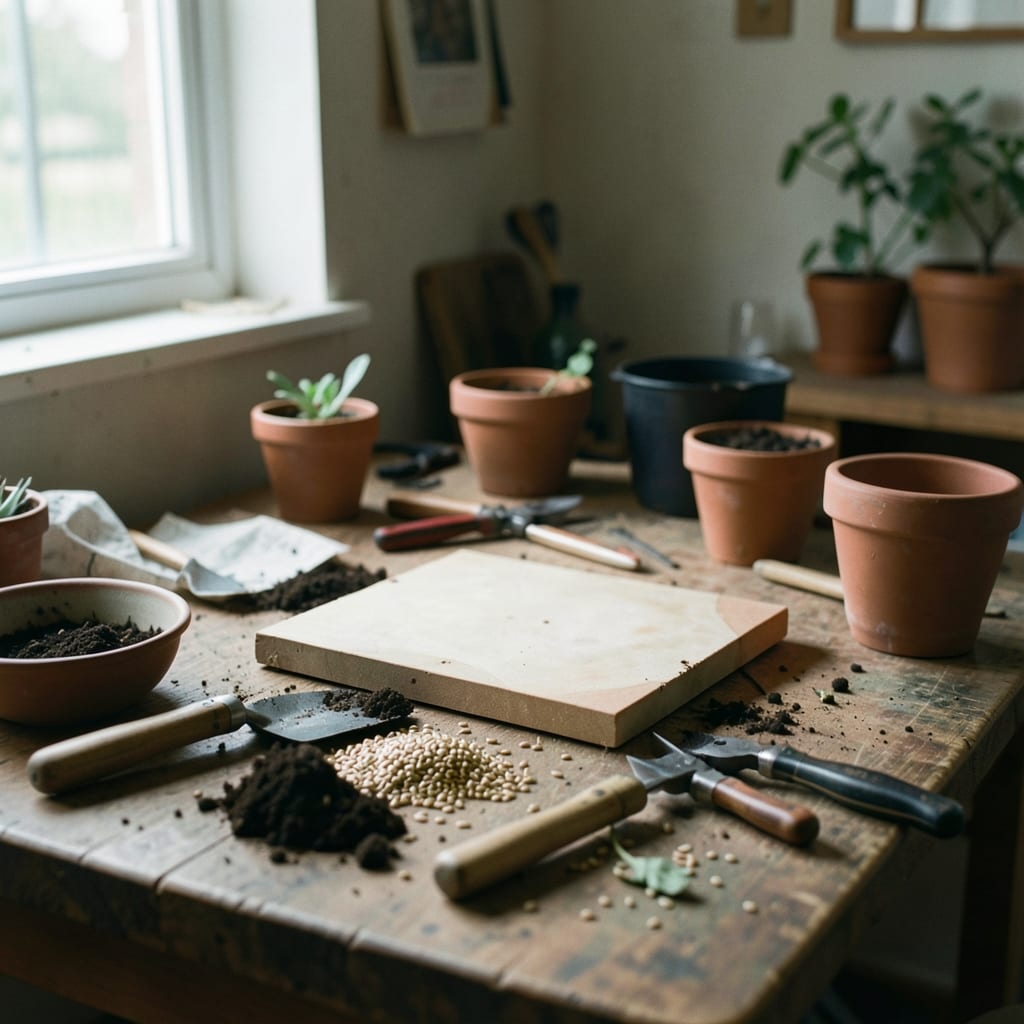
It started with one seedling that refused to straighten
It was late April in Quebec, and the first batch of *Calendula officinalis* I’d sown in a seed tray had germinated—finally. The green shoots were there, but they were bending sideways like drunkards, their stems too weak to reach for the light.
I’d followed the instructions: the soil was warm, the tray was shallow, the seeds were fresh. Everything looked right. And yet, every morning, I’d find them leaning against each other, their cotyledons yellowing at the edges.
I blamed the light first. The windowsill was bright, but maybe not bright enough. So I moved the tray to a south-facing ledge, where the sun hit hardest. The seedlings perked up for a day, then sagged again. Then I thought it was the soil—too dense, too compacted.
I loosened it with my fingers, fluffed it up, even mixed in a little perlite. The stems stiffened for an hour before slumping back into the same crooked posture.
By the third week, I’d tried everything: deeper trays, shallower trays, a heat mat, a spray bottle, even a makeshift shade cloth to mimic the dappled light of a forest floor. Nothing worked. The seedlings kept bending, as if gravity had become a joke they couldn’t take seriously.
I was about to give up when my grandfather—who’d been watching the whole disaster from the porch—handed me a pair of pruning shears and said, *‘Cut the weak ones. The rest will stand tall.’*
Nine tries before it stood upright
The first time I thinned them, I did it too late. The seedlings had already fused together at the base, their roots tangled like old fishing line. I pulled them apart gently, but three snapped at the stem. The remaining six wobbled for a day, then collapsed entirely.
Lesson: thin early, or not at all.
The second try, I used a sterilized knife instead of my fingers. The soil resisted, and I nicked one of the stems. It blackened overnight. The third time, I watered the tray first—just enough to soften the soil—but the roots still broke free too easily.
By the fifth attempt, I’d resorted to tweezers, plucking them out one by one like teeth. Four survived. They grew straight for twelve hours before leaning again.
It wasn’t until the ninth tray—where I’d pre-sprouted the seeds in damp paper towels before transplanting them into a lighter, airier mix of coco coir and vermiculite—that they finally stood firm. The stems were thinner, but they reached for the light without hesitation.
My grandfather was right: the problem wasn’t the soil or the sun. It was the crowding. The seedlings had been fighting each other for space from day one.
The mind behind these pages
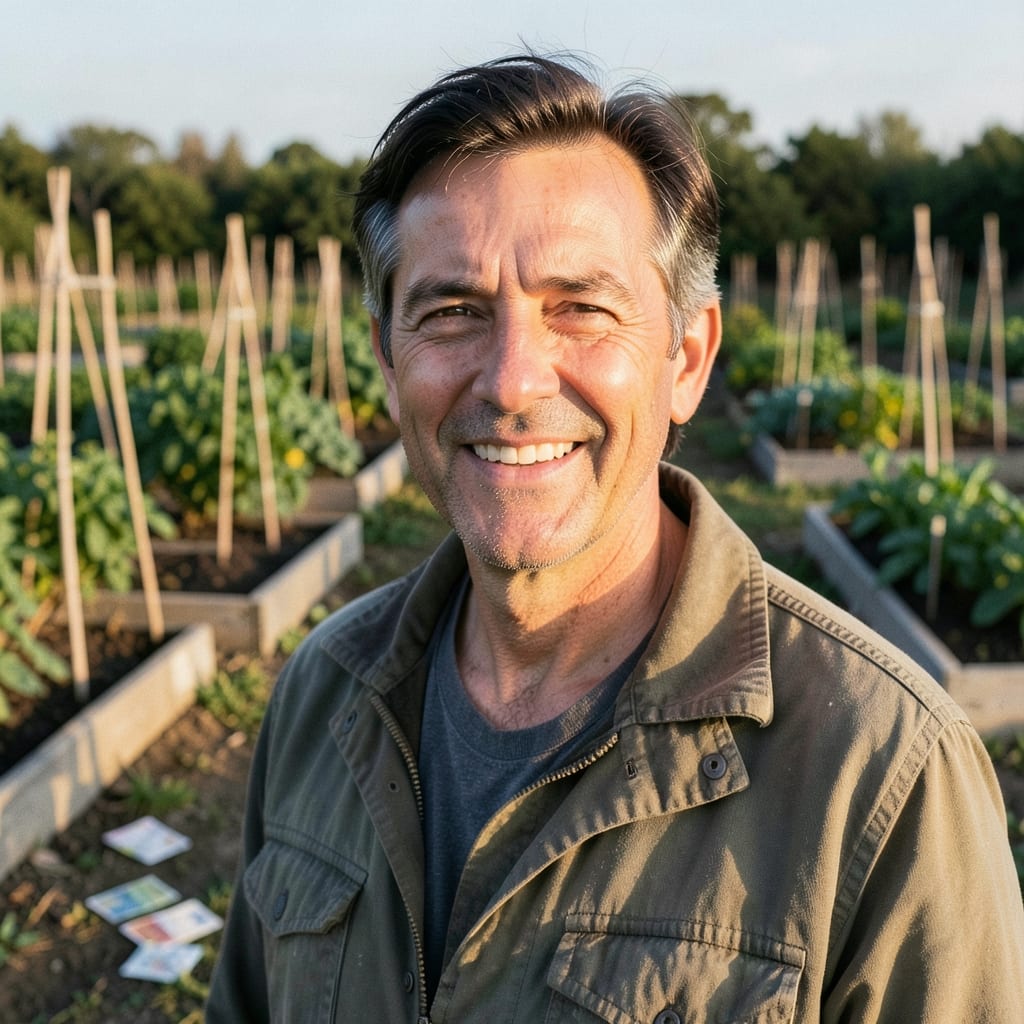
That’s me—Rudy Tremblay—still holding those shears years later, though now I use them for words instead of stems.
As the founder of *Flower Sprout Care*, I write about the same quiet rebellions I’ve seen in gardens: the seed that refuses to germinate, the cutting that roots too slowly, the plant that thrives when every guide says it shouldn’t.
My grandfather’s hands were always stained with soil, and his stories about the plants he coaxed to life are what first made me fall in love with gardening.
I’m the kind of person who tries something nine times before admitting it might not work. It’s a habit that costs me time, money, and more than a few singed fingertips—but it’s also what lets me spot the patterns others miss.
My grandfather recognised it early. ‘You’re not stubborn,’ he’d say. ‘You’re just stubborn about the right things.’ Now, I pass that stubbornness on, one post at a time.
I also collect old garden tools, though I’ve never used half of them. My shed is full of trowels with broken handles, a rusted pruner that still cuts like a dream, and a single terracotta pot my grandmother made in 1972.
She gave it to me when I was twelve, after I burned the first batch of seedlings I’d ever planted. ‘Plants forgive faster than you think,’ she said. I’ve been testing that ever since.
Every page here is written the way that *Calendula* seedling was grown: with failures counted, lessons learned, and no shortcuts. The garden doesn’t reward guesswork—and neither do I.
Everything here is written the way that seedling was grown
If a post on *Flower Sprout Care* feels like it’s been tested, it’s because it has.
I don’t write about a technique until I’ve tried it three times—once in ideal conditions, once in a disaster (like a heatwave or a flood), and once with a plant that *shouldn’t* work (a tropical orchid in a greenhouse, a desert cactus in a bog).
The ‘tips’ you’ll find here are the ones that survived all three attempts, not just the first.
I keep a garden journal, but it’s not for the pretty photos or the harvest dates. It’s for the margins: the soil temperature when the seeds finally cracked, the exact ratio of perlite to peat that kept the roots from rotting, the time of day the light was strongest.
Those details are what turn a ‘maybe’ into a ‘yes.’ And if a method fails—even after nine tries—I’ll say so. Silence isn’t helpful in a garden.
A year after I published my first guide on growing *Calendula*, I got an email from a reader whose seedlings had bent just like mine. They’d tried everything, too. So I sent them a photo of my ninth tray—the one with the straight stems—and told them to start over.
Not with the soil, not with the light, but with the space between the plants. That’s how this site works: one stubborn seedling at a time.
What that means for you
You’ll find no ‘perfect’ gardens here, only real ones—with bent stems, slow starts, and plants that surprise you. Every post is built on the same principle: if it hasn’t failed at least once, it hasn’t been tried enough.
What you *won’t* find are vague promises, before-and-after transformations, or ‘pro tips’ that assume your garden is anything like mine.
If you’ve ever stared at a wilting seedling and wondered why it’s not standing tall, or if you’ve followed a guide that didn’t work, this is where you’ll find the answers.
Not in theory, but in the dirt—and in the nine times I got it wrong before I got it right.
Send me a photo of your garden’s stubbornest plant—the one that’s defying every rule. I’ll tell you what it’s really trying to say. (And if it’s a *Calendula*, we’ll talk about thinning.)
The guides are grouped by category: Advice, Aphids, Blooming, Companion Plants, Container Gardens and Diseases.