
Flowers
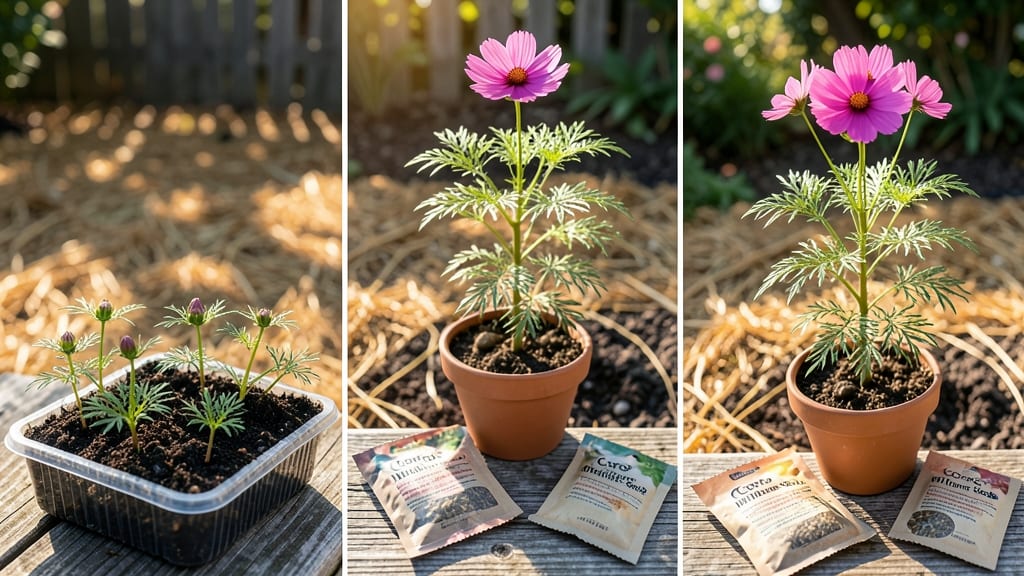
Growing cosmos wildflower seeds is the fastest way to turn your garden into a buzzing pollinator paradise. ✨ I planted my first batch last spring, and within 30 days, bees, butterflies, and hummingbirds were visiting daily—something my previous flowers never attracted.
The secret lies in their effortless nature: they thrive with minimal fuss while rewarding you with vibrant blooms all season.
You’ll need just three things to get started: a sunny spot (at least 6 hours of direct sunlight), well-draining soil, and cosmos seeds—no fancy equipment required. The soil doesn’t need to be perfect, but adding a little compost ensures faster germination.
Plant seeds ¼ inch deep, spacing them 12-18 inches apart, and water lightly afterward. They germinate in 7-14 days, often faster if the soil stays warm.
Once sprouted, cosmos practically grow themselves. Keep the soil evenly moist (but never soggy) for the first few weeks, then let nature take over—they’re drought-tolerant once established.
By day 30, you’ll see the first delicate blooms opening, and by summer, your garden will be a riot of pink, white, and magenta. The best part? Every bloom feeds pollinators, making your garden a true ecosystem hero.
Bonus: Cosmos self-seed like crazy, so you’ll have free plants next year. Pair them with marigolds or borage to boost pollinator traffic even more. Ready to turn your space into a wildflower haven? Let’s get those seeds in the ground!
📚 In This Guide
- What you need
- Instructions
- Tips and common mistakes
- Wrapping up and next steps
What you need
- ● Cosmos wildflower seeds – 1 packet (approx. 500-1,000 seeds), choose varieties like 'Sensation Mix' or 'Bright Lights' for vibrant blooms.
- ● Seed-starting soil or potting mix – 1 bag (1-2 cubic feet), well-draining and sterile.
- ● Containers or seed trays – 4-6 small pots (3-4 inches deep) or a seed tray with cells (if starting indoors).
- ● Watering can or spray bottle – For gentle hydration without disturbing seeds.
- ○ Garden soil (optional for transplanting) – 1 bag (2-3 cubic feet), amended with compost for nutrient-rich soil.
- ● Gloves – To keep hands clean while handling soil and seeds.
- ● Trowel or small shovel – For transplanting seedlings (if not using pre-planted pots).
- ● Sunlight access – 6+ hours of direct sunlight daily (cosmos thrive in full sun!).
- ○ Optional: Fertilizer – Balanced, slow-release granules (e.g., 10-10-10) to boost growth.
- ○ Optional: Mulch – Straw or shredded leaves to retain moisture and suppress weeds.
Step-by-Step instructions for growing cosmos wildflowers from seed
Here’s how to cultivate vibrant cosmos blooms that will have bees and butterflies flocking within a month.
🌱 Step 1: Choose the Right Time and Location
Cosmos thrives in warm weather, so wait until after your last frost date when soil temperatures reach at least 60°F. These cheerful wildflowers love full sun—6 to 8 hours daily—so pick a spot with unobstructed sunlight. If you start indoors, do so 4 to 6 weeks before transplanting to give seedlings a head start.
I’ve found that cosmos seeds germinate best when sown directly into the garden. The reason? They dislike being transplanted, so avoid disturbing their roots. If you’re in a cooler climate, start seeds indoors under grow lights to extend your blooming season.
💧 Step 2: Prepare the Soil and Plant the Seeds
Lightly loosen the top 6 inches of soil with a garden fork or tiller to improve drainage. Cosmos prefers well-draining soil—amend heavy clay with compost or sand if needed. Scatter seeds ¼ inch deep, spacing them 12 to 18 inches apart for single-stemmed varieties or 6 to 12 inches apart for bushier types.
Here’s the thing—cosmos seeds are tiny, so I like to mix them with dry sand first. This makes it easier to distribute them evenly without overcrowding. After planting, gently press the soil over the seeds but don’t cover them heavily. Water lightly to keep the soil moist but not soggy.
☀️ Step 3: Provide Consistent Moisture and Light
Keep the soil evenly moist until germination, which typically occurs in 7 to 14 days. Once seedlings emerge, reduce watering slightly—cosmos is drought-tolerant once established. Water at the base of the plants in the morning to prevent fungal issues, and avoid wetting the leaves.
If your seedlings stretch toward the light (a sign of legginess), they need more sun. Thin them out if necessary, leaving the strongest stems. Cosmos grows quickly, so you’ll see first blooms in about 30 days if conditions are right. Watch for butterflies and bees—they’ll be the first to notice!
✂️ Step 4: Maintain and Enjoy the Blooms
Deadhead spent flowers to encourage more blooms throughout the season. Cosmos rarely needs pruning, but you can trim back leggy stems to promote bushier growth. These wildflowers are self-seeding, so you’ll likely have volunteers popping up next year—just thin them as needed.
Real talk: Cosmos is one of the easiest wildflowers to grow, making it perfect for beginners. With minimal care, you’ll have a pollinator paradise in no time. Just remember—the more you let them go to seed, the more they’ll spread naturally.
Tips & tricks for growing cosmos wildflowers
Between us, these simple strategies will help you turn your garden into a buzzing pollinator haven without the fuss.
Timing Secret: The 60°F soil temperature threshold in Step 1 is non-negotiable—cold soil delays germination or prevents it altogether. I’ve seen seeds planted too early just sit there for weeks. Use a soil thermometer for accuracy, especially in spring when mornings can be deceptive. If your soil runs cooler than 60°F, wait until nighttime temperatures consistently stay above 50°F before planting.
Seed Spacing Strategy: Those 12-18 inch spacing measurements in Step 2 might seem generous, but trust me on this—cosmos grows fast. Crowding leads to leggy stems and fewer blooms. For bushier varieties, stick to the 6-12 inch spacing. Pro tip: Draw a simple grid on paper before planting to visualize spacing, especially if you're working with large areas.
Germination Hack: The 7-14 day germination window can feel like an eternity, but there’s a trick to speed things up. After planting, cover the seedbed with clear plastic wrap or a humidity dome. This creates a mini greenhouse effect that encourages faster sprouting. Just remember to remove it once seedlings emerge to prevent mold.
Sunlight Rescue: When your seedlings start stretching toward the light (Step 3’s legginess warning), it’s already too late to fix their growth. Instead, prevent this by providing shade cloth during the hottest afternoon hours if you’re in a very sunny climate. This gradual sun exposure helps seedlings develop stronger stems from the start. Think of it as their first sunburn protection.
Pro Tips for Cosmos Wildflower Seeds
- Between us, these simple strategies will help you turn your garden into a buzzing pollinator haven without the fuss.
- Timing Secret: The 60°F soil temperature threshold in Step 1 is non-negotiable—cold soil delays germination or prevents it altogether.
- Seed Spacing Strategy: Those 12-18 inch spacing measurements in Step 2 might seem generous, but trust me on this—cosmos grows fast.
Frequently asked questions
Got questions about growing a vibrant cosmos wildflower garden? You’re not alone! Here are some of the most common queries—and their easy answers—to help you create your pollinator paradise without a hitch.
When is the best time to plant cosmos wildflower seeds?
For most U.S. climates, sow seeds after the last frost (typically late spring) when soil temperatures reach 50–60°F (10–15°C). Cosmos thrive in warm weather and can even be direct-sown in summer for a fall bloom! Just avoid planting when nighttime temps dip below 50°F (10°C)—they’re frost-sensitive.
How long does it take for cosmos flowers to attract pollinators?
You’ll see first blooms in just 30–40 days from sowing, and once flowers appear, bees, butterflies, and hummingbirds will flock in! Cosmos are fast-growing and self-seeding, so expect a colorful, buzzing spectacle by early summer. Pro tip: Deadhead spent blooms to encourage non-stop flowering all season.
Do cosmos wildflower seeds need special soil or sunlight?
Not at all! Cosmos are low-maintenance and adaptable. Plant them in full sun (6+ hours daily) and well-draining soil—even poor or sandy soil works. They tolerate drought once established, but young seedlings appreciate consistent moisture until roots develop. No fancy amendments needed!
Can I grow cosmos in containers or small spaces?
Cosmos thrive in containers, window boxes, or tight borders—just ensure pots have drainage holes and are at least 6–8 inches deep. Dwarf varieties (like ‘Bright Lights’) stay under 12 inches tall, perfect for patios or balconies. Group 3–5 plants per container for a fuller look.
Why aren’t my cosmos seeds germinating?
Try these fixes if seeds sit idle:
- Too cold: Wait until soil is at least 50°F (10°C)—cosmos won’t sprout in chilly soil.
- Too deep: Plant seeds only ¼ inch deep; they need light to germinate.
- Dampness issues: Keep soil moist but not soggy; use a spray bottle for gentle watering.
- Old seeds: Cosmos seeds last 2–3 years; test with a fresh packet if unsure.
What’s the easiest way to keep cosmos blooming all season?
Follow this 3-step trick:
- Deadhead daily: Snip spent blooms to redirect energy to new flowers.
- Water at the base: Avoid wetting leaves to prevent mildew.
- Fertilize lightly: Use a balanced 10-10-10 fertilizer every 4–6 weeks.
Wrapping up and next steps
Transforming your space into a buzzing pollinator paradise with cosmos wildflower seeds is simpler—and more rewarding—than you think! 🌸 In just 30 days, you can nurture vibrant blooms that attract bees, butterflies, and hummingbirds, turning your garden into a thriving ecosystem.
Whether you’re a seasoned gardener or a curious beginner, these resilient seeds offer a low-maintenance way to bring life and color to your outdoor haven.
Ready to take the next step? Grab your seeds, pick a sunny spot, and start planting today! Your future pollinator friends will thank you—and so will your soul. 🌿