
Flowers
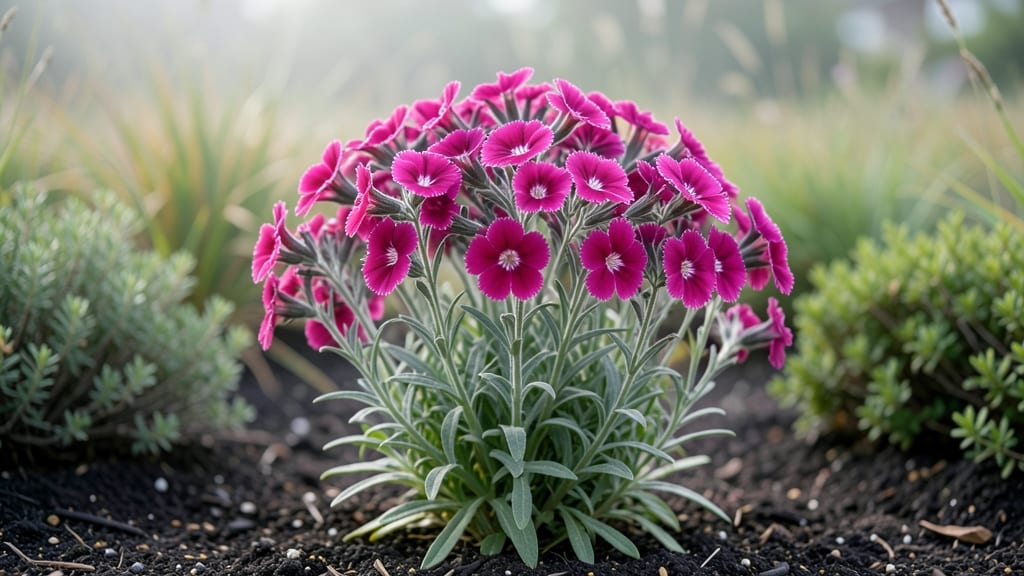
Sweet William flowers look like intricate lacework in blue, pink, or purple hues—each bloom clusters together in flat, rounded heads that resemble tiny carnations. 🌸 The petals are deeply frilled, almost ruffled, with a delicate, almost papery texture that catches light beautifully.
Unlike pansies, which have bold, heart-shaped faces, Sweet Williams display a more uniform, symmetrical charm that makes them ideal for cottage-style gardens.
You’ll spot their foliage first: dark green, slightly fuzzy leaves that grow in neat, upright clumps. The stems are sturdy but flexible, perfect for cutting or tucking into borders where they’ll spill gracefully over edges.
Their compact size—typically 12 to 18 inches tall—makes them versatile for containers, window boxes, or as a colorful edging alongside taller perennials.
In arrangements, their clustered blooms create a soft, dreamy effect that pairs well with deeper purples, creamy whites, or even sprigs of eucalyptus. The scent is subtle but sweet, adding a quiet charm to bouquets.
Whether you’re admiring them in your garden or selecting them at the nursery, their unique, lacy appearance sets them apart from similar flowers like dianthus or stock.
They thrive in full sun to partial shade and bloom prolifically from spring to early summer, making them a reliable choice for seasonal color. Their ability to self-seed also means you’ll often find new clusters popping up year after year—like nature’s own way of saying, “Plant me again.”
📚 In This Guide
- What you need
- Instructions
- Tips and common mistakes
- Wrapping up and next steps
What you need
- ● Field guide or app: A plant identification app (like PlantNet or iNaturalist) or a physical guidebook (e.g., Wildflowers of North America).
- ○ Magnifying glass: Optional but helpful for examining fine details like leaf texture or flower clusters.
- ● Camera or phone: To capture close-ups of petals, stems, or foliage for comparison.
- ● Notebook & pen: For jotting down key features (e.g., flower color, leaf shape, or bloom size).
- ● Seeds: High-quality Dianthus barbatus seeds (check for heirloom or hybrid varieties like ‘Rainbow’ or ‘Moulin Rouge’). Quantity: 10–20 seeds for a small patch.
- ● Potting soil: Well-draining, peat-based mix (or add perlite/sand for better aeration). Quantity: 1–2 gallons per seedling.
- ● Containers or garden bed: Containers: 4–6" pots with drainage holes (for seedlings).
- ● Garden bed: Full sun (6+ hours/day) with loose, fertile soil (pH 6.0–7.0).
- ○ Fertilizer: Balanced 10-10-10 or low-nitrogen option (e.g., 5-10-10) for blooms. Optional: Slow-release granules at planting.
- ● Mulch: Organic mulch (e.g., straw or shredded bark) to retain moisture. Thickness: 1–2 inches.
- ● Watering can or hose: With a gentle spray nozzle for seedlings.
- ● Pruning shears: For deadheading spent blooms (encourages reblooming!).
- ● Floral preservative: If cutting Sweet William for bouquets (e.g., Floralife).
- ● Companion plants: Pair with salvias, thyme, or snapdragons for a pollinator-friendly garden.
- ● Garden gloves: To protect hands while handling soil or thorny stems.
How to identify Sweet William flowers in your garden
Here's how to spot these charming blooms—no expert needed.
🌿 Step 1: Look for Compact Flower Clusters
Sweet William flowers grow in tight, rounded clusters called corymbs, typically 2-3 inches wide. Each cluster holds dozens of tiny blooms packed closely together, creating a lush, textured effect. The stems are sturdy but slender, often 1-2 feet tall, with a slightly woody base that supports the weight of the flowers.
Unlike single-stemmed flowers, Sweet William's clustered arrangement makes them instantly recognizable. Hold a cluster up to the light—you'll see the delicate petals arranged in overlapping layers, giving them that signature "lacy" appearance. This compact growth habit is why they're often used in bouquets.
🌱 Step 2: Examine the Petal Structure
The individual flowers are small, usually ½ inch wide, with five deeply notched petals that create a ruffled, almost feathered edge. This is the defining characteristic that sets them apart from similar flowers like carnations. The petals often have a slightly crinkled texture, adding to their charm.
Here's the thing—Sweet William petals come in a range of colors, but they always have that distinctive notched shape. The edges may appear slightly irregular, almost like tiny hand-cut lace. If you see perfectly smooth petals, it's probably not Sweet William. The center of each flower typically has a small cluster of stamens that may contrast in color with the petals.
☀️ Step 3: Check the Leaf Shape and Arrangement
The leaves are another key identifier. Sweet William has deeply lobed, fern-like leaves that grow in a basal rosette at the plant's base. These leaves are typically 2-4 inches long and have a slightly hairy texture. As the plant matures, additional leaves grow along the stem, but they're always deeply divided with rounded lobes.
Run your fingers along the leaf edges—you'll feel the distinct lobes that make them look almost like miniature ferns. The leaves grow alternately along the stem, not in opposite pairs. This lobed leaf pattern is consistent across all Sweet William varieties, making it a reliable identification feature.
💧 Step 4: Observe the Blooming Pattern
Sweet William flowers typically bloom in late spring to early summer, producing their characteristic clusters over a 3-4 week period. The flowers open gradually, starting from the outer edges of the cluster and working inward. This creates a beautiful gradient effect where you'll see fully open flowers at the edges and tightly closed buds in the center.
Watch the blooms over several days—you'll notice they open in the morning and may close slightly in the afternoon, especially in hot weather. This daily opening and closing is normal and doesn't indicate poor health. The flowers have a pleasant, slightly spicy fragrance that becomes more noticeable in the late morning.
Tips & tricks for identifying Sweet William flowers
Real talk: Even experienced gardeners sometimes mix up Sweet William with other delicate blooms. Here's how to spot them like a pro without any confusion.
Cluster Shape Matters: In Step 1, when you notice those 2-3 inch wide clusters, focus on how they're arranged. Sweet William grows in flat-topped corymbs where the outer flowers open first, creating that signature "lacy" effect. This is different from the rounded clusters of other flowers—think of it like a flat-topped umbrella rather than a ball. The 1-2 feet tall stems are another key clue; they're sturdy enough to support the weight but still slender enough to fit in bouquets.
Petal Texture is Key: During Step 2, when examining the petals, pay attention to their texture. Sweet William petals should feel slightly crinkled with those distinctive notches. Here's what nobody tells you—run your thumb along the petal edge. You should feel those tiny irregular notches that create that "hand-cut lace" appearance. If the petals feel smooth, you're probably looking at carnations or another similar flower.
Leaf Inspection is Non-Negotiable: In Step 3, when checking the leaves, don't just glance at them—touch them! The 2-4 inch long leaves should feel slightly hairy and have those deep lobes that make them look like miniature ferns. The lobes are rounded, not pointed, which is another distinguishing feature. This lobed pattern is consistent across all Sweet William varieties, so it's your most reliable identifier when in doubt.
Timing is Everything: For Step 4, remember that 3-4 week blooming period is crucial. Sweet William typically blooms in late spring to early summer, and the flowers open gradually from the outside in. This creates that beautiful gradient effect where you'll see fully open flowers at the edges with tightly closed buds in the center. If you're seeing all flowers open simultaneously, it's probably not Sweet William.
Pro Tips for What Does Sweet William Flowers Look Like
- Real talk: Even experienced gardeners sometimes mix up Sweet William with other delicate blooms.
- Cluster Shape Matters: In Step 1, when you notice those 2-3 inch wide clusters, focus on how they're arranged.
- Petal Texture is Key: During Step 2, when examining the petals, pay attention to their texture.
Frequently asked questions
Got questions about Sweet William flowers? You’re not alone! Here are some of the most common queries—plus quick, easy answers to help you spot, grow, or care for these charming blooms.
What do Sweet William flowers look like?
Sweet William flowers resemble tiny, lacy clusters of delicate blooms (about 1 inch wide) with 5–6 petals in shades of pink, purple, blue, white, or red. Their ruffled edges and clusters of 10–20 flowers per stem set them apart from similar flowers like pansies. Think of them as a miniature, more intricate version of a carnation!
When is the best time to plant Sweet William?
For spring blooms, plant Sweet William seeds 4–6 weeks before your last frost (typically late winter to early spring). If you want fall color, sow seeds in early summer. They thrive in cool weather and may even rebloom in mild climates if deadheaded regularly. Pro tip: Start seeds indoors 6–8 weeks before transplanting for a head start!
Can Sweet William grow in pots or containers?
Sweet William adapts well to containers as long as the pot has drainage holes and is at least 8–12 inches deep. Use a well-draining potting mix and place them in partial sun (4–6 hours of light daily). Just be mindful—they may need more frequent watering in pots since they dry out faster than in garden beds.
Why aren’t my Sweet William flowers opening?
If your Sweet William blooms stay budded but don’t open, it’s often due to heat stress (they prefer cool temps) or overcrowding. Try these fixes:
- Move to partial shade if temps exceed 80°F (27°C).
- Thin out plants to improve airflow (aim for 8–12 inches apart).
- Deadhead spent blooms to encourage new growth.
- Check for pests like aphids—spray with water or neem oil if needed.
What flowers look similar to Sweet William?
If you’re unsure whether you’ve spotted Sweet William, compare it to these lookalikes:
Flower
Key Difference
Pansies
Larger, heart-shaped faces with three lobes; petals are flatter.
Violas
Smaller than pansies, with smoother petals and less ruffling.
Dianthus
Two-toned petals (often pink/white) and a clove-like scent.
Quick trick: Sweet William’s clusters and ruffled edges are their signature—no other flower mimics that combo!
Wrapping up and next steps
Sweet William flowers are a charming sight—with their delicate, lacy clusters of blue-pink blooms and feathery foliage, they’re perfect for adding a touch of whimsy to gardens or bouquets. 🌸 Whether you’re admiring them in person or through photos, their unique shape and vibrant colors make them unforgettable.
Now that you know what to look for, why not bring some home? Visit a local nursery, browse online plant shops, or even grow them yourself—your garden (or home decor) will thank you!