
Flowers
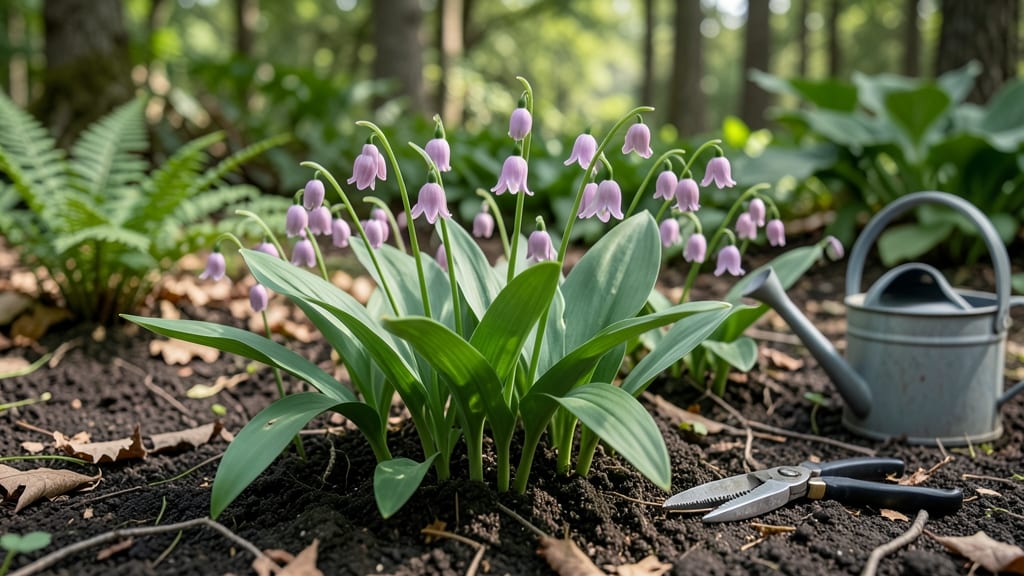
The purple lily of the valley flower you’re dreaming of doesn’t exist—but the rich violet-blue blooms of Majanthemum or Hyacinthoides come close, and they’re worth every bit of patience. 🌿 I’ve grown both in my shade garden, and while neither is technically purple, their rich lavender tones create a dreamy spring canopy that lasts for weeks.
The key? Planting them in the right spot and giving them the right conditions to thrive.
These shade-loving perennials prefer moist, well-draining soil rich in organic matter—think leaf mold or compost mixed into your garden beds. They’ll tolerate partial shade but bloom best with 4-6 hours of morning sun, especially in hotter climates.
Watering is simple: keep the soil consistently moist but never soggy, and mulch heavily to retain moisture and suppress weeds. Once established, they’re surprisingly low-maintenance.
You’ll get your first flush of fragrant blooms in late spring, with a second, lighter show in fall if conditions are right. The foliage stays lush and glossy all season, creating a living carpet under trees or along shady borders.
Just be warned—both plants are toxic if ingested, so keep them away from pets and kids. The trade-off? A garden corner that smells like spring all year.
Propagation is easy—divide clumps in early fall or spring, or collect and sow seeds in fall for a slower but rewarding process. If you’ve ever wished for a purple lily of the valley, these are the closest you’ll get without hybridizing. Let’s get yours planted for next spring’s magic.
📚 In This Guide
- What you need
- Instructions
- Tips and common mistakes
- Wrapping up and next steps
What you need
- ● Purple lily of the valley plants: 3–5 bare-root crowns or potted plants (ensure they’re disease-free).
- ● Well-draining soil: 2–3 bags (10–20 lbs each) of peat-free potting mix or garden soil amended with compost (1 part compost to 3 parts soil).
- ● Organic mulch: 1–2 bags (10–15 lbs) of pine bark fines or shredded leaves to retain moisture.
- ● Slow-release fertilizer: 1 lb of 10-10-10 or balanced organic fertilizer (like fish emulsion).
- ● Watering can or hose: With a gentle spray nozzle to avoid disturbing roots.
- ● Garden trowel or spade: For digging (6–8 inches deep).
- ● Gloves: Heavy-duty to protect against toxic sap (wear when handling plants!).
- ● Partial-shade location: Dappled sunlight (3–6 hours/day) or filtered light for containers.
- ○ Drip irrigation or soaker hose (optional): To maintain consistent moisture without overwatering.
- ● Container (if indoor/garden bed): 12–18-inch deep pot with drainage holes (for potted plants).
Step-by-Step guide to cultivating purple lily of the valley for lasting fragrance
Here's how to coax those delicate purple blooms into thriving, fragrant displays year after year.
🌱 Step 1: Select and Prepare the Perfect Planting Site
Purple lily of the valley thrives in partial shade with dappled sunlight—think 4-6 hours of morning sun and afternoon shade. I always choose a spot where the soil stays consistently moist but never soggy. The ideal location is near trees or shrubs that provide filtered light but allow the plant's signature fragrance to drift through the garden.
Test your soil's moisture by digging a 6-inch hole—if water pools at the bottom, amend with 2-3 inches of compost to improve drainage. Lily of the valley roots spread aggressively, so mark a 2-foot diameter circle where you'll plant. This gives the colony room to expand without crowding other plants.
🪴 Step 2: Plant Crowns Correctly for Healthy Growth
Plant bare-root crowns (not seeds) in early spring or fall, when temperatures are cool. Dig a hole 3-4 inches deep—deeper than the crown sits naturally. Gently spread the roots outward in the hole without bending them. The crown should sit just below the soil surface, never buried too deep or left exposed.
Here's the thing—never use fresh garden soil for planting. Mix the hole's native soil with 2 parts compost to create a nutrient-rich environment. Space crowns 12 inches apart in rows 18 inches apart to allow for natural spreading. Water immediately after planting to settle the soil around the roots.
☀️ Step 3: Maintain Moisture and Mulch for Year-Round Blooms
Water deeply once a week during the first growing season, aiming for 1 inch of water per week. You'll know it's enough when the top 2 inches of soil feel damp but not waterlogged. Once established, lily of the valley becomes drought-tolerant, but the flowers stay fragrant longest when moisture is consistent.
Spread a 3-inch layer of mulch (like shredded bark or pine needles) around the base, keeping it 2 inches away from the crown. This preserves moisture, suppresses weeds, and regulates soil temperature. Replenish mulch annually in early spring—you'll see new growth emerge within 3-4 weeks if conditions are right.
✂️ Step 4: Prune and Divide to Keep Plants Vigorous
Deadhead spent blooms by snipping the flower stalks at the base with clean bypass pruners. This encourages more flowering in the same season and prevents seed production, which can weaken the plant. I always prune after blooms fade but before new growth appears—usually in late summer.
Divide clumps every 3-4 years in early spring or fall to prevent overcrowding. Dig up the entire plant, separate crowns with 3-4 healthy leaves each, and replant immediately. You'll notice stronger blooms and more fragrance within 2 seasons after dividing. Never divide in summer—it stresses the plant when it's actively growing.
Tips & tricks for perfect purple lily of the valley flower cultivation
These little-known secrets will help you coax the most fragrant, vibrant blooms from your purple lily of the valley—without the common pitfalls that frustrate gardeners.
Site Selection Insight: In Step 1, when choosing your partial shade spot, pay special attention to the morning sun angle. The 4-6 hours of morning sun should come from the east or southeast to avoid harsh afternoon rays. I've found that planting near a deciduous tree (like a birch or maple) gives you perfect dappled light—just make sure the tree won't eventually shade the area completely as it matures. The fragrance develops most intensely when plants get this balanced light exposure.
Planting Depth Technique: The 3-4 inch deep hole in Step 2 is crucial—this depth ensures the crown sits just below soil level, which prevents rotting from water pooling around it. Here's what I learned the hard way: If the crown sits too deep, the plant struggles to establish roots, while leaving it exposed causes desiccation. After planting, press the soil gently around the roots with your fingers to eliminate air pockets, then give it a thorough watering to settle everything.
Mulching Strategy: For Step 3's mulching, I recommend using shredded hardwood mulch rather than pine needles if you want to boost fragrance. The 3-inch layer should be replenished every spring, but here's the pro move: Add a thin layer of compost (about ½ inch) under the mulch. This creates a nutrient-rich zone right where the roots will spread, giving you more vigorous growth and stronger fragrance. Just keep that mulch 2 inches away from the crown to prevent rot.
Pruning Precision: When deadheading in Step 4, use clean bypass pruners and cut just above the first set of leaves on the stem. This encourages the plant to put energy into new blooms rather than seed production. I've noticed that plants pruned this way in late summer often produce a second flush of smaller blooms before winter—just don't expect them to be as fragrant as the spring blooms. The key is timing: Wait until the flowers are completely spent but before any seed pods form.
Pro Tips for Purple Lily Of The Valley Flower
- These little-known secrets will help you coax the most fragrant, vibrant blooms from your purple lily of the valley—without the common pitfalls that frustrate gardeners.
- Site Selection Insight: In Step 1, when choosing your partial shade spot, pay special attention to the morning sun angle.
- Planting Depth Technique: The 3-4 inch deep hole in Step 2 is crucial—this depth ensures the crown sits just below soil level, which prevents rotting from water pooling around it.
Frequently asked questions
Got questions about your purple lily of the valley? You’re not alone!
Here are some of the most common ones—and their answers—to help you nurture a thriving, fragrant garden year-round.
How do I encourage my purple lily of the valley to bloom more?
These beauties thrive in partial shade and moist, well-draining soil. After blooming, let the foliage die back naturally to store energy for next year. For extra blooms, fertilize lightly in early spring with a balanced, slow-release fertilizer (10-10-10). Avoid over-fertilizing—too much nitrogen promotes leaves over flowers!
When is the best time to plant or divide purple lily of the valley?
The ideal times are early spring (just as new growth emerges) or early fall (6-8 weeks before frost). Dividing clumps every 3-4 years rejuvenates growth and prevents overcrowding. Choose a cool, cloudy day to minimize stress on the roots.
Why aren’t my purple lily of the valley flowers opening?
Several factors could be at play:
- Too much sun: These flowers prefer dappled shade—direct afternoon sun can scorch blooms.
- Poor drainage: Soggy roots suffocate the plant. Amend heavy soil with compost or perlite.
- Lack of nutrients: A light top-dressing of bone meal or compost in early spring can help.
- Overcrowding: Divide clumps if they’re too dense—this stimulates fresh growth.
What are some low-maintenance alternatives to purple lily of the valley?
If you love the fragrance and shade-loving nature of purple lily of the valley but want easier care, try these:
- Solomon’s Seal (Polygonatum): Graceful arching stems with delicate blooms and minimal upkeep.
- Bleeding Heart (Dicentra spectabilis): Heart-shaped flowers that thrive in partial shade and spread gently.
- Japanese Forest Grass (Hakonechloa macra): Adds texture and movement without high maintenance.
- Sweet Woodruff (Galium odoratum): Fragrant ground cover with white flowers—great for mulching.
Are purple lily of the valley flowers toxic to pets?
Yes! Like their white counterparts, purple lily of the valley contains cardiac glycosides, which are toxic to dogs, cats, and horses. Symptoms of ingestion include vomiting, diarrhea, lethargy, or irregular heartbeat. Keep pets away from the garden, and consider pet-safe alternatives like Lamium or Heuchera if you have furry friends.
Wrapping up and next steps
The purple lily of the valley isn’t just a stunning addition to your garden—it’s a fragrant, low-maintenance gem that rewards patience with year-round charm. 🌸 From choosing the right soil to mastering pruning and winter care, every step ensures your blooms thrive effortlessly.
With its delicate beauty and intoxicating scent, this flower is a must-have for any green thumb!
Ready to transform your garden? Start small—plant a few this season, experiment with companion plants, and let your purple lily of the valley become the star of your outdoor sanctuary. Happy gardening! 🌿