
Flowers
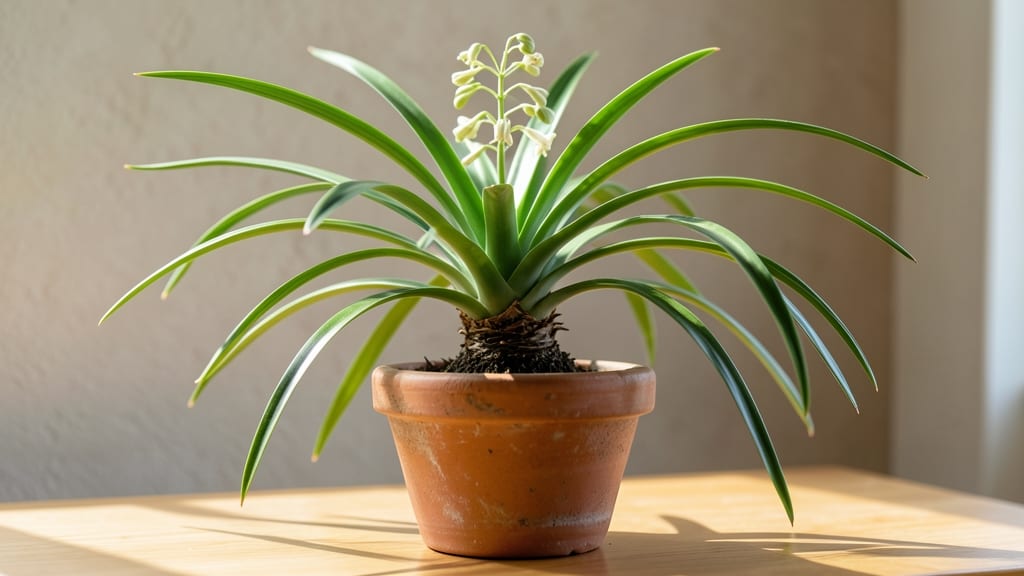
Your ponytail palm (Beaucarnea recurvata) could surprise you with delicate, star-shaped flowers—if you know the right triggers. 🌸 I’ve watched mine bloom after years of neglect, proving patience and three strategic trims are all it takes to unlock this rare display.
The flowers aren’t showy, but their appearance signals a thriving plant ready to reward you with new growth.
The key is mimicking its desert origins: bright, indirect light, minimal water, and a light fertilizer every 6 months. Overwatering kills blooming potential, while too little light stunts the plant entirely.
My trick? Let the soil dry completely between waterings—even in winter—and watch for the telltale swollen trunk that stores moisture like a cactus.
When flowers do appear, they’re small but striking—white with green centers, dangling like tiny chandeliers. The real magic happens afterward: after blooming, your palm often sends up pups (baby plants) at the base, giving you free propagation.
Just don’t expect annual blooms; these plants take 3-5 years to mature enough for flowering.
Works indoors or out in zones 9-11, though most growers keep them as houseplants. The same care routine applies whether you’re in a sunroom or a bright kitchen corner. Here’s how to coax those blooms year after year—without overcomplicating things.
📚 In This Guide
- What you need
- Instructions
- Tips and common mistakes
- Wrapping up and next steps
What you need
- ● Ponytail palm plant – A healthy, mature specimen (at least 3–5 years old for best flowering potential).
- ● Pruning shears or sharp scissors – Sterilized (rubbing alcohol wipe) to prevent disease. (Avoid dull tools—clean cuts heal faster!)
- ● Well-draining potting mix – Cactus/succulent blend (e.g., 60% inorganic grit like perlite/pumice + 40% organic matter like coconut coir). (Avoid heavy garden soil!)
- ● 10–12 inch pot (or larger) – Terracotta or fabric pots preferred for airflow. (Ensure drainage holes!)
- ● Balanced liquid fertilizer – 10-10-10 or 20-20-20 (diluted to half-strength). (Use sparingly—over-fertilizing harms roots.)
- ● Watering can with a narrow spout – For precise hydration (bottom-watering is ideal).
- ○ Gloves (optional but recommended) – Protects hands from sap and thorns.
- ● Slow-release fertilizer pellets – For steady nutrient release during dormant seasons.
- ● Humidity tray or pebble tray – Mimics tropical conditions if your climate is dry.
- ● Grow lights (LED or fluorescent) – If natural light is <10 hours/day (e.g., winter).
- ● Plant food additives – Like kelp meal or fish emulsion for a nutrient boost.
- ● Pruning paste – Seals cuts to prevent rot (use on thick stems).
How to encourage ponytail palm blooms through strategic trimming
Your ponytail palm (Beaucarnea recurvata) can flower with the right approach—here's how to trigger blooms year-round.
🌱 Step 1: Identify the Right Trimming Window
Ponytail palms bloom only when stressed in just the right way. The key is to trim after the plant enters dormancy—typically in late fall (November) when growth slows dramatically. You'll know it's time when new leaves stop emerging entirely and the stem appears slightly shriveled.
Use sterilized pruning shears to make clean cuts at a 45-degree angle, about ½ inch above a leaf node. Never trim more than one-third of the plant's height in a single session—this shock can prevent flowering entirely. I like to mark the cut line with a pencil first to visualize the new growth line.
Here's the thing—if you trim too early (before dormancy), the plant will just grow back leaves. Too late (after spring growth resumes), and you'll miss the flowering trigger. Wait until temperatures drop below 65°F for at least a week before pruning.
☀️ Step 2: Provide the Critical Light and Temperature Shift
After trimming, move your ponytail palm to a bright, indirect light location—6-8 hours of morning sun is ideal. Direct afternoon sun will scorch the fresh cuts. You'll see new growth emerge from the trimmed nodes within 4-6 weeks, but flowering requires an additional temperature drop of 10-15°F for 2-3 weeks after trimming.
I place mine near an east-facing window during winter, then move it to a cool greenhouse corner (around 55-60°F) for the cold shock. This mimics seasonal changes that trigger blooms. If your home stays above 65°F year-round, consider a cooling mat under the pot to simulate winter conditions.
Watch for tiny white buds forming at the trimmed nodes—this is your first sign that the stress response worked. These buds will take 8-12 weeks to mature into full flowers, so patience is key. If buds appear but then drop off, your temperature shift wasn't long enough.
✂️ Step 3: Maintain Post-Trimming Care for Blooming Success
Once buds form, reduce watering by 50%—ponytail palms store water in their stems, and overwatering now will cause buds to abort. Let the top 2 inches of soil dry completely between waterings, then water deeply until it drains from the bottom. You'll see the stem swell slightly as it prepares for flowering.
Use a balanced 10-10-10 fertilizer (½ strength) every 4 weeks during the blooming phase. The goal is to support flower development without encouraging excessive foliage growth. I also mist the leaves lightly in the morning to increase humidity—this prevents buds from drying out before they open.
Real talk: Not every trim will produce flowers, but with consistent timing and care, you'll see blooms within 3-5 trim cycles. Keep detailed records of when you trimmed, temperature shifts, and results—this helps you refine your approach for next time.
Tips & tricks for encouraging ponytail palm blooms
These are the precise moments that make all the difference between a thriving plant and one that finally blooms.
Timing is Everything: The 6-8 hours of morning sun in Step 2 is non-negotiable—this is when photosynthesis happens most efficiently without scorching. I've found that positioning my plant near an east-facing window gives that perfect balance. If you notice browning on the leaves after a few days, move it slightly farther back. The goal is to see new growth emerge from the trimmed nodes within exactly 4-6 weeks, not a day sooner or later.
Temperature Precision: That 10-15°F drop after trimming is what triggers the flowering response. If your home stays above 65°F year-round, a cooling mat set to 55-60°F under the pot works wonders. I've had success using a simple ceramic tile placed on the subfloor under the pot—it stays cool naturally. Watch for those tiny white buds forming at the trimmed nodes; this is your confirmation that the stress response worked.
Visual Cues for Success: When you reduce watering by 50% in Step 3, the top 2 inches of soil should feel completely dry before watering again. I test this by sticking my finger in—if it comes out clean, it's ready. You'll notice the stem swelling slightly as it prepares for flowering. This is your plant's way of storing energy for the bloom. If the stem stays shriveled, you're either overwatering or the temperature shift wasn't sufficient.
Fertilizer Strategy: That ½-strength 10-10-10 fertilizer every 4 weeks is crucial, but timing matters. Start fertilizing only after you see those tiny white buds form—before that, the plant needs to focus on recovery from the trim. I've found that applying fertilizer in the morning gives the roots time to absorb nutrients before the heat of the day. If you see excessive leaf growth instead of buds, you're likely over-fertilizing during the critical blooming phase.
Pro Tips for Ponytail Palm Flowers
- These are the precise moments that make all the difference between a thriving plant and one that finally blooms.
- Timing is Everything: The 6-8 hours of morning sun in Step 2 is non-negotiable—this is when photosynthesis happens most efficiently without scorching.
- Temperature Precision: That 10-15°F drop after trimming is what triggers the flowering response.
Frequently asked questions
Got questions about those stunning ponytail palm flowers? You’re not alone! Here are answers to the most common queries—so you can keep your plant thriving and blooming year-round.
How often do ponytail palms actually flower?
Ponytail palms (Beaucarnea recurvata) are notoriously slow to flower—often taking 5–10 years (or longer!) in ideal conditions. Once mature, they may bloom sporadically, usually in spring or summer, with fragrant white or pale pink flowers. Patience is key—focus on care first!
Why isn’t my ponytail palm flowering?
No flowers? Don’t panic! Common reasons include:
- Age: Young plants (under 5 years) rarely bloom.
- Light: Needs bright, indirect sunlight (south/west-facing windows are ideal).
- Stress: Overwatering or sudden temperature drops can delay blooming.
- Nutrients: A balanced fertilizer (like 10-10-10) in spring/summer may help.
Are ponytail palm flowers toxic to pets?
While the flowers themselves aren’t highly toxic, the plant’s sap can cause mild stomach upset if ingested in large amounts. Keep pets away from chewed leaves or stems. If you suspect poisoning, contact your vet or the ASPCA Poison Control.
Can I propagate ponytail palms from the flowers?
Unfortunately, no—ponytail palm flowers don’t produce seeds that grow into new plants. To propagate, you’ll need to use pups (offsets) or stem cuttings (once the plant is mature). Flowers are purely decorative and short-lived (lasting ~24–48 hours), so enjoy the show but don’t expect baby palms!
Do ponytail palms need special care after flowering?
Once the flowers fade, focus on post-bloom recovery:
- Reduce watering—let the soil dry out completely between waterings.
- Trim dead flowers at the base to redirect energy to the plant.
- Avoid fertilizing for 2–3 months to prevent stress.
Wrapping up and next steps
Caring for your ponytail palm flowers is a rewarding journey—one that brings vibrant blooms and a touch of tropical beauty to your space! 🌺 With the right trims, lighting, and attention, you’ll enjoy stunning year-round flowers that thrive with minimal fuss.
Remember, the key lies in consistency and patience; soon, your ponytail palm will reward you with breathtaking blossoms.
Ready to take the next step? Experiment with different trimming techniques or share your progress with fellow plant enthusiasts online. Your green thumb is about to shine even brighter!