
Flowers
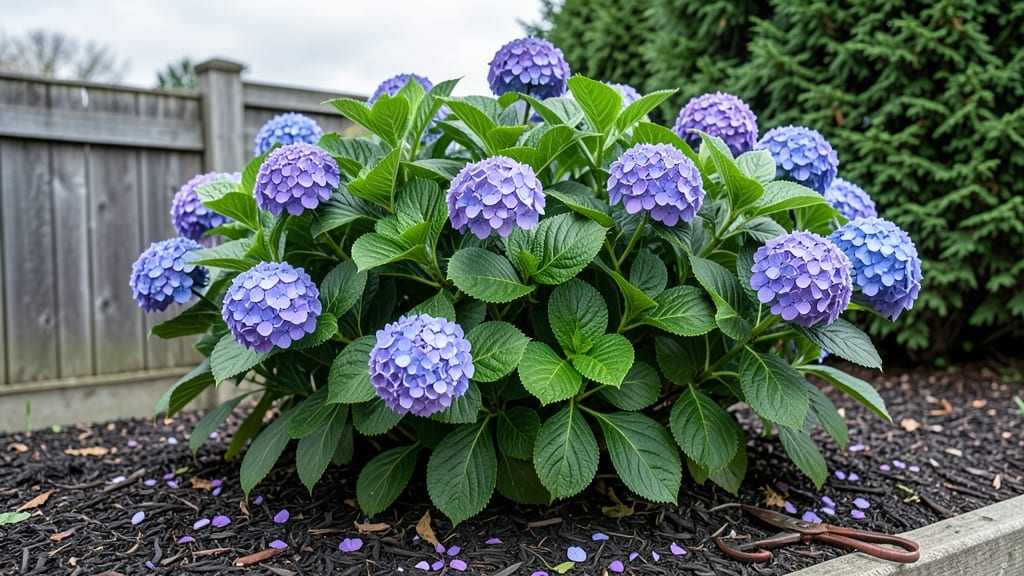
A hydrangea flower bed that blooms from spring to frost is the kind of garden centerpiece that makes neighbors pause and ask, "What's your secret?" I've designed mine to shift colors with the seasons—pinks in May, blues in July, and fiery reds by September—all while keeping the foliage lush year-round.
The trick isn't just the hydrangeas themselves, but the layered plants that bridge the gaps between their bloom cycles.
Start with your site's sun exposure: most hydrangeas thrive in morning sun and afternoon shade, but varieties like 'Endless Summer' can handle full sun with consistent moisture. Pair them with hostas for shade-loving texture, ferns for delicate fronds, and ornamental grasses that sway even after the hydrangeas fade.
My 3-season trim strategy keeps the beds looking intentional—never sparse—by cutting back dead blooms in early spring, shaping in midsummer, and adding winter interest with evergreen companions.
What you'll end up with is a garden that feels like a living painting, where every season brings a new palette. The key is color coordination: plant 'Nikko Blue' hydrangeas alongside purple hostas for a cool-toned vignette, or mix 'Limelight' with gold-leafed perennials for a bold contrast.
Even in winter, the skeletal branches of hydrangeas paired with berry-producing shrubs create unexpected beauty. This isn't just a flower bed—it's a year-round conversation starter.
Works for any yard size, from a small city patio to a sprawling backyard. The same principles apply whether you're creating a border, focal point, or layered bed—just scale the plant quantities. Here's how to make it happen without overcomplicating the process.
📚 In This Guide
- What you need
- Instructions
- Tips and common mistakes
- Wrapping up and next steps
What you need
- ● Hydrangea plants: Choose 3-5 varieties for seasonal interest (e.g., Hydrangea macrophylla for summer blooms, Hydrangea arborescens for fall/winter color, and Hydrangea paniculata for late-season flair). Aim for 5-7 mature plants per 100 sq. ft. (spaced 3-5 ft. apart).
- ● Soil: Well-draining, acidic soil (pH 5.2-6.2)—amend with 2-3 inches of compost or peat moss if your soil is heavy clay or alkaline.
- ● Mulch: 2-3 inches of pine bark or shredded leaves to retain moisture and acidify soil.
- ● Fertilizer: Slow-release granular fertilizer (10-10-10 or 12-12-12)—apply 2-3 tbsp per plant in early spring.
- ● Aluminum sulfate or hydrangea-specific fertilizer (for blue/purple blooms; 1 lb per 100 sq. ft.).
- ● Pruning tools: Bypass pruners (for clean cuts on stems ½-inch above a bud).
- ● Loppers (for thicker stems).
- ● Garden shears (for shaping).
- ● Watering supplies: Drip irrigation or soaker hose (hydrangeas need 1-2 inches of water weekly).
- ○ Support structures (optional but helpful): Flower rings or small stakes for tall varieties like H. paniculata.
- ● Color-enhancing products: Liquid bloom boosters (e.g., Botanical Interests Hydrangea Food) for vibrant blooms.
- ● Seasonal accents: Ornamental grasses, ferns, or heuchera to fill gaps and extend color.
- ● Weather protection: Burlap wraps for young plants in harsh winters.
- ● DIY soil test kit to monitor pH and adjust as needed.
How to maintain a lush hydrangea flower bed through all seasons
Here’s how to keep your hydrangeas vibrant from spring to winter with just three key seasonal trims.
Prune for Spring Growth in Late Winter
Wait until late winter, just as buds begin to swell but before any green appears. This timing ensures you don’t accidentally remove next year’s blooms. For mophead and bigleaf hydrangeas, cut back one-third of the oldest stems to the first set of outward-facing buds. These stems are the most mature and often produce the weakest flowers.
I like to use clean, sharp pruners to make 45-degree cuts just above a bud. This angle helps water run off the stem, preventing rot. Avoid cutting into the center of the plant—this creates a bare spot where sunlight can’t penetrate. After pruning, remove any dead or diseased branches entirely, even if it means sacrificing a few stems.
Lightly Shape in Early Summer After First Blooms
Once your hydrangeas finish their first flush of flowers—usually 6-8 weeks after spring pruning—it’s time for a light shaping trim. This step encourages a second round of blooms and keeps the plant full. Focus on removing only the spent flower heads and any stems that are growing too leggy or out of place.
For panicle and smooth hydrangeas, which bloom on new wood, you can cut back up to half of the oldest stems to encourage fresh growth. Avoid heavy pruning now—you want to preserve the plant’s energy for late-summer blooms. After trimming, water deeply to help the plant recover and promote new growth.
Clean Up and Prepare for Winter in Late Fall
As temperatures drop and leaves begin to yellow, it’s time for your final trim of the year. Remove all spent blooms, seed heads, and any dead or damaged foliage. This step prevents pests and diseases from overwintering in the bed. Cut stems back to about 6 inches above the ground, but leave the base intact—this protects the plant’s crown from freezing.
Mulch the base of the plant with 2-3 inches of organic mulch, like shredded bark or leaves, to insulate the roots. This layer helps regulate soil temperature and retains moisture during winter. Avoid piling mulch directly against the stems, as this can cause rot. Once the ground freezes, your hydrangeas will be ready to rest until spring.
Bonus: Year-Round Care Tips
Hydrangeas thrive with morning sun and afternoon shade, especially in hot climates. Water deeply 2-3 times per week during dry spells, keeping the soil consistently moist but not soggy. Overwatering can lead to root rot, while underwatering causes buds to dry out before blooming.
Fertilize in early spring with a balanced, slow-release fertilizer to support new growth. Avoid high-nitrogen fertilizers, which promote leafy growth at the expense of flowers. If your soil is acidic, add sulfur or aluminum sulfate in early spring to encourage blue blooms, or lime for pink flowers.
Tips & tricks for perfect hydrangea flower bed maintenance
Keeping your hydrangeas vibrant year-round takes just a few strategic moves—and avoiding these common pitfalls makes all the difference.
Pruning Precision: In Step 1, when cutting back one-third of the oldest stems, focus on the largest, most mature branches first. These stems often produce weaker blooms, so removing them actually strengthens next year's growth. Look for stems that are thicker and have fewer buds—they're the ones to prioritize. I've learned that cutting too many stems at once can shock the plant, so stick to that one-third guideline even if it feels excessive.
Seasonal Timing Matters: The 6-8 week window after spring pruning for your summer shaping trim is critical. If you're unsure when to act, use the bloom cycle as your guide: once the first flowers fade and seed heads start forming, that's your cue. For panicle and smooth varieties, this mid-summer trim can actually extend your blooming season by encouraging new growth that will flower later. I've seen plants with continuous blooms from June through September when this timing is perfect.
Winter Protection Strategy: When preparing for winter in Step 3, that 6-inch stem height is ideal for insulation while still allowing air circulation. For colder climates, consider adding a layer of frost cloth over the mulch for extra protection during extreme freezes. I've found that leaving too much stem exposes the crown to cold damage, while cutting too short can leave the plant vulnerable to heaving when the ground freezes and thaws.
Pro Tips for Hydrangea Flower Bed
- Keeping your hydrangeas vibrant year-round takes just a few strategic moves—and avoiding these common pitfalls makes all the difference.
- Pruning Precision: In Step 1, when cutting back one-third of the oldest stems, focus on the largest, most mature branches first.
- Seasonal Timing Matters: The 6-8 week window after spring pruning for your summer shaping trim is critical.
Frequently asked questions
Got questions about creating or maintaining a stunning hydrangea flower bed?
You’re not alone! Here are answers to the most common questions to help you keep your blooms thriving year-round.
When is the best time to plant hydrangeas for a flower bed?
The ideal time to plant hydrangeas is in early spring (after the last frost) or early fall (4-6 weeks before the first frost). This gives roots time to establish before extreme temperatures. If planting in summer, keep soil consistently moist to reduce stress.
How often should I trim my hydrangeas for continuous blooms?
Trim hydrangeas once in late winter/early spring (to shape and remove dead wood) and again in mid-summer (after the first flush of blooms) to encourage a second round. Bigleaf and panicle types benefit most from this schedule.
Why are my hydrangea leaves turning brown or yellow?
Brown/yellow leaves often signal overwatering, underwatering, or nutrient deficiencies. Check soil moisture (hydrangeas love consistently damp—but not soggy—soil). Yellow edges may mean chlorosis (low iron), while crispy leaves could indicate heat stress. Adjust care and fertilize with acid-loving plant food if needed.
Can I mix hydrangeas with other plants in a flower bed?
Pair hydrangeas with hostas, ferns, or impatiens for shade, or black-eyed Susans and coneflowers for sun. Avoid competitive plants like invasive ground covers. Aim for a 3:1 ratio of hydrangeas to supporting plants to keep them the star!
Do hydrangeas need winter protection?
In USDA Zones 5-7, wrap young plants in burlap or frost cloth and mulch heavily (4-6 inches) around the base. Established hydrangeas in warmer zones (8+) usually thrive without extra care. Prune dead blooms in late winter to avoid damaging new growth.
Pro Tip:
For year-round color, choose varieties like 'Endless Summer' (reblooming) or 'Limelight' (panicle type). Group plants by color (e.g., pink, blue, white) to create dramatic visual impact in your bed!
Wrapping up and next steps
Creating a stunning hydrangea flower bed that blooms across three seasons is easier than you think! With the right variety, pruning know-how, and a little seasonal care, you’ll enjoy vibrant colors from spring through fall—and even winter interest. 🌸
Ready to transform your garden? Start by sketching your design and gathering supplies, then roll up your sleeves and get pruning! Whether you’re a beginner or a seasoned gardener, every trim brings you closer to a breathtaking, low-maintenance landscape. Your future self will thank you!
Next step: Pick your favorite hydrangea variety and check out our pruning calendar to keep your flower bed thriving all year.