
Planting
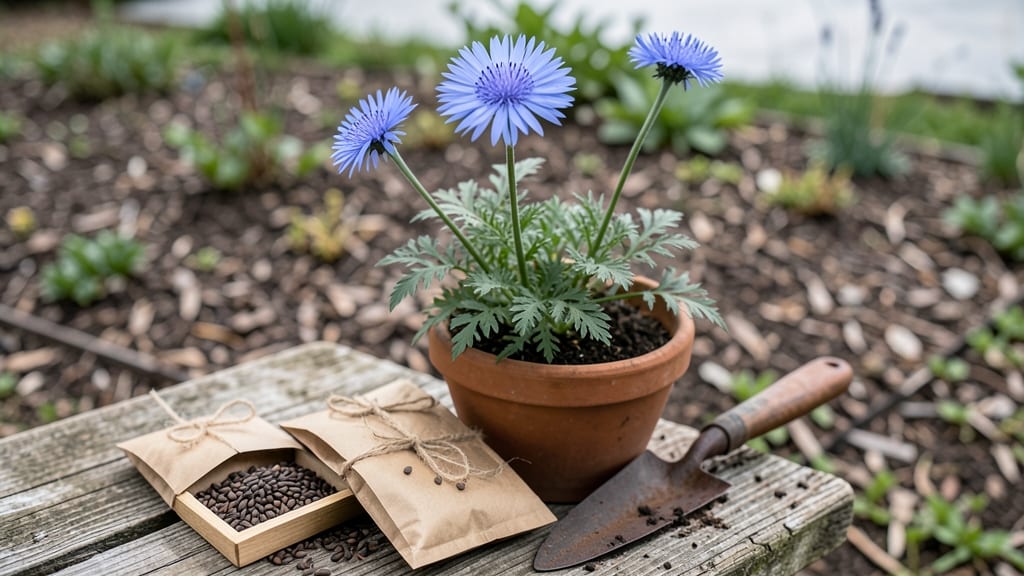
Planting cornflowers means bold blue spikes that pop against any garden backdrop—no fancy tricks, just sun, soil, and patience. 🌿 I learned the hard way that skipping soil prep or crowding seedlings leads to leggy, sparse blooms, but once you nail the basics, these flowers practically grow themselves.
The secret isn’t complicated: well-draining soil, bright light, and spacing that lets each plant stretch its wings.
You’ll need a sunny spot with at least 6 hours of direct light daily, loose soil mixed with compost, and seeds planted ¼-inch deep with 12-inch spacing between plants.
Cornflowers thrive in poor soil—they’re tough enough to bloom even in rocky ground—but a little organic matter keeps them looking their best. Start seeds indoors 8-10 weeks before your last frost or sow directly after soil warms to 50°F.
Once planted, water lightly to keep soil moist but not soggy—these flowers hate wet feet. In 4-6 weeks, you’ll see those signature blue spikes shooting up, and they’ll keep blooming all summer with minimal fuss.
Deadhead spent flowers to encourage more blooms, and watch bees and butterflies flock to your garden. The best part? They self-seed like crazy, so you’ll have cornflowers popping up for years.
Pair them with lavender for a Mediterranean vibe or toss them into wildflower meadows for a natural look. They’re drought-tolerant once established, so they’re perfect for low-maintenance gardens.
Just avoid over-fertilizing—they’ll grow tall and floppy instead of sturdy and showy. Ready to add some effortless color? Let’s get those seeds in the ground.
📚 In This Guide
- What you need
- Instructions
- Tips and common mistakes
- Wrapping up and next steps
What you need
- ● Cornflower seeds – Choose Centaurea cyanus varieties (e.g., 'Black Star', 'Moonstruck', or 'Telephone Pole'). Buy 1-2 seed packets (each packet typically contains 500-1,000 seeds).
- ● Well-draining soil – Cornflowers thrive in average to poor soil (they’re drought-tolerant!). Amend heavy clay with compost or sand if needed.
- ● Sunlight access – A full-sun location (6+ hours of direct sunlight daily) is ideal.
- ● Watering can or hose – A gentle spray nozzle helps avoid disturbing seedlings.
- ● Garden trowel or hand fork – For digging small holes (about ¼ inch deep).
- ○ Gloves (optional) – Protects hands from soil and prickly stems.
- ○ Seedling trays or biodegradable pots (optional) – Use if starting indoors or in cooler climates (2-3 inch pots per seedling).
- ○ Mulch (optional) – Straw or shredded leaves (1-2 inches) to retain moisture and suppress weeds.
- ○ Plant markers (optional) – Label seeds if planting multiple varieties.
- ● Timing – Plant seeds 2-3 weeks before your last frost date (cornflowers tolerate light frost). For fall blooms, sow again in late summer.
- ● Spacing – Thin seedlings to 6-12 inches apart for optimal airflow and blooms.
- ● Drought tolerance – Once established, cornflowers need minimal watering (water deeply 1-2 times per week in dry spells).
Step-by-step guide to planting cornflowers for stunning summer blooms
These cheerful blue spikes thrive with minimal fuss—just follow my foolproof method.
🌱 Step 1: Choose the Perfect Planting Spot
Cornflowers adore full sun, so pick a location that gets at least 6-8 hours of direct sunlight daily. They're drought-tolerant once established, so avoid low-lying areas where water pools after rain. I always test the spot by watching how quickly soil dries—if it stays wet for more than a day, amend with compost to improve drainage.
Their striking blue blooms contrast beautifully with other perennials, so I like to plant them near lavender, salvia, or ornamental grasses. Just give them 12-18 inches of spacing between plants—they'll spread naturally but won't crowd neighbors. If you're planting in containers, choose pots at least 12 inches deep with drainage holes.
🌿 Step 2: Prepare Soil and Plant Seeds
Cornflowers grow best in well-draining, slightly alkaline soil with a pH between 6.0-7.5. Before planting, loosen the top 6 inches of soil with a garden fork to break up compaction. Mix in 2-3 inches of compost to provide nutrients without overwhelming the young plants.
Sow seeds ¼ inch deep in early spring, about 2-3 weeks before your last frost date. Scatter them lightly—they germinate easily and don't need precise placement. If you're planting in fall for winter color, sow seeds 4-6 weeks before the first frost. Water gently after planting to settle the soil around the seeds without disturbing them.
☀️ Step 3: Maintain Water and Light for Strong Growth
Keep the soil evenly moist but not soggy until germination, which typically takes 7-14 days. After that, cornflowers are remarkably drought-resistant—water deeply once a week unless you're experiencing extreme heat or prolonged dry spells. Overwatering is the biggest mistake gardeners make; these plants thrive on neglect once established.
If you notice seedlings stretching toward the light (a sign of legginess), they need more sun. Cornflowers will self-seed prolifically if you let them go to seed—just deadhead spent blooms if you want to control where new plants appear. They're also deer-resistant, making them a great choice for rural gardens.
✂️ Step 4: Encourage Nonstop Blooming
To keep cornflowers flowering from midsummer through fall, deadhead spent blooms regularly. Snip off faded flowers at the base with clean pruners—this redirects the plant's energy into producing more blooms instead of seed heads. I like to do this every 2-3 weeks during peak bloom season.
Fertilize lightly once in early spring with a balanced 10-10-10 fertilizer—cornflowers don't need much to thrive. Too much nitrogen will encourage leafy growth at the expense of those stunning blue spikes. If your soil is poor, a slow-release granular fertilizer applied in spring is all they'll need for the entire season.
🪴 Step 5: Overwintering and Long-Term Care
Cornflowers are perennial in USDA zones 3-9, meaning they'll return year after year with proper care. In colder climates, they may die back to the ground in winter but will regrow in spring. In zones 10 and warmer, they'll often self-seed annually, creating naturalizing drifts of blue.
If you want to divide clumps, do it in early spring before new growth appears. Simply dig up the plant, separate the roots, and replant the divisions. They handle transplanting well, so don't worry about shocking them. With minimal effort, these cheerful bloomers will reward you with color for years to come.
Tips & tricks for perfect cornflower planting
Here's what nobody tells you about getting those bold blue spikes to thrive effortlessly.
Sunlight Secret: That 6-8 hours of sunlight is non-negotiable—cornflowers will fade dramatically if they get less. I've planted them in partial shade by mistake, and while they survived, the blooms turned pale and sparse. If your garden has limited sun, consider containers where you can move them to catch afternoon rays during critical bloom months. The deeper the blue, the more sunlight they received!
Soil Test Tip: Before amending your soil, test the pH—cornflowers prefer that slightly alkaline range of 6.0-7.5. If your soil tests lower, add crushed limestone gradually (about 1 pound per 100 square feet) and retest in a few weeks. I learned this the hard way after planting in acidic soil and watching my blue blooms turn dull purple. A simple soil test kit costs pennies and saves you from disappointment.
Timing is Everything: Those 2-3 weeks before last frost might seem flexible, but planting too early can lead to frost damage on tender seedlings. Check your local frost dates and mark your calendar—cornflowers grow quickly but need stable soil temperatures above 50°F to germinate properly. For fall planting, the 4-6 week window before frost gives seeds time to establish roots before winter sets in.
Deadheading Discipline: The 2-3 week deadheading schedule is your secret weapon for nonstop blooms. I've seen gardeners skip this step, and while the plants still produce flowers, they'll focus energy on seed production instead of more blooms. Use clean pruners and cut just above a set of leaves to encourage bushier growth. This simple habit transforms a one-time bloom into months of color!
Pro Tips for Plant Cornflowers
- Here's what nobody tells you about getting those bold blue spikes to thrive effortlessly.
- Sunlight Secret: That 6-8 hours of sunlight is non-negotiable—cornflowers will fade dramatically if they get less.
- Soil Test Tip: Before amending your soil, test the pH—cornflowers prefer that slightly alkaline range of 6.0-7.5.
Frequently asked questions
Got questions about growing cornflowers? You’re not alone! Here are answers to the most common queries to help you cultivate these cheerful blue blooms with confidence.
When is the best time to plant cornflowers?
Cornflowers thrive when planted in early spring (after the last frost) or late summer for fall blooms. They’re hardy and adaptable, so sow seeds directly into the soil once temperatures consistently reach 50°F (10°C). For cooler climates, start indoors 4–6 weeks before the last frost.
How much water do cornflowers need?
These drought-tolerant beauties prefer moderate watering—about 1 inch per week. Water deeply at the base to encourage strong roots, but avoid soggy soil, which can cause rot. Once established, they’re quite low-maintenance and handle dry spells like a champ!
Do cornflowers attract bees or butterflies?
Cornflowers are a magnet for pollinators, including bees, butterflies, and even hummingbirds. Their bright blooms provide nectar, making them a fantastic addition to pollinator gardens. Plant them near veggie patches to boost your garden’s biodiversity!
Why aren’t my cornflower seeds germinating?
Cornflower seeds need light to germinate, so don’t bury them deeply—just press them lightly into the soil (¼ inch max). Cold temperatures (40–60°F or 4–15°C) also help. If seeds aren’t sprouting in 2–3 weeks, try stratifying them (chilling in a damp paper towel for a week) or check for moisture levels.
Can I grow cornflowers in containers?
Yes! Cornflowers adapt well to containers as long as the pot has drainage and is at least 6–8 inches deep. Use a well-draining potting mix and place them in full sun. Just be mindful—they can spread, so choose a pot with room to grow or trim them back occasionally.
Wrapping up and next steps
Planting cornflowers is a rewarding way to add vibrant, low-maintenance color to your garden! With their striking blue blooms and effortless growth, they’re perfect for beginners and experienced gardeners alike.
Just follow the simple steps—choose the right location, prepare the soil, sow seeds at the right time, and keep them watered—then sit back and enjoy their nonstop beauty.
Now that you’re ready to grow these bold blue stars, why not expand your garden’s charm? Try pairing cornflowers with other drought-tolerant perennials or experiment with different planting designs. Happy gardening—your future blooms will thank you! 🌸