
Light Requirements
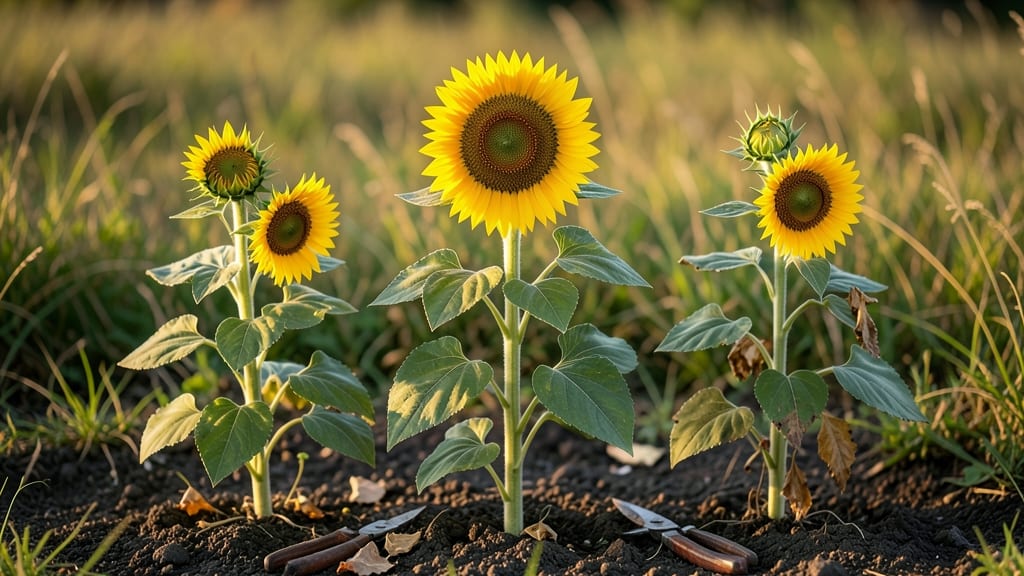
A full sun flower garden bursting with color needs just one secret ingredient: the right mix of sun-loving blooms that outshine each other. I’ve designed mine to be a pollinator paradise where every stem stands tall without fighting for sunlight—no wilting, no fading, just nonstop blooms from spring to frost.
The key? Grouping plants by height and bloom time so they take turns stealing the show.
Start with sunflowers as your backbone—they’re the drama queens of the garden, reaching 6 feet or more while attracting birds and bees. Pair them with daisies for a soft, airy contrast and marigolds to repel pests naturally.
For a cottage-garden feel, add coneflowers and black-eyed Susans; for a modern look, try zinnia spikes in bold colors. The trick is spacing them so the tallest get 6+ hours of sun while shorter varieties thrive in their dappled shade.
By midsummer, you’ll have a bold canopy that hums with activity—bees buzzing between blooms, butterflies sipping nectar, and stems so sturdy they don’t flop in the breeze.
The best part? Once established, these gardens need minimal care—just deadheading spent blooms and watering deeply once a week. Even my black thumb keeps this one alive.
Whether you’re going for a wildflower meadow or a structured border, the layout should guide the eye through seasons. Plant early bloomers like lupines in front, midseason stars like rudbeckias in the middle, and late-season asters at the back.
Add a few salvias for height and fragrance, and you’ve got a garden that thrives without fuss—and turns heads all year.
📚 In This Guide
- What you need
- Instructions
- Tips and common mistakes
- Wrapping up and next steps
What you need
- ● Flower seeds or transplants: Choose sun-loving varieties like Black-eyed Susans, Coneflowers, Daylilies, Marigolds, or Sunflowers (6–24 plants, depending on garden size).
- ● Well-draining potting mix or garden soil: 1–2 cubic yards (for in-ground planting) or 10–20 bags (for raised beds/containers).
- ● Compost or organic fertilizer: 5–10 lbs (balanced, 10-10-10 or slow-release formula).
- ○ Mulch (optional but recommended): 2–3 bags of shredded bark or straw to retain moisture.
- ● Watering can or hose with a gentle spray nozzle: For consistent hydration.
- ● Garden trowel or hand shovel: For digging holes (6–12 inches deep).
- ● Pruners or shears: For trimming dead blooms and shaping plants.
- ○ Gloves (optional but handy): To protect hands from thorns or soil.
- ● Sunlight access: A location receiving 6+ hours of direct sun daily (critical for full sun gardens!).
- ○ Drip irrigation or soaker hose (optional): For automated watering in hot climates.
How to design a stunning full-sun flower garden that blooms year after year
Here's how I create vibrant, low-maintenance flower gardens that stand out in any landscape.
Select Drought-Tolerant Flower Varieties for Your Climate
Choose native perennials and annuals that thrive in full sun (6+ hours daily) and match your hardiness zone. Black-eyed Susans, coneflowers, and daylilies are my go-to perennials—they return reliably year after year with minimal care. For instant color, add annuals like zinnias, cosmos, and marigolds, which bloom nonstop from spring until frost.
I always mix heights to create visual impact: tall varieties like sunflowers or hollyhocks at the back, mid-height perennials like bee balm or Russian sage in the middle, and low-growing annuals like alyssum or sweet alyssum in the front. This layered approach prevents a flat, monotonous look.
Prepare the Soil for Maximum Bloom Power
Test your soil first—most flower gardens need well-draining, slightly acidic to neutral soil (pH 6.0–7.0). Amend heavy clay with 2–3 inches of compost and 1 inch of coarse sand to improve drainage. For sandy soil, mix in 2 inches of peat moss or compost to retain moisture and nutrients.
I like to add a slow-release granular fertilizer (10-10-10) at planting time to give flowers a strong start. Work it into the top 6 inches of soil where roots will develop. Avoid fresh manure—it can burn delicate flower roots and attract pests.
Plant with Strategic Spacing for Airflow and Sunlight
Follow spacing guidelines on seed packets or plant tags—crowding leads to weak stems, fungal diseases, and fewer blooms. For example, daylilies need 18–24 inches apart, while zinnias thrive 6–12 inches apart. I always plant in odd-numbered clusters (3, 5, or 7 plants) for a natural, fuller look.
Face taller plants toward the north or west to prevent them from shading shorter varieties. If your garden has partial shade in the afternoon, place sun-loving annuals on the south or east side where they’ll get the most light. Mulch with 2–3 inches of shredded bark after planting to retain moisture and suppress weeds.
Water Deeply and Establish a Consistent Schedule
Water deeply once or twice a week (depending on rainfall) to encourage strong root growth. Aim for 1–1.5 inches of water per week, delivered at the base of plants (not overhead) to prevent fungal diseases. Early morning is the best time to water—it reduces evaporation and gives foliage time to dry before evening.
I use drip irrigation for established gardens because it delivers water slowly and directly to roots. For new plantings, soak the soil until it’s 6 inches deep—you’ll know it’s right when water runs out the drainage holes. Overwatering is a common mistake; yellowing leaves or wilting despite damp soil usually means roots are suffocating.
Prune and Deadhead for Continuous Blooms
Remove spent blooms regularly to redirect energy into new flowers. For perennials like coneflowers or black-eyed Susans, cut back dead stems to the ground in early spring to encourage fresh growth. Annuals like zinnias and cosmos benefit from light pinching (removing the top set of leaves) to promote bushier plants.
I also prune leggy stems in late summer to maintain shape and prevent flopping. Use clean, sharp shears and make cuts just above a leaf node. Avoid cutting into woody stems—it weakens the plant and invites disease. A little maintenance now means longer blooming seasons and healthier plants next year.
Tips & tricks for perfect full sun flower gardens
Between us, these small details make the difference between a garden that merely survives and one that absolutely thrives. Here's what nobody tells you about creating that showstopping full-sun display.
Native Plants Are Non-Negotiable: While the instructions mention black-eyed Susans and coneflowers, I can't stress enough how critical it is to choose varieties that are actually native to your specific region. Local botanical gardens often have excellent plant guides—these species have evolved to thrive in your exact climate conditions, requiring far less water and maintenance once established. For example, in the Southwest, blanket flowers and desert marigolds outperform traditional annuals by leaps and bounds.
Soil Testing Saves You Money: The instructions mention testing soil pH, but I've seen gardeners skip this step and then wonder why their $50 worth of plants underperformed. Invest in a simple soil test kit ($10-$15) before amending—you might discover your soil needs lime (to raise pH) or sulfur (to lower it) rather than just compost. The 10-10-10 fertilizer recommendation works for most gardens, but if your test shows phosphorus deficiency, switch to a 5-20-10 blend instead.
Layering Goes Beyond Height: While the instructions cover height layers, true visual impact comes from textural contrast too. Pair velvety lamb's ear with spiky Russian sage, or combine fuzzy lamb's ear with smooth-leaved sedum. This creates depth that flat layers of similar textures miss. I also recommend adding one fragrant element—like lavender or bee balm—to each garden section, as scent adds another dimension to the visual experience.
Mulch Matters More Than You Think: The 2-3 inches of shredded bark mentioned in Step 3 isn't just about moisture retention—it's also about temperature regulation. Dark-colored mulches absorb heat during the day and release it slowly at night, protecting tender roots from temperature swings. For extra insulation in cold climates, top with a 1-inch layer of straw after the initial mulch settles. This simple addition can mean the difference between winter survival and spring die-off.
Pro Tips for Full Sun Flower Garden
- Between us, these small details make the difference between a garden that merely survives and one that absolutely thrives.
- Native Plants Are Non-Negotiable: While the instructions mention black-eyed Susans and coneflowers, I can't stress enough how critical it is to choose varieties that are actually native to your specific region.
- Soil Testing Saves You Money: The instructions mention testing soil pH, but I've seen gardeners skip this step and then wonder why their $50 worth of plants underperformed.
Frequently asked questions
Got questions about creating a full sun flower garden? You’re not alone! Here are answers to the most common queries to help you grow a vibrant, low-maintenance floral paradise.
What does "full sun" really mean for flowers?
"Full sun" typically means 6 or more hours of direct sunlight daily. While some flowers (like sunflowers or black-eyed Susans) thrive in this, others (such as impatiens) may wilt. Check plant tags—most flowers labeled "full sun" can handle up to 8+ hours if soil stays moist.
When is the best time to plant a full-sun flower garden?
Plant annuals after the last frost (usually spring) for instant color, or perennials in early spring or fall for deeper root establishment. Bulbs like daffodils can go in fall. Pro tip: Mulch after planting to retain moisture and deter weeds!
How often should I water full-sun flowers?
Water deeply 2–3 times per week (more in extreme heat). Morning watering prevents fungal issues, and 1–2 inches of water weekly (including rain) is ideal. Let soil dry slightly between waterings—overwatering is a common killer of sun-loving blooms.
What are the toughest full-sun flowers for beginners?
Start with low-maintenance champions like:
- Sunflowers (fast-growing, pest-resistant)
- Zinnias (bright, long-blooming, deer-resistant)
- Coneflowers (drought-tolerant, attracts pollinators)
- Marigolds (repels pests naturally)
How do I keep pests away from my sun-loving flowers?
Prevent pests with neem oil sprays or companion planting (e.g., marigolds deter aphids). Remove chewed leaves promptly, and encourage ladybugs—they’re natural aphid hunters! For slugs, use copper tape barriers or diatomaceous earth.
Can I grow full-sun flowers in containers or raised beds?
Use well-draining soil and containers at least 12 inches deep. Opt for dwarf varieties (like 'Teddy Bear' sunflowers) and water more frequently since pots dry out faster. Raised beds warm up quicker—perfect for early spring planting!
Wrapping up and next steps
A full sun flower garden is your ticket to vibrant, low-maintenance beauty that dances with sunlight and delights the senses. Whether you’re a seasoned gardener or just starting, these bold blooms prove that stunning results don’t require complicated care—just a sunny spot and a little love. 🌻
Now that you’re armed with the right plants, tools, and tips, it’s time to roll up your sleeves and get growing!
Start small with a single bed or dive in with a full border—either way, your garden will thank you. Ready to transform your space? Grab your gloves and let the sunshine do the rest!