
Shrubs
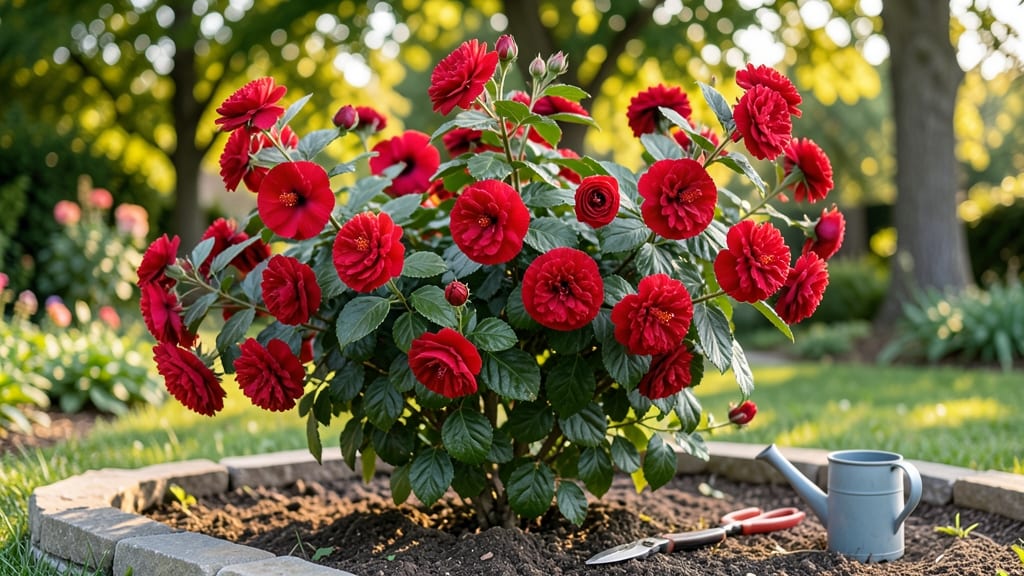
Double-flowering red althea (Hibiscus syriacus) transforms any garden into a pollinator paradise with its bold crimson blooms and fragrant blue-green foliage. I planted mine last spring, and by summer, bees and butterflies were already claiming it as their favorite spot.
The secret lies in its cold-hardy nature—it thrives where many shrubs fail, even in Zone 4 winters.
Start with well-draining soil and full sun for best results. Most nurseries sell bare-root plants in early spring, but you can also transplant container-grown shrubs. Water deeply once a week after planting, then taper off as roots establish—overwatering is the fastest way to kill these tough beauties.
A light feeding with balanced fertilizer in early spring keeps them blooming like crazy.
Pruning is where the magic happens. Cut back dead wood in late winter, then shape in early summer after flowering. The more you prune, the bushier and fuller it grows, with those stunning double blooms appearing in waves from midsummer through fall.
My neighbors now ask for cuttings—everyone wants a piece of this pollinator magnet.
This shrub handles everything from drought to urban pollution, making it perfect for city gardens, foundation plantings, or as a standalone statement piece. Once established, it’s nearly maintenance-free, just like I promised. Ready to grow yours?
📚 In This Guide
- What you need
- Instructions
- Tips and common mistakes
- Wrapping up and next steps
What you need
- ● Double flowering red althea plants (1-3 plants, depending on desired coverage; choose Hibiscus syriacus cultivars like 'Red Heart' or 'Diana').
- ● Well-draining soil (amend with compost or organic matter if your soil is heavy clay).
- ● Sunlight access (full sun to partial shade; at least 6 hours of direct sunlight daily).
- ● Watering can or hose (with a gentle spray nozzle for delicate watering).
- ● Mulch (2-3 inches of organic mulch like shredded bark or straw to retain moisture).
- ● Balanced fertilizer (10-10-10 or 20-20-20, applied 2-3 times per year during growing season).
- ● Garden gloves (to protect hands while planting or pruning).
- ● Trowel or shovel (for digging planting holes, 12-18 inches deep).
- ● Pruning shears (sharp and sterilized for trimming dead or overgrown branches).
- ○ Staking or support (optional) (for young plants in windy areas; use 3-4 ft bamboo stakes).
- ○ pH testing kit (optional) (ideal soil pH: 6.5-7.5; adjust with lime or sulfur if needed).
Step-by-Step guide to cultivating double flowering red althea
Here's how to establish this striking, cold-tolerant perennial with minimal fuss.
🌱 Step 1: Select and Prepare the Planting Site
Choose a location with partial shade to full sun—althaea thrives in morning sunlight with afternoon shade in hotter climates. The soil should drain well but retain moisture; amending heavy clay with 2-3 inches of compost improves aeration. I dig a hole twice as wide as the root ball to encourage outward growth rather than crowding.
Test the soil pH—althaea prefers slightly acidic to neutral (6.0-7.0). If your soil tests alkaline, mix in 1-2 pounds of peat moss per square yard to adjust. Avoid fresh manure, which can burn delicate roots. Water the hole thoroughly before planting to settle the soil and eliminate air pockets.
🌿 Step 2: Plant Bare-Root or Container-Grown Althea
For bare-root plants, soak the roots in lukewarm water for 30 minutes before planting to revive them. Position the crown 1-2 inches below soil level—this prevents rot while encouraging strong basal growth. Spread the roots horizontally in the hole, ensuring they aren’t bent or curled.
If using container-grown plants, remove it from the pot and loosen the root ball gently. The top of the root ball should sit flush with the surrounding soil—never deeper. Backfill with native soil mixed with 1 cup of compost, tamping lightly to eliminate air gaps. Water deeply to settle everything into place.
☀️ Step 3: Establish Watering and Mulching Routine
Water deeply once a week during the first growing season, allowing the soil to dry slightly between waterings. Overwatering causes root rot, while underwatering stresses the plant. You’ll know moisture is right when the top 2 inches of soil feel dry to the touch. Mulch with 2-3 inches of shredded bark to retain moisture and suppress weeds.
After the first year, althea becomes drought-tolerant once established. Reduce watering to every 10-14 days unless your region experiences extreme heat. The mulch layer also regulates soil temperature, protecting roots in winter and summer. Avoid letting mulch touch the stems directly—keep it 2 inches away to prevent rot.
✂️ Step 4: Prune for Shape and Encourage Blooms
Deadhead spent blooms every 2-3 weeks during the flowering season to prolong blooms and redirect energy to new growth. Cut back stems to the first set of healthy leaves below the faded flowers. This prevents seed formation and encourages a second flush of blooms in late summer.
In early spring, trim back one-third of the plant’s height to shape it and remove any dead or weak stems. Althea responds well to pruning, so don’t hesitate to cut back aggressively—it’ll bounce back with lush foliage. Avoid pruning in fall, as the plant needs its leaves to store energy for winter.
⏰ Step 5: Winter Care for Cold-Hardy Althea
Althea is USDA zones 3-9 hardy, but young plants benefit from winter protection. After the first hard frost, apply a 3-inch layer of shredded leaves or straw mulch over the base. This insulates roots and prevents heaving during freeze-thaw cycles. Remove the mulch in early spring once new growth appears.
Established plants rarely need winter care, but if your region experiences prolonged sub-zero temperatures, wrap the crown with burlap or frost cloth for extra protection. Althea’s deep roots store moisture, so supplemental watering isn’t necessary unless your winter is exceptionally dry. Spring growth will signal it survived the cold successfully.
Tips & tricks for perfect double flowering red althea cultivation
These insider strategies will help you cultivate thriving althea plants with minimal effort while maximizing their stunning blooms and cold-hardiness.
Soil Preparation Insight: When amending heavy clay soil with 2-3 inches of compost in Step 1, I recommend mixing in a handful of perlite or coarse sand to further improve drainage. This prevents waterlogging while maintaining moisture retention—critical for althea's deep roots. The wider hole you dig (twice the root ball size) creates space for lateral root expansion, which translates to stronger plants that handle drought better once established.
Planting Technique: For container-grown althea in Step 2, gently squeezing the root ball before planting helps break up any circling roots that might form in pots. This encourages outward growth rather than root-bound development. When positioning the crown 1-2 inches below soil level, use your finger to create a small trench around the base—this creates a moisture reservoir that prevents crown rot while encouraging basal growth.
Watering Wisdom: The "dry top 2 inches" test in Step 3 works best when checked in the morning after dew has evaporated. I've found that watering in the early morning (before 10am) prevents fungal issues while allowing the soil to dry properly between waterings. For the first year, consider using a moisture meter—althaea's preference for "dry slightly between waterings" can be tricky to judge by feel alone.
Pruning Precision: When deadheading every 2-3 weeks in Step 4, I use clean, sharp pruners and make cuts just above the first set of healthy leaves. This technique prevents disease transmission between cuts. For spring pruning, I recommend cutting back one-third of the plant's height in stages—first remove any dead wood, then shape the plant gradually over 2-3 days. This reduces shock while still encouraging vigorous new growth.
Pro Tips for Double Flowering Red Althea
- These insider strategies will help you cultivate thriving althea plants with minimal effort while maximizing their stunning blooms and cold-hardiness.
- Soil Preparation Insight: When amending heavy clay soil with 2-3 inches of compost in Step 1, I recommend mixing in a handful of perlite or coarse sand to further improve drainage.
- Planting Technique: For container-grown althea in Step 2, gently squeezing the root ball before planting helps break up any circling roots that might form in pots.
Frequently asked questions
When is the best time to plant double flowering red Althea?
Plant your double flowering red Althea in early spring or early fall when the soil is workable but not frozen. Avoid extreme heat or cold, as these conditions can stress young roots. If you’re in a mild climate, fall planting gives roots time to establish before summer’s heat. Pro tip: Amend heavy clay soil with compost to improve drainage—this shrub hates soggy feet!
How cold-hardy is double flowering red Althea, really?
This variety thrives in USDA Zones 5–9, making it one of the toughest Althea cultivars. While mature plants handle down to 10°F (-12°C), young plants may need winter protection (like mulch or burlap wraps) in Zone 5. Pro tip: In harsh winters, prune back dead stems in early spring—new growth is vigorous and resilient!
Why aren’t my red Althea flowers blooming as much as expected?
Double blooms can be finicky! If your plant is underperforming, check these fixes:
- Prune in late winter: Cut back ⅓ of the oldest stems to encourage fresh growth and more flowers.
- Feed lightly: Use a balanced, low-nitrogen fertilizer (like 10-10-10) in early spring.
- Full sun is key: At least 6–8 hours of sunlight daily maximizes blooms.
- Deadhead spent blooms: Snip faded flowers to redirect energy to new buds.
Can I grow double flowering red Althea in containers?
Yes! Choose a large container (at least 18–24 inches wide) with drainage holes and use a well-draining potting mix (add perlite or sand). Container-grown Althea needs regular watering (keep soil evenly moist but not soggy) and winter protection (move to a sheltered spot or use frost cloth). Pro tip: Dwarf varieties like ‘Red Velvet’ are ideal for pots!
What pests or diseases should I watch for with double flowering red Althea?
This shrub is generally pest-resistant, but keep an eye out for:
- Aphids or spider mites: Spray with water or use neem oil if you spot sticky residue or tiny webs.
- Powdery mildew: Avoid overhead watering and improve airflow to prevent this fungal issue.
- Root rot: Ensure proper drainage—Althea hates wet feet!
Wrapping up and next steps
Growing double flowering red Althea is a rewarding journey that brings vibrant color, fragrance, and life to your garden while supporting pollinators! 🌸 With its cold-hardy nature and stunning blooms, this shrub is perfect for both beginners and seasoned gardeners alike.
Whether you’re drawn to its striking flowers or its low-maintenance charm, this plant is sure to become a standout feature in your outdoor space.
Ready to transform your garden? Start by gathering your supplies and follow the steps outlined in this guide. Plant your Althea, enjoy its beauty, and watch as it thrives—your garden (and local pollinators!) will thank you!