
Blooming
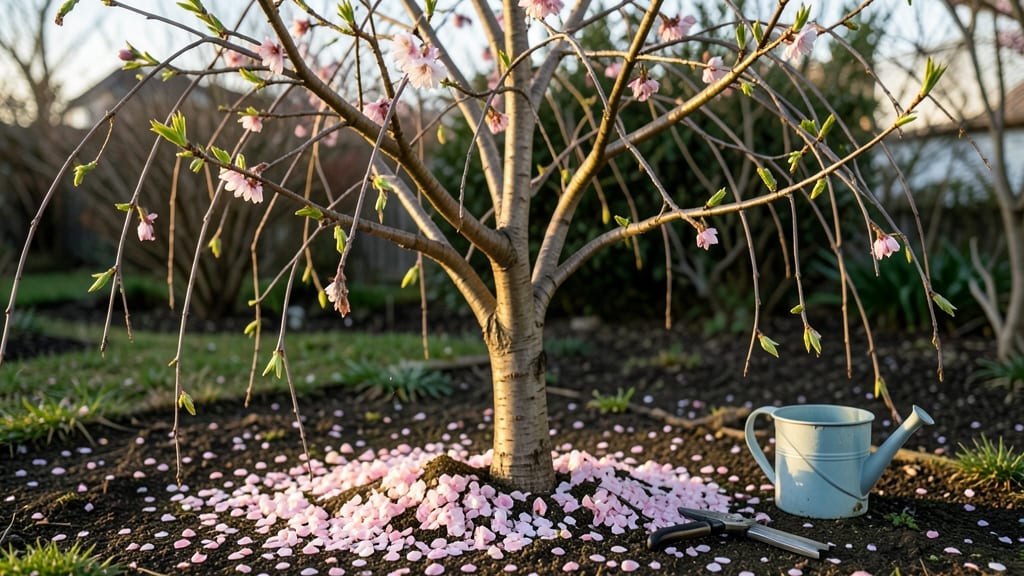
Once the cherry blossom tree after flowers fall off, the real work begins—but don’t panic. ✨ The right pruning now keeps your tree healthy, blooming strong next spring, and free from overgrowth or disease.
I’ve learned the hard way that skipping this step leads to tangled branches and fewer flowers later.
Start with light pruning in late spring or early summer, removing only dead, crossing, or weak branches. Avoid heavy cuts—cherry blossoms bloom on last year’s growth, so aggressive pruning now steals next year’s flowers.
Grab your pruners, gloves, and a ladder, and focus on opening up the center for better airflow and light penetration.
You’ll end up with a tree that looks as good in summer as it did in bloom season—lush green leaves, sturdy branches, and no surprise fruit (which can sap energy from flowering).
The key is timing: prune after the flowers fade but before new growth starts, and you’ll set your tree up for years of vibrant spring displays.
For summer care, water deeply once a week (more in extreme heat), watch for pests like aphids, and fertilize lightly in early summer. Winter prep comes next—mulch the base and protect young trees from cold snaps. Your tree will thank you with stronger blooms next spring.
📚 In This Guide
- What you need
- Instructions
- Tips and common mistakes
- Wrapping up and next steps
What you need
- ● Pruning shears: Bypass pruners (sharp, clean, and sterilized with rubbing alcohol or a 10% bleach solution). Pro tip: 💡 Invest in high-quality shears (e.g., Felco or Fiskars) for precision cuts.
- ● Loppers: For branches ½ to 1.5 inches thick—look for bypass-style loppers with a 6- to 8-inch handle.
- ● Pruning saw: For thicker branches (1.5+ inches); a curved-tooth pruning saw (like the blank">Fiskars X27) minimizes tear-out.
- ● Gloves: Heavy-duty gardening gloves (e.g., blank">Wolfe Gardens brand) to protect against thorns and sap.
- ○ Disposable pruning bags: 1–2 13-gallon bags to collect debris (optional but handy for cleanup!).
- ● Rubbing alcohol (70%+) or bleach: For sterilizing tools between cuts to prevent disease.
- ○ Sealing wax (optional): Pruning sealant (e.g., Tanglefoot Tree Wound Pruning Sealer) for cuts larger than ½ inch.
- ● Timing: Prune immediately after flowering (late spring) or during dormant season (winter). Avoid pruning during active growth or when buds are forming!
- ● Weather: Choose a dry, overcast day to reduce stress on the tree and prevent sap bleeding.
- ● Safety gear: Safety glasses (to shield from debris) and long sleeves/pants (cherry blossoms can have sharp thorns!).
- ● Tree health check: Inspect the tree for signs of disease (e.g., cankers, fungal spots) or pests before pruning.
- ● 🔥 Mark your cuts: Use chalk or tape to outline branches to remove before cutting—helps avoid over-pruning!
- ● ✨ Disinfect tools: Wipe blades with rubbing alcohol before and after each cut to prevent spreading pathogens.
- ● 🌡️ Work in layers: For large branches, make a notch cut first, then a relief cut, and finally the final cut to avoid bark tearing.
Step-by-step instructions for pruning a cherry blossom tree after flowering
Here's how to refresh your tree while keeping it strong for next spring's blooms.
🌿 Step 1: Assess the Tree's Structure Before Pruning
Start by examining your cherry blossom tree from all sides. Look for branches that have already lost their flowers—they'll look bare while others still have lingering buds. This is your natural pruning guide. Focus on removing branches that cross or rub against each other, as these create wounds that invite disease.
I always check for dead or diseased branches first—these are easy to spot because they're brown, brittle, or have no leaves. Run your hand along the branch to feel for soft spots or oozing sap, which means decay has set in. Mark these branches with a piece of twine or flagging tape so you don't miss them during pruning.
✂️ Step 2: Remove Dead Wood and Shape the Canopy
Using sharp bypass pruners, cut out the marked dead branches at their point of origin. Make your cuts just outside the branch collar—the swollen area where the branch meets the trunk. This ensures the tree can seal the wound properly. For branches thicker than 1 inch, use a pruning saw instead.
Next, thin out the canopy by removing about 20% of the smallest branches. Focus on branches growing inward or downward—they create shade inside the tree and reduce air circulation. Step back frequently to visualize the tree's shape. You want an open, vase-like form that allows sunlight to reach all parts of the tree.
🌱 Step 3: Encourage New Growth for Next Season
After removing the deadwood and thinning, look for branches that still have flower buds but haven't bloomed yet. These are your future bloomers—leave them alone. However, if you see clusters of buds on a branch that's too small or weak, you can lightly prune it back by about one-third to redirect energy to stronger growth.
This is also the time to prune any suckers—those vigorous shoots growing from the base or trunk. Cut them off at ground level immediately. They sap energy from the main tree and can lead to multiple trunks, which weakens flowering. Finish by cleaning up all the pruned branches and disposing of them away from your yard to prevent disease spread.
💧 Step 4: Post-Pruning Care for Recovery
Water the tree deeply right after pruning to help it recover. The roots need moisture to support new growth, especially if you've removed a significant number of branches. Mulch around the base with 2-3 inches of organic mulch, keeping it clear of the trunk. This helps retain moisture and protects roots from temperature swings.
Monitor the tree over the next few weeks for signs of stress like yellowing leaves or wilting. If you see these, it's usually a sign of over-pruning. Cherry blossoms are sensitive, so never remove more than 25% of the canopy in one season. Instead of drastic cuts, focus on gradual shaping over several years.
Tips & tricks for pruning a cherry blossom tree after flowering
Here's what nobody tells you about keeping your cherry blossom tree healthy after those stunning blooms fade.
Timing is Everything: Prune right after the flowers fall but before new leaves emerge. This gives your tree time to heal before spring growth begins. I've seen trees pruned too early (right after blooming) develop weak buds for next year's flowers. Wait until the petals have completely dropped and you notice new leaf buds swelling but haven't opened yet.
Tool Prep Matters: Sterilize your pruning tools with rubbing alcohol before you start. This prevents spreading disease between cuts. I always sharpen my bypass pruners first—they make cleaner cuts that heal faster. For branches over 1 inch thick, a pruning saw with a fine-tooth blade will give you more control than trying to force the pruners.
Visualize the Shape: Step back every 5-10 minutes to check your progress. Cherry blossom trees naturally grow in a vase shape, so aim to maintain that open center. Remove branches that grow straight up or down—they create a "lollipop" shape that blocks sunlight from reaching the center. Think of your tree like a sculpture: every cut should improve the overall form.
Post-Pruning Care: The 2-3 inches of organic mulch mentioned in Step 4 isn't just decoration—it's crucial. Spread it in a donut shape around the trunk, keeping it clear of the base. This helps regulate soil temperature and retain moisture, both critical for recovery. I've seen trees pruned in summer without proper mulching develop stress cracks in their bark during winter.
Pro Tips for Cherry Blossom Tree After Flowers Fall Off
- Here's what nobody tells you about keeping your cherry blossom tree healthy after those stunning blooms fade.
- Timing is Everything: Prune right after the flowers fall but before new leaves emerge.
- Tool Prep Matters: Sterilize your pruning tools with rubbing alcohol before you start.
Frequently asked questions
Got questions about what happens to your cherry blossom tree after those stunning pink blooms drift away? You’re not alone! Here are some of the most common concerns—and expert answers—to keep your tree thriving all year.
What should I do with my cherry blossom tree once the flowers fall off?
After blooms drop, focus on pruning to shape the tree and encourage new growth. Remove dead, crossing, or weak branches (aim for 15–25% of the canopy at a time). Avoid heavy pruning in late summer—wait until late winter or early spring (before buds swell) for best results. Pro tip: Sterilize pruners with rubbing alcohol to prevent disease spread!
How long does it take for a cherry blossom tree to recover after pruning?
Recovery time varies, but most trees bounce back within 4–8 weeks if pruned correctly. New leaves and shoots will emerge quickly in spring. For dramatic cuts (like removing large branches), monitor for stress—water deeply and avoid fertilizing until regrowth starts. Signs of trouble? Yellowing leaves or wilting may mean over-pruning or disease.
Can I still enjoy my cherry blossom tree if I don’t prune it after the flowers fall?
Yes! While pruning enhances health and blooms, cherry blossoms can survive without it. However, unpruned trees may become overcrowded, weak, or disease-prone. You’ll miss out on bigger, healthier flowers next season and risk structural issues (like weak branches). Think of pruning as a long-term investment—like a spa day for your tree!
Will pruning my cherry blossom tree after flowering affect next year’s blooms?
Not if done right! Prune after flowers fade (but before summer heat) to avoid cutting off next year’s flower buds. Timing is key: Late winter/early spring pruning (for dormant trees) or light summer pruning (to shape) won’t harm blooms. Just avoid heavy cuts in fall—that’s when buds form!
What if my cherry blossom tree’s leaves turn brown or fall off after flowering?
Brown/yellow leaves are often normal post-bloom, but sudden defoliation could signal stress, pests (like aphids), or disease (e.g., powdery mildew). Check for:
- Pests: Inspect undersides of leaves for bugs.
- Fungus: White powdery spots? Prune infected branches and treat with neem oil.
- Environmental stress: Too much water, drought, or extreme heat?
If unsure, a local arborist can diagnose the issue. Preventative tip: Mulch around the base and water deeply (but not soggy) to reduce stress!
Wrapping up and next steps
Watching your cherry blossom tree thrive beyond its stunning spring bloom is a rewarding journey!
Remember, pruning after the flowers fall isn’t just about shaping—it’s about inviting new growth, health, and beauty for seasons to come. 🌸 With the right tools, timing, and techniques, you’re setting the stage for a vibrant, resilient tree that will grace your space year after year.
Ready to take the next step? Mark your calendar for late spring or early summer—when your tree is ready to shine again—and grab those pruners! Start small, observe your tree’s response, and enjoy the process. Every cut is a step toward a longer, happier life for your blossom beauty.