
Companion Plants
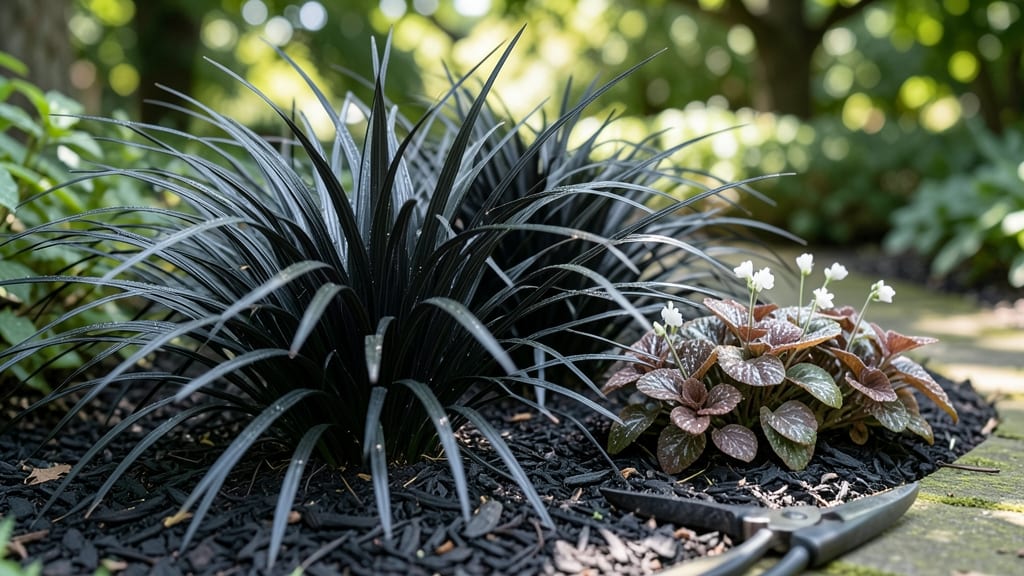
The allure of black plants and flowers drew me in after I spotted how they turned a shadowy nook into a humming, buzzing haven—especially when set against silvery leaves and blue spikes like salvia.
The contrast isn't just striking; it's magnetic for bees and butterflies that flock to the deep hues year-round.
Start with three easy standouts: Ophiopogon 'Nigrescens' for its glossy black grass texture, Dahlias 'Black Narcissus' for velvety blooms, and Roses 'Black Baccara' for classic romance. These thrive in partial shade where lighter plants would fade, and their rich tones make silver foliage like lamb's ear or artemisia glow.
The key? Group them in odd-numbered clusters for natural flow.
You'll end up with a garden that feels like a midnight stroll through a forest—lush, mysterious, and alive with movement. The blue spikes of salvia or agapanthus will pop against the black backdrop, while pollinators can't resist the contrast. Plant near seating areas to enjoy the show up close.
Works for moon gardens, gothic borders, or even a single statement pot. The dark palette hides dirt and complements modern or cottage-style homes equally. Let's bring the drama to your space!
📚 In This Guide
- What you need
- Instructions
- Tips and common mistakes
- Wrapping up and next steps
What you need
- ● Black plants & flowers: Ophiopogon planiscapus 'Nigrescens' (Black Mondo Grass) – 3-5 plants
- ● Heuchera 'Black Beauty' (Coral Bells) – 2-3 plants
- ● Lamium maculatum 'Black Beauty' (Spotted Dead Nettle) – 3-5 plants
- ● Calla palustris (Wild Calla) – 3-5 tubers
- ● Black mondo grass (Ophiopogon japonicus 'Nigrescens') – 5-7 plants
- ● Black mondo grass (Ophiopogon planiscapus 'Nigrescens') – 3-5 plants
- ● Blue-spiked pollinator magnets: Agastache 'Blue Fortune' (Hyssop) – 3-5 plants
- ● Salvia nemorosa 'May Night' (Perennial Sage) – 2-3 plants
- ● Echinacea purpurea 'Blue Dawn' (Coneflower) – 3-5 plants
- ● Lavandula angustifolia 'Hidcote' (Lavender) – 3-5 plants
- ● Garden trowel or hand shovel
- ● Pruning shears (for shaping and maintenance)
- ● Garden gloves (to protect your hands)
- ● Measuring tape or ruler (for spacing plants)
- ● Compost or well-draining potting mix (if container gardening)
- ● Mulch (to retain moisture and suppress weeds)
- ● Watering can or hose with a gentle spray nozzle
- ● Decorative garden stones or pebbles (for borders)
- ● Pollinator-friendly fertilizer (low in phosphorus, high in potassium)
- ● Butterfly or bee house (to attract more pollinators)
- ● Garden stakes or cages (for taller plants like Echinacea)
- ● Slow-release plant food (for long-term growth)
How to create a dramatic year-round pollinator garden using black-foliaged plants
This striking design transforms any space with bold contrast while supporting pollinators year-round.
Select Black-Foliaged Plants for Maximum Impact
Start with four key black-leaved plants that provide seasonal interest: Ophiopogon planiscapus 'Nigrescens' (black mondo grass), Heuchera 'Plum Pudding' (deep purple-black foliage), Carex 'Black Jack' (black sedge), and Lamium maculatum 'Black Beauty' (purple-black foliage). Each offers different textures and growth habits—grass-like, mounding, and trailing—to create visual depth.
For flowers, pair these with blue-spiked Salvia nemorosa 'May Night' and Agastache 'Blue Fortune' to create striking color contrast against the black foliage. These perennials thrive in full sun and attract pollinators relentlessly. I always choose varieties with drought tolerance—once established, they’ll require minimal watering beyond seasonal rainfall.
Design for Year-Round Structure and Bloom
Arrange plants in odd-numbered groupings (3, 5, or 7) to create natural focal points. Place the black mondo grass at the front for its low, cascading habit, while the Heuchera and Carex form the mid-height layer. The Lamium will spill over edges, adding movement. This layered approach ensures no season feels bare—evergreen foliage provides winter structure, while spring and summer blooms fill gaps.
Include two evergreen shrubs like Ilex 'Stokes Acre' (black holly) or Pittosporum 'Black Velvet' to anchor the design and provide winter interest. These shrubs also offer year-round pollinator support, with berries that birds adore. I like to position them at the back of the bed, where their dark foliage creates a dramatic backdrop for the perennials.
Prepare the Soil for Dark Foliage Success
Black-leaved plants thrive in well-draining, slightly acidic soil with high organic matter. Amend your native soil with 3 inches of compost and 1 part peat moss to maintain moisture while preventing root rot. These plants are sensitive to soggy conditions, so avoid heavy clay without amendment. I always test soil pH—aim for 5.5-6.5—and adjust with sulfur if needed.
For containers, use a lightweight mix of 50% potting soil, 30% perlite, and 20% coconut coir. This blend ensures aeration while retaining enough moisture for black foliage, which can scorch in dry conditions. Water deeply after planting to settle the soil around roots, then let the top 1 inch dry out before watering again. Overwatering is the fastest way to lose these prized plants.
Mulch and Maintain for Pollinator-Friendly Growth
Apply 2 inches of shredded bark mulch in early spring to suppress weeds and retain moisture. Dark mulch also enhances the contrast of black foliage while breaking down slowly to feed the soil. Avoid dyed mulches—they can leach chemicals that harm pollinators. I like to refresh the mulch layer annually in late winter, just before new growth begins.
Fertilize lightly in early spring with a balanced, slow-release fertilizer (10-10-10). Black-leaved plants don’t need heavy feeding—they’re more about foliage drama than lush growth. Deadhead spent blooms on the Salvia and Agastache to encourage continuous flowering and attract more pollinators. Prune back any leggy growth in early spring to maintain compact, vibrant foliage.
Extend the Season with Strategic Planting
For winter interest, add Ornamental Grasses like Miscanthus 'Malepartus' (black bamboo) or Pennisetum 'Black Prince'. Their upright forms provide structure when perennials go dormant. In early spring, plant bulbs like Allium 'Black Samurai' beneath the grasses—their deep purple-black blooms will emerge just as the grasses begin to brown.
To support year-round pollinators, include native plants like Echinacea 'Black Beauty' (dark purple coneflowers) and Rudbeckia 'Black Beauty' (black-eyed susans). These provide nectar from early summer through fall, while the black foliage plants offer shelter and nesting sites. Even in winter, evergreen foliage provides critical habitat—don’t underestimate its value to bees and butterflies.
Tips & tricks for stunning black-foliaged pollinator gardens
Creating a bold, year-round pollinator haven starts with these essential strategies that elevate your design beyond ordinary garden beds.
Layering for Seasonal Impact: In Step 2, when arranging your plants in odd-numbered groupings, focus on height contrast—the black mondo grass should cascade just above soil level while the Heuchera and Carex create a mid-height foundation. This layered approach prevents visual monotony and ensures every season has something to offer. I've found that positioning the Lamium 'Black Beauty' at the edges creates natural movement that draws the eye through the garden, especially when it trails over container edges or garden borders.
Soil Science for Dark Foliage: The soil preparation in Step 3 is where many gardeners go wrong. While the instructions call for 3 inches of compost and 1 part peat moss, I recommend adding a handful of worm castings to the mix—this provides immediate microbial activity that helps black foliage plants establish more quickly. These plants are particularly sensitive to soil compaction, so avoid walking on newly planted beds until roots are fully established (typically 6-8 weeks).
Pollinator Magnet Techniques: To maximize the impact of your blue-spiked Salvia and Agastache from Step 1, plant them in clusters of at least 5 stems together. This creates a visual impact that pollinators can't resist while providing continuous blooms. I've noticed that bees are particularly drawn to these plants when they're positioned near the black foliage—it creates a striking contrast that makes the blue flowers stand out even more to pollinators.
Winter Interest Secrets: For the winter interest plants mentioned in Step 5, consider adding a few bare-root roses like 'Black Baccara' to your design. These provide architectural interest during winter months while offering spring blooms that complement your black foliage. The key is to plant them slightly deeper than recommended—their canes will emerge higher from the soil, creating that dramatic winter silhouette you're aiming for.
Pro Tips for Black Plants And Flowers
- Creating a bold, year-round pollinator haven starts with these essential strategies that elevate your design beyond ordinary garden beds.
- This layered approach prevents visual monotony and ensures every season has something to offer.
- Soil Science for Dark Foliage: The soil preparation in Step 3 is where many gardeners go wrong.
Frequently asked questions
Got questions about adding black plants and flowers to your garden? You’re not alone! Here are some common queries—and their answers—to help you create a stunning, pollinator-friendly space with ease.
What are the best black plants and flowers for beginners?
Start with hardy, low-maintenance options like Lamium maculatum ‘Black Beauty’ (a striking ground cover) or Oenothera ‘Black Prince’ (a night-blooming evening primrose). For bold color, Calla lilies (Zantedeschia aethiopica) or Black Baccara roses add drama with minimal fuss. These thrive in partial shade and attract pollinators like bees and butterflies!
When is the best time to plant black foliage or flowers?
Plant in early spring (after the last frost) or early fall for the best root establishment. Black callas and hostas, for example, prefer cooler soil temps, so avoid planting in scorching summer heat. If starting from seeds (like Black Prince evening primrose), sow indoors 6–8 weeks before your last frost date.
Do black plants actually attract pollinators, or is it just a myth?
Not all black plants attract pollinators, but many do—especially those with contrasting nectar guides (like white or yellow stripes) or fragrant blooms. Black Baccara roses and Lamium ‘Purple Dragon’ (deep purple-black) are magnets for bees and butterflies. Pair them with bright flowers (e.g., purple coneflowers) to create a high-contrast, pollinator-friendly buffet!
How do I keep black foliage from fading in full sun?
Black plants often lose their deep hue in intense sunlight due to chlorophyll production. To preserve their color, plant them in partial shade (3–6 hours of sun) or use them as accent plants near taller, sun-loving species. Mulch with black plastic or gravel to reduce heat stress, and water deeply in the morning to prevent leaf scorch.
What are some great alternatives if I can’t find black plants locally?
Try deep purple or near-black varieties that mimic the look: ‘Black Lace’ elderberry, ‘Purple Smoke’ bush bean, or ‘Midnight’ sweet potato vine. For flowers, ‘Black Adder’ coleus or ‘Obsidian’ heuchera offer similar drama. Online nurseries (like Fast-Growing-Trees.com) often carry rare black foliage—just check shipping zones!
Pro Tip: Pair black plants with silver or chartreuse foliage (like ‘Limelight’ hydrangea) to make them pop and create a modern, high-contrast garden. The color contrast will draw attention to your pollinator haven year-round!
Wrapping up and next steps
From the striking black calla lilies to the bold blue spikes of Agapanthus, these plants don’t just add drama—they create a thriving ecosystem for pollinators year-round. 🐝 Their deep hues and unique textures make them standout stars in any garden, proving that beauty and function go hand in hand.
Whether you’re a seasoned gardener or just starting out, these plants offer a low-maintenance way to elevate your outdoor space while supporting local wildlife.
Ready to transform your garden? Start small—pick one or two black or deep-blue varieties to test the waters, then expand as you fall in love with their impact. Grab your gloves, and let’s get growing! 🌱