
Trees
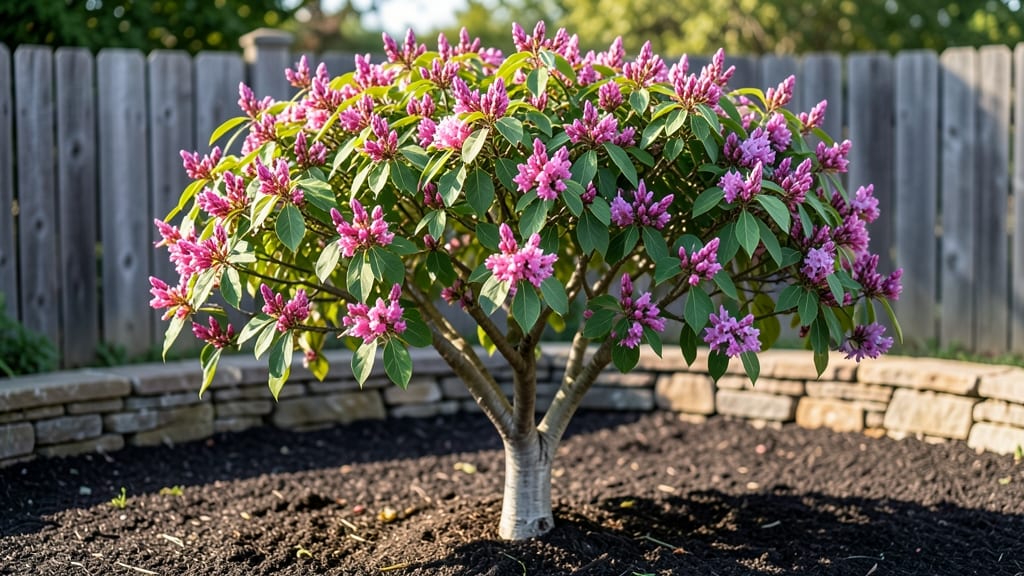
The identification of white flowering trees can transform your backyard into a seasonal spectacle—just like that first dogwood I saw, its delicate petals unfolding against spring’s fresh green like a hidden treasure. The key is noticing details most people overlook: leaf shape, bark texture, and flower structure.
Start with the basics: smooth bark often signals younger trees, while rough or scaly bark hints at maturity. Flower clusters? Some trees like serviceberry have small, star-shaped blooms, while magnolias boast large, waxy petals that smell like honey.
Even the way leaves attach to branches tells a story—alternate vs. opposite patterns can narrow it down fast.
You’ll quickly recognize standouts like cherry blossoms with their abundant, fragrant clusters or bridalwreath spirea with its layered, cloud-like blooms. Each tree has unique care needs, but most thrive in full sun to partial shade with well-drained soil—once you identify them, growing tips become much clearer.
This guide covers regional favorites and tricky look-alikes, so you’ll never confuse a flowering pear for a crabapple again. Grab your phone’s camera and let’s start identifying—your yard’s spring transformation begins with just a few close-up observations.
📚 In This Guide
- What you need
- Instructions
- Tips and common mistakes
- Wrapping up and next steps
What you need
- ● Field Guide or Smartphone App: A printed guidebook (e.g., National Audubon Society Field Guide to North American Trees) or
- ● A tree ID app like PictureThis, LeafSnap, or iNaturalist (free/paid options available).
- ● Hand Lens (10x Magnification): 1–2 lenses (for examining leaf veins, bark texture, or tiny flowers).
- ● Notebook & Pen: 1 small notebook (or digital note-taking app) to record observations.
- ● Measuring Tape (6–10 ft): 1 tape for noting tree height, trunk diameter, or branch spacing.
- ● Camera or Smartphone: 1 device (for capturing close-ups of flowers, leaves, and bark).
- ● Pruning Shears (Small, Sharp): 1 pair (for safely collecting leaf/branch samples—only if necessary).
- ● Gloves (Nitrile or Gardening): 1 pair (to protect hands from thorns or sap).
- ● Tree Bark Rubbing Kit: 1 set (includes paper and crayon for capturing bark texture patterns).
- ● Portable Printer or Instant Camera: 1 device (to print a quick reference guide or snap Polaroids of key features).
- ● GPS Device or Offline Maps: 1 tool (to log tree locations for future visits or sharing discoveries).
- ● Field Binoculars (8x42 Magnification): 1 pair (for spotting high-canopy flowers or wildlife in the tree).
How to identify white flowering trees in the field
Mastering these visual clues will help you confidently distinguish among common white-blossoming species.
Examine Flower Cluster Shape and Arrangement
Start by assessing how the flowers grow on the branches. Rounded, flat-topped clusters often indicate hawthorn or serviceberry, while hanging, drooping racemes suggest silverbell or fringe tree. Look closely at the flower arrangement—some trees like dogwood have solitary blooms on short stems, while others like crabapple produce dense, spherical clusters.
Here's the thing—flower shape is your first real clue. A five-petaled, star-like bloom points toward serviceberry, while four-petaled, urn-shaped flowers are characteristic of dogwood. Take a moment to count petals if possible; this simple observation narrows down possibilities dramatically.
Assess Leaf Characteristics and Growth Pattern
Leaf shape and arrangement provide critical identification markers. Alternate, oval leaves with serrated edges suggest flowering cherry, while compound leaves with 5-9 leaflets point to hawthorn. Pay attention to leaf texture—some species like serviceberry have smooth, matte leaves, while others like fringe tree feature slightly fuzzy undersides.
Look at how leaves attach to stems. Simple leaves (single blade) appear on dogwood and serviceberry, while pinnately compound leaves (multiple leaflets) are common in hawthorn. This distinction alone eliminates half the possibilities in many regions. I always check leaf arrangement first—it's one of the most reliable traits.
Observe Branch and Bark Features
Mature bark texture often reveals the species. Smooth, gray bark that develops shallow furrows with age typically belongs to serviceberry, while dark, deeply fissured bark suggests hawthorn. Younger trees may have smooth bark, but look for developing patterns that indicate future characteristics.
Examine branch structure too. Spreading, horizontal branches often indicate crabapple, while upright, vase-shaped growth points toward flowering cherry. Some trees like silverbell have weeping branches that create a distinctive silhouette. These structural clues become more apparent as the tree matures.
Note Flowering Time and Seasonal Cues
Timing is everything in identification. Early spring bloomers (March-April) are typically flowering cherry or silverbell, while late spring (May-June) white flowers suggest serviceberry or hawthorn. Keep a seasonal calendar in your head—this eliminates many possibilities immediately.
Watch for secondary clues like fruit development. Small red berries appearing after white flowers indicate serviceberry, while persistent pomes (apple-like fruits) suggest crabapple. These post-bloom characteristics often provide definitive confirmation when flowers fade.
Verify with Additional Sensory Details
Engage all your senses. Fringe tree has a distinctive faint, sweet fragrance, while hawthorn often emits a stronger, more honey-like scent. Some species like dogwood produce mildly sweet flowers, while others remain nearly odorless. This sensory information helps distinguish between visually similar species.
Don't overlook the habitat clues either. Trees growing in wet areas are likely to be silverbell, while those in dry, sunny locations often prove to be serviceberry. Pay attention to surrounding vegetation—this ecological context provides valuable supporting evidence for your identification.
Tips & tricks for mastering white flowering tree identification
Field identification can feel overwhelming, but these refined techniques will sharpen your eye for those subtle details that separate one species from another.
Petal Counting Precision: In Step 1, when examining flower clusters, I can't stress enough how critical petal counting becomes—especially for dogwood versus serviceberry. Use a small magnifying glass if needed to distinguish between five delicate petals (serviceberry) and four broader petals (dogwood). The difference in petal structure often correlates with leaf arrangement you'll examine in Step 2, creating a cross-verification system that eliminates guesswork.
Leaf Texture Contrast: The distinction between smooth serviceberry leaves and fuzzy fringe tree undersides becomes more apparent when you run your fingers along the leaf surface. In Step 2, I always test this texture by gently brushing my thumb across the underside—this tactile check often reveals what visual inspection might miss, particularly in low light conditions. This sensory approach works especially well when distinguishing between visually similar species like hawthorn and flowering cherry.
Bark Pattern Development: For Step 3's bark analysis, focus on the transition zones where smooth bark begins developing furrows. Serviceberry typically shows these shallow furrows first on the lower trunk, while hawthorn develops deep fissures that run vertically. I recommend examining multiple trees of the same species to observe how bark patterns evolve with age—this comparative approach builds pattern recognition that becomes instinctive over time.
Seasonal Timing Cross-Referencing: When applying Step 4's seasonal cues, I find it helpful to create a mental matrix of species by bloom time and habitat. For example, silverbell's early spring bloom (March-April) combined with wetland habitat creates a unique profile that eliminates many other possibilities. This layered approach—combining timing with environmental context—reduces identification to a systematic process rather than random observation.
Pro Tips for White Flowering Trees Identification
- Field identification can feel overwhelming, but these refined techniques will sharpen your eye for those subtle details that separate one species from another.
- Petal Counting Precision: In Step 1, when examining flower clusters, I can't stress enough how critical petal counting becomes—especially for dogwood versus serviceberry.
- Leaf Texture Contrast: The distinction between smooth serviceberry leaves and fuzzy fringe tree undersides becomes more apparent when you run your fingers along the leaf surface.
Frequently asked questions
Got questions about identifying white flowering trees? You’re not alone!
Here are some of the most common queries—plus quick answers to help you spot, care for, or troubleshoot these stunning specimens with confidence.
What’s the easiest way to tell white flowering trees apart?
Look for three key markers: flower shape, leaf arrangement, and bark texture. For example, dogwoods have broad, opposite leaves and clusters of small white blooms, while serviceberry trees feature delicate, drooping flowers and edible berries. Snap a photo and compare it to our field guide!
When is the best time to see white flowers on these trees?
Timing varies by species, but most bloom in spring (March–May). Bradford pear and crabapple trees often flower first (late winter/early spring), while magnolias may bloom as early as January in mild climates. Check local frost dates—late frosts can delay or damage buds.
Can I plant a white flowering tree in my yard? What’s low-maintenance?
Top picks for beginners:
- Serviceberry (tolerates shade, drought-resistant once established)
- Eastern redbud (fast-growing, thrives in partial sun)
- Hawthorn (hardy, supports wildlife)
My white flowering tree isn’t blooming—what’s wrong?
Common culprits:
- Late frost damaged buds (protect young trees with frost cloth).
- Too much shade (most need 6+ hours of sun).
- Over/under-watering (keep soil moist but well-drained).
- Pests (aphids, borers)—inspect leaves/bark for signs.
Are there white flowering trees that work in containers or small spaces?
Yes! Try these compact options:
Tree
Mature Size
Notes
Dwarf Korean lilac
6–8 ft tall
Fragrant blooms, drought-tolerant.
Japanese tree lilac
10–15 ft tall
Slow-growing, great for urban gardens.
Potted crabapple
8–12 ft tall
Needs large container (20+ gallons), full sun.
Pro tip: Use self-watering pots and mulch to retain moisture. Dwarf varieties often need annual pruning to control shape.
Wrapping up and next steps
Identifying white flowering trees can turn your outdoor adventures into a rewarding journey of discovery! 🌸 From the delicate blooms of the Dogwood to the bold statement of the Bradford Pear, each species offers unique beauty and ecological benefits.
By focusing on key markers like flower shape, leaf structure, and seasonal timing, you’ll sharpen your skills and feel more connected to nature.
Ready to put your new knowledge to the test? Grab your field guide, step outside, and start exploring! Share your finds with fellow plant enthusiasts or even contribute to local tree-mapping projects—every observation helps preserve our green spaces. Happy identifying! 🌳✨