
Flowers
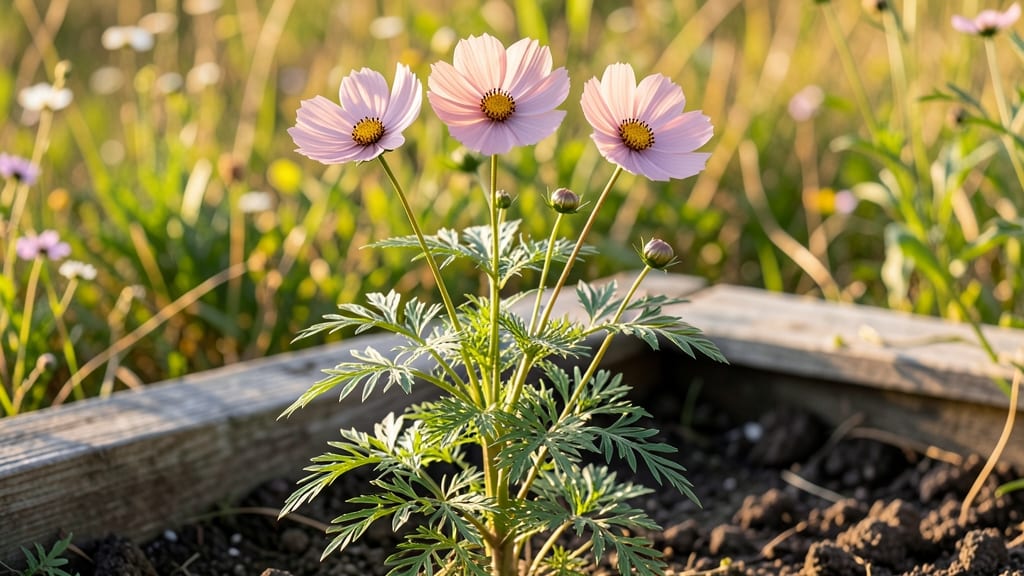
Growing cosmos flowers to their tallest possible height starts with the right variety and a few simple tricks that most gardeners overlook. 🌻 I’ve watched ‘Cosmos bipinnatus’ reach 7 feet in my own garden—no fancy pruning, just the right conditions and a little patience.
The key isn’t constant trimming (contrary to what you might read) but letting those stems stretch naturally while giving them the support they crave.
These sun-loving annuals thrive in well-draining soil and full sun, but the real secret to sky-high stems is consistent moisture without soggy roots. Think of them like drought-tolerant giants—water deeply once a week rather than daily shallow sips.
And here’s the game-changer: stake them early with bamboo canes or a simple tomato cage to prevent flopping before they even start reaching for the sky.
By late summer, you’ll be harvesting vibrant, long-lasting blooms that tower over your garden beds. The flowers stay fresh for days in vases, and the stems keep producing new blooms with almost no effort.
No deadheading required—just let nature do its thing. The only pruning you’ll need is trimming back leggy stems in spring to encourage bushier growth.
Works perfectly for cut flower gardens, wildflower meadows, or even as dramatic backdrops in mixed borders. Once you try this method, you’ll never settle for short cosmos again. Ready to grow sky-high stems with minimal fuss?
📚 In This Guide
- What you need
- Instructions
- Tips and common mistakes
- Wrapping up and next steps
What you need
- ● Cosmos seeds: Choose a variety like Cosmos bipinnatus or Cosmos sulphureus for maximum height (1-2 packets, ~50-100 seeds total). Opt for organic, non-GMO seeds for best results.
- ● Well-draining potting mix: 10-15 lbs of a lightweight, airy blend (60% peat moss/coco coir, 30% perlite, 10% compost). Avoid heavy garden soil.
- ● Containers or garden bed: Containers: 5-6" deep pots (1 per plant) with drainage holes. Use black or dark-colored pots to absorb heat (3-5 pots for a cluster effect).
- ● Garden bed: Full sun (6+ hours/day) and loose, sandy soil. Amend with compost if your soil is clay-heavy.
- ● Fertilizer: A balanced, slow-release granular fertilizer (10-10-10 or 5-5-5 ratio, 1 tbsp per plant at planting). Avoid high-nitrogen fertilizers.
- ● Gloves: A pair of gardening gloves (nitrile or cotton) to protect your hands.
- ● Trowel or small shovel: For planting seeds and transplanting seedlings.
- ● Watering can or hose with a gentle spray nozzle: Cosmos hates soggy roots—water lightly but consistently.
- ○ Stakes or cages (optional but recommended): Bamboo stakes (3-4 ft tall) or tomato cages to support tall stems and prevent flopping.
- ● Soft plant ties (1-2 per stake) to secure stems without damaging them.
- ● Pruning shears: Small, sharp shears for minimal deadheading (only if needed).
- ● Sunlight access: A south-facing window, grow light, or outdoor space with full sun.
- ● Patience: Cosmos grows fastest in warm weather (60-75°F), so start seeds indoors 4-6 weeks before the last frost.
- ● Skip the transplant shock: Direct-sow seeds after the last frost for hardier, taller plants.
- ● Let them lean: Cosmos stems naturally bend toward sunlight—embrace it for a dramatic, cascading look!
- ● Deadhead sparingly: Only remove faded blooms if you want longer stems (skip this for maximum height).
Step-by-step guide to growing towering cosmos blooms
Here's how to coax cosmos into reaching their full, effortless height—with just a few key techniques.
🌱 Step 1: Select and Prepare the Perfect Site
Cosmos thrive in full sun—at least 6-8 hours daily—so choose a spot that gets unfiltered light. I always pick the sunniest corner of my garden because cosmos reward generous sunlight with taller, sturdier stems. Avoid low-lying areas where cold air pools, as cosmos dislike damp roots.
Loosen the soil to a depth of 12 inches using a garden fork. Cosmos have deep taproots that need room to establish. Amend the soil with 2-3 inches of compost mixed into the top 6 inches—this ensures nutrients reach those roots without competition. A well-drained site is critical; cosmos hate soggy feet and will flop or rot if planted in heavy clay.
☀️ Step 2: Time Planting for Maximum Height
For the tallest cosmos, plant seeds 4-6 weeks before your last frost date. Early starts give roots time to establish before the heat of summer, which is when cosmos really stretch toward the sky. I like to direct-sow seeds ¼ inch deep in rows spaced 18 inches apart—this gives stems room to grow without crowding.
Keep the soil consistently moist but not waterlogged until germination, which takes 7-14 days depending on your climate. Once seedlings appear, thin them to 12-18 inches apart—this spacing prevents overcrowding, which weakens stems and reduces height. Watch for the first true leaves (the second set after the initial cotyledons) to confirm thinning is safe.
💧 Step 3: Water and Feed for Sky-High Growth
Water cosmos deeply once a week during dry spells, aiming for 1 inch of water per week. I water at the base in the early morning to prevent fungal issues from evening moisture. Overhead watering can cause mildew, especially in humid climates, so a soaker hose or drip irrigation keeps foliage dry.
Feed cosmos with a balanced, low-nitrogen fertilizer (like 10-10-10) every 4-6 weeks starting when they reach 12 inches tall. Too much nitrogen makes them bushy but short, while phosphorus and potassium encourage tall, sturdy stems. I also sprinkle compost tea around the base monthly for a natural nutrient boost without burning roots.
✂️ Step 4: Prune Strategically to Encourage Height
Here's the thing—cosmos don't need much pruning, but a little goes a long way for height. When stems reach 18 inches tall, pinch back the tips just above a set of leaves. This redirects energy downward, producing stronger roots and taller, more robust growth. I repeat this every 6-8 weeks through the season.
Deadhead spent blooms by snipping stems 2-3 inches below the flower head—this encourages more blooms and prevents the plant from diverting energy into seed production. Avoid cutting into woody stems; cosmos are tender and heal best when pruned at leaf nodes. If a stem flops, tie it to a stake early to prevent permanent bending.
Tips & tricks for perfecting towering cosmos blooms
Real talk: The difference between 3-foot cosmos and 5-foot giants often comes down to these overlooked details.
Sunlight Strategy: While 6-8 hours of sun is the minimum, I've found that positioning cosmos in the western part of your garden gives them an extra boost. The late-afternoon sun strengthens stems more than morning light, especially in cooler climates. If your garden has partial shade, choose the sunniest microclimate you can find—cosmos will lean toward light, but weak stems can't support themselves properly.
Soil Depth Secret: That 12-inch soil depth isn't just about roots—it's about creating an underground reservoir. I always add 1 cup of perlite to every 5 gallons of soil mix to improve drainage. This prevents the soggy soil that makes cosmos flop, while still keeping moisture available for those deep taproots. The top 6 inches where you mix compost should be loose enough to let roots spread easily.
Germination Timing: The 7-14 day germination window can be tricky—especially if you're watching for those first true leaves. I've learned to mark my calendar 10 days after planting and check daily. If nothing emerges by day 14, lightly scratch the soil surface to see if seeds need more light. Sometimes they're just waiting for the perfect conditions beneath the surface.
Pruning Precision: When you pinch back at 18 inches, focus on the main stem first—this is where the plant directs its growth energy. I use clean, sharp scissors to avoid crushing stems, and always make cuts at a 45-degree angle just above a leaf node. This technique creates stronger branching later in the season, which translates to more blooms and better support for those towering stems.
Pro Tips for Tallest Cosmos Flower
- Real talk: The difference between 3-foot cosmos and 5-foot giants often comes down to these overlooked details.
- Sunlight Strategy: While 6-8 hours of sun is the minimum, I've found that positioning cosmos in the western part of your garden gives them an extra boost.
- Soil Depth Secret: That 12-inch soil depth isn't just about roots—it's about creating an underground reservoir.
Frequently asked questions
Got questions about growing the tallest cosmos flowers with ease? You’re in the right place! Here are answers to the most common queries—from care tips to troubleshooting—so you can enjoy sky-high blooms without the fuss.
How tall can cosmos flowers really grow?
With the right care, cosmos (especially ‘Bright Lights’ or ‘Sensation’ varieties) can reach 4 to 6 feet tall—or even taller in ideal conditions! They thrive in full sun and well-drained soil, so give them space (3–4 feet apart) and watch them soar. Pro tip: Deadhead spent blooms to encourage continuous growth!
When is the best time to plant cosmos seeds for maximum height?
Plant cosmos seeds 2–3 weeks after your last frost date (spring) for early blooms. They germinate quickly (5–10 days) and grow fast—so don’t worry about timing! For fall blooms, sow seeds in late summer. Cosmos are annuals, so they’ll self-seed if you let them go to seed.
Can I grow cosmos in containers? Will they still get tall?
Yes! Cosmos adapt well to large containers (12+ inches deep), but their height may be slightly limited (3–4 feet). Use a lightweight potting mix and a trellis or cage to support their stems. Just ensure the pot has drainage—cosmos hate soggy roots. Bonus: Container-grown cosmos bloom earlier!
Why aren’t my cosmos flowers growing tall? Troubleshooting tips!
If your cosmos are stunted, check these fixes:
Not enough sun? Cosmos need 6+ hours of direct sunlight daily.
Overcrowded? Thin seedlings to 12–18 inches apart for better airflow.
Poor soil? Amend with compost—they prefer lean, well-draining soil.
Pests? Watch for aphids or slugs; use neem oil or diatomaceous earth if needed.
Still struggling? Try a balanced fertilizer (10-10-10) at planting time for a boost.
What’s a low-maintenance alternative to cosmos for tall flowers?
If cosmos aren’t your style, try these easy-care tall flowers:
- Sunflowers – Fast-growing and dramatic (up to 12 feet!).
- Hollyhocks – Classic cottage-garden height (3–6 feet) with minimal pruning.
- Statice – Drought-tolerant and long-lasting (2–4 feet).
- Russian Sage – Silvery foliage and tall spikes (3–5 feet) with almost no fuss.
All three thrive in full sun and handle heat like champs!
Wrapping up and next steps
The tallest cosmos flower isn’t just a stunning addition to your garden—it’s a low-maintenance superstar that thrives with minimal effort! With the right soil, sunlight, and occasional pruning, you can enjoy sky-high blooms that bring joy and color to your outdoor space.
Whether you're a seasoned gardener or just starting, these vibrant flowers prove that beauty and ease go hand in hand.
Ready to grow your own cosmos paradise? 🌱 Start by gathering your supplies, following the care tips shared, and watch your garden transform into a breathtaking display. Happy planting—your future tall cosmos blooms will thank you!