
Flowers
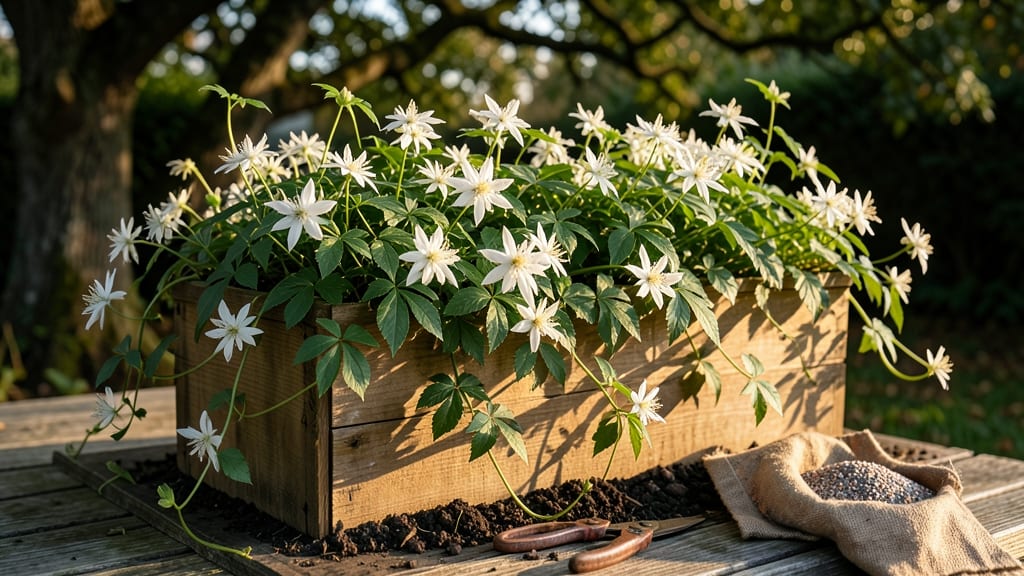
Sweet autumn clematis (Clematis terniflora) turns your garden into a fragrant, late-season dream with its cascading white blooms and intoxicating jasmine-like scent. 🌿 I planted mine last spring, and by August, the vines were already heavy with flowers, filling the air with a sweet, heady aroma that lasts until frost.
The secret lies in its love for sun, its adaptable nature, and a little strategic pruning—none of which is complicated once you know the basics.
You’ll need a sturdy trellis or fence for support, well-draining soil (amend with compost if yours is heavy clay), and a spot with full sun to partial shade. This clematis thrives in zones 4-9, making it one of the hardiest varieties, and it’s surprisingly low-maintenance once established.
The real magic happens in late summer when the flowers appear in waves, creating a canopy of delicate blossoms that attract bees and butterflies.
Pruning is the key to keeping it blooming all season—cut back last year’s growth in early spring, then trim lightly after each flush of flowers to encourage more blooms. Yellowing leaves? That’s often a sign of powdery mildew, which you can prevent with proper spacing and fungicide sprays if needed.
With the right care, your sweet autumn clematis will reward you with fragrance and beauty for years to come.
Perfect for pergolas, arbors, or even as a ground cover along fences, this clematis adapts to almost any garden style. Whether you’re a beginner or a seasoned gardener, it’s a plant that delivers effortless elegance. Let’s get you growing one that’ll make your garden the talk of the neighborhood!
📚 In This Guide
- What you need
- Instructions
- Tips and common mistakes
- Wrapping up and next steps
What you need
- ● Sweet Autumn Clematis Plant: 1-2 bare-root or container-grown plants (choose disease-resistant varieties like 'Jackmanii' or 'Durandii' for best results).
- ● Well-draining potting mix: 3-5 gallons (for container gardening) or enriched garden soil (for in-ground planting). Mix with compost for nutrients.
- ● Support structure: Trellis (6-8 ft tall)
- ● Arbor or pergola (for larger spaces)
- ● Strong stakes or wire mesh (for climbing guidance)
- ● Mulch: 2-3 inches of organic mulch (e.g., shredded bark or straw) to retain moisture and suppress weeds.
- ● Fertilizer: Balanced, slow-release granular fertilizer (10-10-10 ratio) or organic options like composted manure.
- ● Gardening gloves (to protect hands from thorns).
- ● Trowel or spade (for digging planting holes).
- ● Pruning shears (sharp, sterilized for clean cuts).
- ● Watering can or hose with a gentle spray nozzle (for deep watering).
- ● Measuring tape or ruler (to ensure proper spacing).
- ○ Optional: Soil pH test kit (ideal pH: 6.0-7.0 for clematis).
- ● Plant ties or soft twine (to secure vines to supports).
- ● Slow-release watering system (e.g., drip irrigation for containers).
- ● Sunlight: Full sun (6+ hours/day) for optimal blooms and fragrance.
- ● Space: Minimum 6-10 ft vertical clearance (depending on variety).
- ● Soil: Well-draining, slightly acidic to neutral soil. Amend heavy clay with sand or peat moss.
- ● Patience: Clematis can take 1-2 years to establish and fully bloom!
Step-by-Step guide to planting and caring for sweet autumn clematis
Here's how to get your fragrant climbing beauty thriving from day one.
🌱 Step 1: Choose the Perfect Planting Location
Sweet autumn clematis needs a spot with 6-8 hours of sunlight daily but benefits from afternoon shade in hot climates. I always look for a location with a sturdy trellis or arbor within 3-6 feet of the planting site—this vine will grow aggressively once established. The trellis should be at least 8 feet tall to support its mature height.
Check the soil drainage by digging a 12-inch hole and filling it with water. If it drains in less than an hour, your site is perfect. If water pools after 2 hours, you'll need to amend the soil with 3 inches of compost to improve drainage. This vine hates soggy roots, which can lead to root rot and stunted growth.
🪴 Step 2: Plant with Proper Spacing and Support
Dig a hole twice as wide as the root ball but no deeper. Sweet autumn clematis should be planted at the same depth it was in the nursery container. Gently loosen the roots if they're circling and position the plant so the top of the root ball sits 1-2 inches below soil level—this helps protect the stem from rot and encourages strong root growth.
Install your trellis or support structure before planting. I like to use a sturdy metal arbor or a heavy-duty wooden lattice. Secure the base firmly in the ground so it doesn't shift as the vine grows. Fill the hole halfway with native soil, then place the plant and backfill with the remaining soil, pressing gently to remove air pockets. Water deeply to settle everything.
☀️ Step 3: Provide Consistent Watering and Pruning
Water your clematis deeply once a week for the first month, then reduce to every 10-14 days once established. You'll know it's time to water when the top 2-3 inches of soil feel dry. This vine is drought-tolerant once mature, but young plants need consistent moisture to establish strong roots. Avoid overhead watering to prevent fungal diseases.
Here's the pruning secret: Sweet autumn clematis blooms on new growth, so you can prune it aggressively in late winter or early spring. Cut back all stems to 2-3 feet tall using clean, sharp pruners. This encourages bushier growth and more abundant blooms. Remove any dead or diseased stems immediately—they can spread problems to healthy growth. I also deadhead spent flowers in fall to keep the plant tidy and encourage next year's blooms.
✂️ Step 4: Support Growth and Maintain Health
As your clematis grows, gently weave the vines through the trellis to encourage upward growth. Don't let the vines tangle—they'll struggle to reach sunlight and produce fewer flowers. I like to use soft plant ties to secure the main stems to the trellis, but avoid tying individual leaves or small stems, which can restrict growth.
Fertilize in early spring with a balanced 10-10-10 fertilizer applied at half strength. This gives your clematis the nutrients it needs without overwhelming it. I also add a 2-inch layer of mulch around the base to retain moisture and regulate soil temperature. Keep the mulch 3-4 inches away from the stem to prevent rot. Watch for pests like aphids or spider mites—if you see them, treat with insecticidal soap immediately.
Tips & tricks for perfect sweet autumn clematis growth
Took me a while to figure these out, so here goes—your fragrant vine will thank you.
Sunlight Strategy: While 6-8 hours of sunlight is ideal, I've found that in hot climates, providing afternoon shade (especially between 2-4 PM) prevents leaf scorch and actually extends the blooming season. Watch for leaves turning yellow—this is your plant begging for relief from intense afternoon rays. A simple shade cloth or positioning near a north-facing wall works wonders.
Root Health Secret: The drainage test in Step 1 is crucial—don't skip it! If your soil drains slowly (water still present after 2 hours), mix in that 3 inches of compost but also consider adding perlite or coarse sand to create better aeration. I once planted mine in heavy clay soil without amending it properly, and it took two years for the roots to recover from the stress.
Pruning Precision: When cutting back stems to 2-3 feet in late winter, make your cuts just above a leaf node where new growth will emerge. I like to use clean pruners and dip them in rubbing alcohol between cuts to prevent spreading any potential diseases from dead stems. This also gives you a clear visual of where new shoots will appear in spring.
Support System: Installing your trellis before planting makes all the difference. I've seen vines struggle when planted first—they grow in awkward directions trying to reach support. A sturdy metal arbor is my top recommendation because it won't warp over time like some wooden options. For larger gardens, consider a freestanding trellis that can support the vine's weight as it grows heavier with blooms.
Pro Tips for Sweet Autumn Clematis Flower
- Took me a while to figure these out, so here goes—your fragrant vine will thank you.
- Sunlight Strategy: While 6-8 hours of sunlight is ideal, I've found that in hot climates, providing afternoon shade (especially between 2-4 PM) prevents leaf scorch and actually extends the blooming season.
- Root Health Secret: The drainage test in Step 1 is crucial—don't skip it!
Frequently asked questions
Got questions about growing and enjoying your sweet autumn clematis? You’re not alone! Here are some of the most common queries—plus quick, practical answers to keep your fragrant vine thriving.
How do I encourage my sweet autumn clematis to bloom more?
Prune strategically! Cut back last year’s growth (the thick, woody stems) in early spring, leaving only 4–6 healthy buds. Avoid over-fertilizing with high-nitrogen feed—opt for a balanced 10-10-10 or phosphorus-rich fertilizer in early summer to boost blooms. Deadhead spent flowers to redirect energy to new growth.
Why isn’t my sweet autumn clematis blooming this year?
Several factors could be at play:
- Pruning too late—cut stems back before buds swell in spring.
- Poor sunlight—this vine needs 6+ hours of sun daily.
- Overcrowded roots—ensure it has room to sprawl (10+ feet!).
- Drought stress—keep soil consistently moist but well-drained.
What pests or diseases should I watch for?
Sweet autumn clematis is generally tough, but keep an eye out for:
- Clematis wilt (fungal)—remove infected stems and improve airflow.
- Aphids or spider mites—spray with neem oil or a strong water jet.
- Powdery mildew—water at the base (not leaves) and prune for airflow.
Can I grow sweet autumn clematis in containers?
Yes, but it needs deep pots (20+ gallons) with fast-draining soil and a support trellis. Use a balanced fertilizer every 4–6 weeks and water consistently—containers dry out quicker! Choose a large, sturdy pot (like fabric grow bags) to prevent tipping.
What’s a good alternative if I want a fragrant vine but less maintenance?
Try these low-fuss, fragrant options:
- Star jasmine (Trachelospermum jasminoides)—evergreen, drought-tolerant, and highly fragrant (but slower-growing).
- Clematis ‘Jackmanii’—reblooms with purple flowers and fewer pests (prune differently—cut back 1/3 in spring).
- Honeysuckle (Lonicera)—fast-growing, attracts pollinators, and thrives in partial shade.
Wrapping up and next steps
The Sweet Autumn Clematis isn’t just a stunning addition to your garden—it’s a fragrant, low-maintenance superstar that keeps blooming until frost! 🌸 Whether you’re drawn to its intoxicating scent, vibrant flowers, or easy care, this vine is a dream for any gardener. Ready to transform your outdoor space?
Take the next step: sketch a spot in your garden where its cascading beauty can shine, then gather your supplies. With a little patience and love, you’ll soon be rewarded with a fragrant, ever-blooming canopy that turns heads—and fills the air with sweetness!