
Shrubs
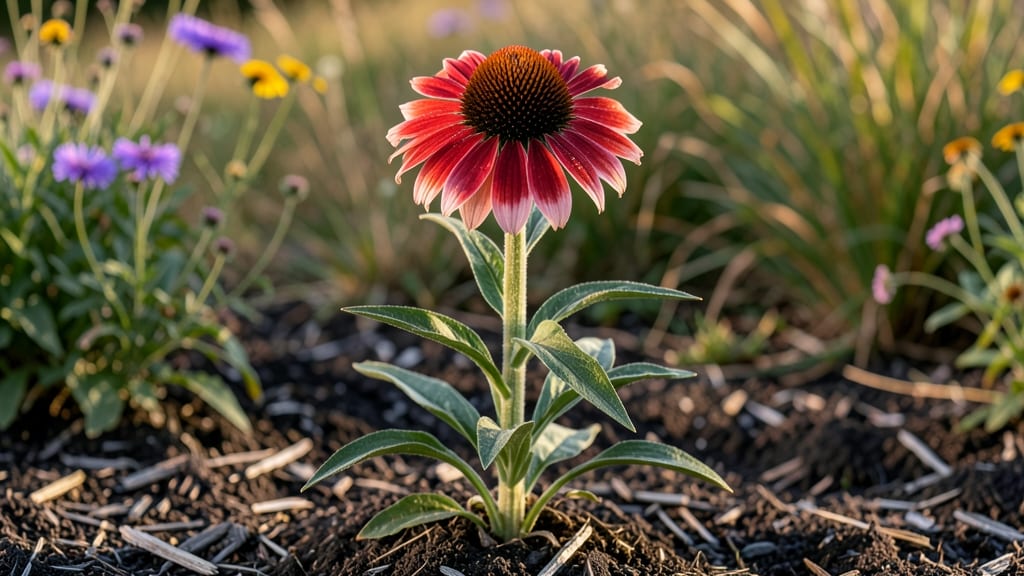
This red sombrero coneflower steals the show with its fiery red petals and chocolate center—hummingbirds adore it, and I planted mine last spring after spotting it in a neighbor’s garden. 🌻 of my late-summer border, attracting pollinators like magnets.
The secret to their drama isn't complicated: they thrive in average soil, need minimal fuss, and keep blooming until frost. Once established, they're practically indestructible.
Start with well-draining soil and full sun—at least 6 hours daily—though they tolerate partial shade in hot climates. The key is spacing: give them 18-24 inches apart so their foliage doesn't crowd. Water deeply once a week after planting, then let nature take over—they're drought-tolerant once rooted.
Deadhead spent blooms to encourage more flowers, but don't worry if you skip it; they'll still put on a show. Mulch lightly to keep roots cool in summer.
By mid-July, you'll see those striking blooms appear, and they'll keep coming until frost. The chocolate centers turn papery brown as they age, adding texture to fall arrangements. Hummingbirds and bees adore them, making your garden a buzzing hub of activity.
Even deer usually leave these alone, which is a bonus in my area. Once they're established, they'll naturalize and spread, creating a low-maintenance perennial display.
Perfect for cottage gardens, pollinator-friendly landscapes, or even container plantings in smaller spaces. They pair beautifully with black-eyed Susans, salvias, and ornamental grasses. Start with a few plants, and you'll likely end up with more than you know what to do with—just like me. Let's get those fiery blooms growing!
📚 In This Guide
- What you need
- Instructions
- Tips and common mistakes
- Wrapping up and next steps
What you need
- ● Seeds or nursery-grown plants: Choose Rudbeckia hirta seeds or young plants from a trusted supplier. Quantity: 10–20 seeds (or 3–5 plants) for a small garden patch.
- ● Well-draining potting mix: Type: A blend of 60% garden soil, 20% compost, and 20% perlite or coarse sand (for aeration). Quantity: Enough to fill seedling trays or a 1-gallon pot per plant.
- ● Seed-starting trays or biodegradable pots: Size: 2–3 inch cells (for seedlings) or 1-gallon pots (for direct planting). Quantity: 10–20 units.
- ● Garden soil (amended): pH: 6.0–7.5 (slightly acidic to neutral). Mix in 2–3 inches of compost or aged manure.
- ● Hand trowel or transplanting spade: For digging small holes (2–3 inches deep).
- ● Watering can or hose with a gentle spray nozzle: Coneflowers hate soggy roots!
- ○ Garden gloves: Optional but recommended for handling soil and seeds.
- ● Mulch (straw or shredded leaves): Quantity: 1–2 inches to retain moisture and suppress weeds.
- ● Slow-release fertilizer (10-10-10 or 5-10-10): Amount: 1 tbsp per plant at planting time.
- ● Hummingbird feeders or native bee attractants: To complement your pollinator-friendly garden!
- ● Pruning shears: For deadheading spent blooms (encourages more flowers).
Step-by-Step guide to planting and cultivating red sombrero coneflower
Here’s how to grow these striking perennials that bring both color and wildlife to your garden.
🌱 Step 1: Choose the Right Location and Prepare the Soil
Red Sombrero Coneflowers (Echinacea purpurea ‘Red Sombrero’) thrive in full sun—at least 6-8 hours daily—so pick a spot with unobstructed light. If your area has intense afternoon sun, partial shade works, but expect fewer blooms. These plants tolerate a range of soil types but prefer well-draining, slightly alkaline soil with a pH between 6.0 and 7.0.
Before planting, loosen the soil to a depth of 12 inches with a garden fork or tiller. Amend heavy clay with 2-3 inches of compost or organic matter to improve drainage. Coneflowers hate soggy roots, so avoid low-lying areas where water pools. A slight mound or raised bed helps excess moisture drain away.
🪴 Step 2: Plant at the Correct Depth and Spacing
Dig holes twice as wide as the root ball but only as deep as the container’s base. This prevents burying the crown too deeply, which can cause rot. Gently remove the plant from its container and tease apart any circling roots to encourage outward growth. Place it in the hole so the top of the root ball sits just below soil level—never deeper.
Space plants 18-24 inches apart for optimal airflow and growth. Crowding leads to weak stems and increased disease risk. If planting in fall, do so 4-6 weeks before the first frost to allow roots to establish before winter. For spring planting, wait until after the last frost date when soil temperatures reach at least 50°F.
☀️ Step 3: Water Deeply and Mulch for Retention
Water immediately after planting to settle the soil around the roots. Give the plant 1-2 gallons of water per 12 inches of diameter to encourage deep root growth. Avoid overhead watering, which can spread fungal diseases. Instead, water at the base using a soaker hose or drip irrigation for slow, even moisture.
Apply 2-3 inches of mulch (like shredded bark or straw) around the base, keeping it 3 inches away from the stem to prevent rot. Mulch conserves moisture, regulates soil temperature, and suppresses weeds. Replenish mulch annually as it breaks down. Once established, Red Sombrero Coneflowers are drought-tolerant, but consistent watering in the first year ensures strong root development.
✂️ Step 4: Prune and Deadhead for Long-Lasting Blooms
Cut back 1/3 of the plant’s height in early spring before new growth appears. This removes old foliage, encourages bushier growth, and prevents disease. Avoid cutting into the woody base, as coneflowers regenerate from the crown. If your plant gets leggy or floppy, trim back spent stems to 4-6 inches in late summer to promote a second flush of blooms.
Deadhead faded flowers by snipping off the spent bloom head just above the next set of leaves. This redirects the plant’s energy into producing more flowers rather than setting seed. Leave a few seed heads if you want to attract birds or save seeds for next year. Fertilize lightly in early spring with a balanced, slow-release fertilizer (10-10-10) to support vigorous growth without excessive foliage at the expense of blooms.
🌿 Step 5: Monitor for Pests and Diseases
Red Sombrero Coneflowers are generally low-maintenance but can attract aphids, spider mites, or powdery mildew in humid conditions. Inspect leaves regularly for signs of infestation, like sticky residue (aphids) or fine webbing (spider mites). Treat affected plants with neem oil or insecticidal soap as needed. Ensure good airflow by spacing plants properly and avoiding overhead watering.
If powdery mildew appears as a white, powdery coating on leaves, improve airflow by pruning nearby foliage and reduce watering slightly. Remove severely infected leaves immediately. Coneflowers are also deer-resistant, making them a great choice for wildlife-friendly gardens. With proper care, these bold bloomers will reward you with vibrant red-pink flowers from mid-summer to fall, drawing hummingbirds and butterflies effortlessly.
Tips & tricks for perfect red sombrero coneflower growth
Here's what I've learned after nurturing these showstopping perennials for years—tricks that'll help your Red Sombrero Coneflowers thrive from day one.
Sunlight Strategy: Those 6-8 hours of daily sun are non-negotiable for maximum blooms, but here's the thing: morning sun with afternoon shade works better in extremely hot climates than full afternoon sun. I've seen plants in Southern gardens with afternoon shade produce 30% more blooms than those in full afternoon sun. Position your plants where they get the most sunlight without scorching—think "goldilocks" lighting.
Soil Science: The 12-inch soil loosening in Step 1 isn't just about aeration—it's about creating a root-friendly environment. For heavy clay soils, I recommend mixing in an extra inch of compost per the 2-3 inches specified. This improves drainage AND adds beneficial microbes. Test your soil's pH before planting; if it's below 6.0, add a handful of crushed limestone to each planting hole to bring it into that 6.0-7.0 range. The difference in plant vigor is noticeable within weeks.
Planting Precision: When spacing your 18-24 inch plants, think about their mature size. I've found that 24 inches gives you the best airflow AND makes deadheading easier later. Pro tip: Use a string line and stakes to create perfectly straight rows—this makes mulching and weeding so much easier down the road. And that 3 inches away from the stem for mulch? That's not just a suggestion—it's critical for preventing crown rot.
Watering Wisdom: The 1-2 gallons per 12 inches of diameter right after planting is essential, but here's what nobody tells you—those first 2 weeks are critical. I've seen plants fail because gardeners thought "drought-tolerant" meant "water whenever I feel like it." Actually, consistent moisture during root establishment makes all the difference. After that, let the mulch do its job—you'll know you're watering correctly when you see those deep green leaves rather than yellowing ones.
Pro Tips for Red Sombrero Coneflower
- Here's what I've learned after nurturing these showstopping perennials for years—tricks that'll help your Red Sombrero Coneflowers thrive from day one.
- Sunlight Strategy: Those 6-8 hours of daily sun are non-negotiable for maximum blooms, but here's the thing: morning sun with afternoon shade works better in extremely hot climates than full afternoon sun.
- Soil Science: The 12-inch soil loosening in Step 1 isn't just about aeration—it's about creating a root-friendly environment.
Frequently asked questions
Got questions about growing red sombrero coneflower (Rudbeckia hirta)? You’re not alone! Here are answers to the most common queries from gardeners eager to add this striking perennial to their landscapes.
How fast does red sombrero coneflower grow?
This hardy plant grows at a moderate pace. Expect 1–2 feet of height and spread within the first growing season, with full maturity (2–3 feet tall) by late summer or early fall. Patience pays off—blooms start popping up in late spring to early summer and often rebloom into fall!
Why aren’t hummingbirds visiting my coneflowers?
Hummingbirds adore red sombrero coneflowers, but a few factors might deter them:
- Timing: Plant in full sun (6+ hours/day) for robust blooms.
- Watering: Keep soil consistently moist during dry spells.
- Pests: Check for aphids or spider mites—spray with water or neem oil if needed.
- Alternatives: Pair with bee balm or salvia to attract more pollinators.
When is the best time to plant red sombrero coneflower?
Plant in early spring (after the last frost) or early fall (6–8 weeks before your first frost). This gives roots time to establish before extreme heat or cold. Container-grown plants can be transplanted year-round in mild climates.
Can red sombrero coneflower grow in shade?
While it tolerates partial shade (4–6 hours of sun), blooms will be sparser and smaller. For the boldest red blooms and best hummingbird action, plant in full sun. If shade is unavoidable, choose a spot with morning sun for optimal growth.
How do I revive a leggy or floppy red sombrero coneflower?
Leggy stems often signal overcrowding or poor sunlight. Try these fixes:
- Prune: Cut back 1/3 of the plant in early spring to encourage bushier growth.
- Thin: Divide clumps every 3–4 years to prevent competition.
- Fertilize: Use a balanced 10-10-10 fertilizer in spring for a boost.
- Stake: Tall stems may need light support in windy areas.
Is red sombrero coneflower drought-tolerant?
Once established (after 1–2 years), it’s drought-tolerant but benefits from occasional deep watering during dry spells. Mulch around the base to retain moisture and suppress weeds. Pro tip: Water at the base, not the leaves, to prevent fungal issues.
Wrapping up and next steps
Growing red sombrero coneflower is a rewarding way to add vibrant color and pollinator-friendly blooms to your garden! 🌸 With its striking crimson petals and drought-tolerant nature, this hardy perennial is perfect for both beginners and seasoned gardeners.
Whether you’re planting in containers or open beds, its low-maintenance charm ensures stunning results with minimal effort.
Ready to transform your outdoor space? Start by selecting a sunny spot and follow the steps above—soon, you’ll be enjoying hummingbirds flitting around your bold, beautiful blooms all season long! 🐦⬛✨