
Flowers
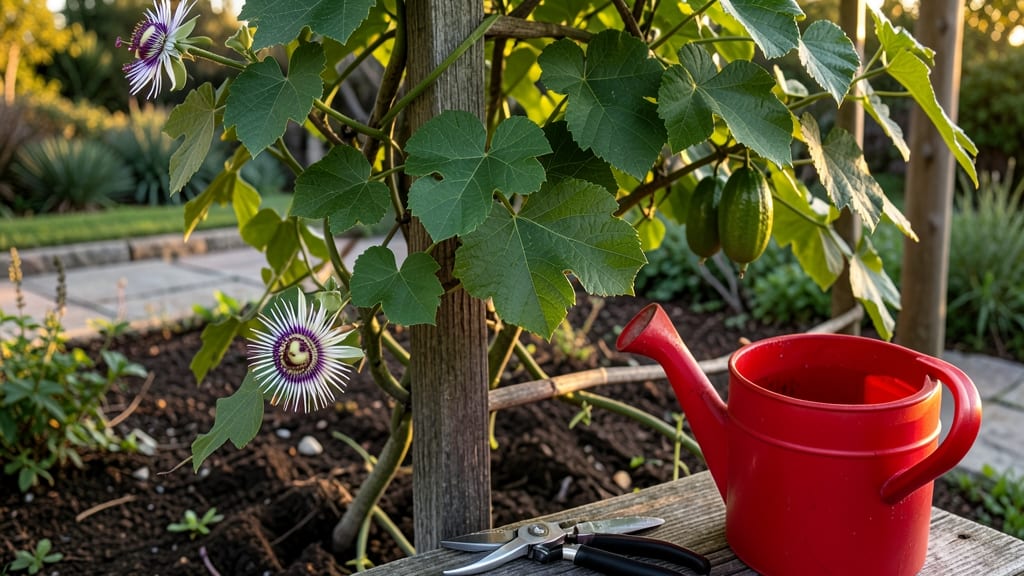
Passion flower maintenance starts with a simple truth: pruning at the right time transforms a struggling vine into a blooming jungle of exotic flowers. 🌿 I’ve watched my own vines go from bare stems to heavy with vibrant blossoms just by following a seasonal pruning schedule—no fancy tools or secret tricks required.
The key is timing: prune right after blooming in spring and again after the first frost in fall. You’ll need sharp pruners, a ladder for taller vines, and about 30 minutes to trim back dead or overgrown growth.
Passion flowers reward precision—cut just above a leaf node to encourage new shoots and more flowers next season.
By summer, your vine will be a lush wall of foliage dotted with striking blooms, their intricate petals drawing hummingbirds and butterflies. The secret? Consistent care—watering deeply but infrequently, feeding lightly in spring, and keeping an eye out for pests like spider mites.
This method works for both hardy and tropical varieties, whether you’re growing in containers or training along a trellis. Let’s get those vines thriving year-round—no guesswork, just blooms.
📚 In This Guide
- What you need
- Instructions
- Tips and common mistakes
- Wrapping up and next steps
What you need
- ● Pruning shears – Bypass-style, sharp, and sterilized (1 pair). Avoid dull tools to prevent crushing stems.
- ● Gloves – Heavy-duty gardening gloves (1 pair) to protect from thorns and sap.
- ○ Pruning sealant – Optional but helpful (e.g., tree wound paint) to prevent disease in large cuts.
- ● Support structure – Trellis, fence, or strong stakes (adjustable height, 6–10 ft tall).
- ● Balanced fertilizer – 10-10-10 or 20-20-20 (1–2 lbs per plant, spring/early summer).
- ● Mulch – Organic mulch (2–3 inches, e.g., shredded bark or compost) to retain moisture.
- ● Hose or watering can – Drip irrigation or soaker hose (for deep watering, 1–2 times/week).
- ○ pH test kit – Optional but useful to check soil pH (ideal: 6.0–7.5).
- ● Staking twine – Soft, flexible twine (for training vines, 50+ ft roll).
- ● Pest control – Neem oil or insecticidal soap (for aphids/mealybugs, as needed).
- ● Sunlight – 6+ hours of direct sun (partial shade in hot climates).
- ● Well-draining soil – Amiable to sandy loam (amend clay soil with compost).
- ● Climate awareness – Hardy in USDA Zones 5–11 (protect from frost; bring potted plants indoors if needed).
Step-by-Step guide to pruning passion flowers for year-round blooms
Here's how I keep my passion vines producing flowers consistently—no guesswork, just science-backed timing.
🌿 Step 1: Understand the Growth Cycle and Pruning Windows
Passion flowers bloom on new wood, meaning pruning stimulates fresh growth that produces flowers. The best time to prune is immediately after flowering or during late winter dormancy before new shoots emerge. I mark my calendar for February-March in cold climates and every 3 months in warm zones.
Look for woody stems with no leaves—these are dead and should be removed first. Healthy stems have green bark and small buds. Never prune when flowers are open; you'll sacrifice that season's blooms. The goal is to shape the vine while encouraging 6-12 inch long new shoots that will bear next year's flowers.
✂️ Step 2: Perform the Structural Pruning Cut
Use clean, sharp bypass pruners to make cuts at a 45-degree angle, about ¼ inch above a leaf node or outward-facing bud. I always start by removing 30-50% of the oldest, thickest stems first—these are the least productive. Cut back to a healthy bud or lateral branch, never leaving a stub.
For vines that sprawl uncontrollably, I thin to 3-5 main stems per plant. This might seem drastic, but passion flowers reward aggressive pruning with denser foliage and more flowers. After cutting, wipe your pruners with rubbing alcohol to prevent disease spread between cuts.
🌱 Step 3: Post-Pruning Care for Rapid Regrowth
Water deeply within 24 hours of pruning to help the plant recover. I use 1 gallon per plant for established vines, soaking the root zone until water runs out the drainage holes. Follow up with 2 inches of mulch around the base to retain moisture and protect roots from temperature swings.
Fertilize with balanced 10-10-10 fertilizer at half-strength 1 week after pruning. This jumpstarts new growth without burning tender shoots. Watch for new leaves emerging within 3-4 weeks—that's your signal the pruning worked. If no new growth appears after 6 weeks, the plant may need more sunlight or a stronger fertilizer.
☀️ Step 4: Manage Light and Support for Continuous Blooms
Passion flowers need 6-8 hours of direct sun daily to produce flowers consistently. After pruning, move vines to a sunnier location if needed—even partial shade reduces blooming. I train my vines on 6-foot trellises to maximize vertical space and air circulation, which prevents fungal diseases.
Rotate the trellis quarter-turn weekly so all sides get equal light. You'll notice new shoots growing toward the light—this is normal. Once shoots reach 12 inches long, pinch the tips to encourage bushier growth and more flower nodes. Each pinch creates 2-3 additional side shoots that will eventually bloom.
Tips & tricks for perfect passion flower maintenance
Real talk: passion flowers can be finicky, but these pro techniques will keep them blooming like clockwork.
The Timing Secret: In Step 1, when you're marking your calendar for February-March pruning, here's what nobody tells you—watch for the first frost date in your zone. If you're in a transitional climate where winters are mild but occasional freezes happen, delay pruning until after the last frost. Cold snaps can stress newly pruned vines, so wait until temperatures consistently stay above freezing before cutting.
Pruning Precision: For Step 2, the 45-degree angle cut isn't just about aesthetics—it's about water runoff. When you make that angled cut just above a leaf node, rainwater will naturally channel away from the wound rather than pooling. This dramatically reduces the risk of fungal infections that can kill your vine. I've seen passion flowers decline after pruning because people made flat cuts that collected water.
Post-Pruning Recovery: That 24-hour watering window in Step 3 is your plant's lifeline. Here's the thing: if you're using city water with high chlorine content, let it sit out overnight before watering. The chlorine can stress tender new shoots. I also recommend adding a handful of compost to that gallon of water—it gives the roots a gentle nutrient boost right when they need it most after such a dramatic pruning.
Sunlight Strategy: When managing light in Step 4, don't just assume your current location gets enough sun. Use a light meter app for a week to track actual sunlight hours. I've seen passion flowers in full sun locations that only got 4 hours of direct light because of afternoon shade from neighboring trees. If you're in this situation, consider moving your trellis to a south-facing wall or using reflective surfaces like white fencing to bounce extra light onto the vines.
Pro Tips for Passion Flower Maintenance
- Real talk: passion flowers can be finicky, but these pro techniques will keep them blooming like clockwork.
- The Timing Secret: In Step 1, when you're marking your calendar for February-March pruning, here's what nobody tells you—watch for the first frost date in your zone.
- Pruning Precision: For Step 2, the 45-degree angle cut isn't just about aesthetics—it's about water runoff.
Frequently asked questions
Got questions about keeping your passion flower thriving?
Here are answers to the most common concerns—from pruning tips to troubleshooting—so you can enjoy those stunning blooms year-round!
When is the best time to prune passion flowers for maximum blooms?
Prune your passion flower after flowering (typically late winter to early spring) to encourage new growth and blooms. Light trimming can also happen in summer to shape the plant, but avoid heavy cuts then—it may delay fall blooms.
How much should I cut back my passion flower vine?
For established vines, reduce by 1/3 to 1/2 their length to promote bushier growth. Dead or weak stems should be removed entirely. Avoid over-pruning—too much cutting can stress the plant and reduce flowering.
Can I prune passion flowers in winter?
Light pruning (removing dead or damaged stems) is safe in winter, but avoid heavy cuts. Cold-sensitive varieties may benefit from minimal trimming until spring when new growth resumes. Mulch around the base to protect roots!
Why aren’t my passion flowers blooming despite regular pruning?
Blooms may lag due to over-fertilizing (too much nitrogen), poor sunlight (6+ hours/day needed), or underwatering. Check for pests (aphids, spider mites) too—they sap energy. Adjust care and repot if roots are crowded.
Are there low-maintenance alternatives to passion flowers?
If passion flowers feel high-maintenance, try clematis (drought-tolerant climbers) or jasmine (fragrant, fast-growing). Both thrive with minimal pruning and still offer stunning blooms!
Wrapping up and next steps
Caring for your passion flower is all about consistency and timing—with the right pruning schedule, you’ll enjoy lush vines and stunning, year-round blooms! 🌸 Remember, healthy plants thrive when you trim strategically, fertilize wisely, and stay mindful of pests.
Now that you’re armed with a pruning calendar and expert tips, there’s no better time to roll up your sleeves and give your passion flower the TLC it deserves.
Ready to transform your garden? Start by marking your calendar with the key pruning dates, then explore companion plants to create a vibrant, thriving ecosystem. Your passion flower—and your green thumb—will thank you! 🌿