
Plants
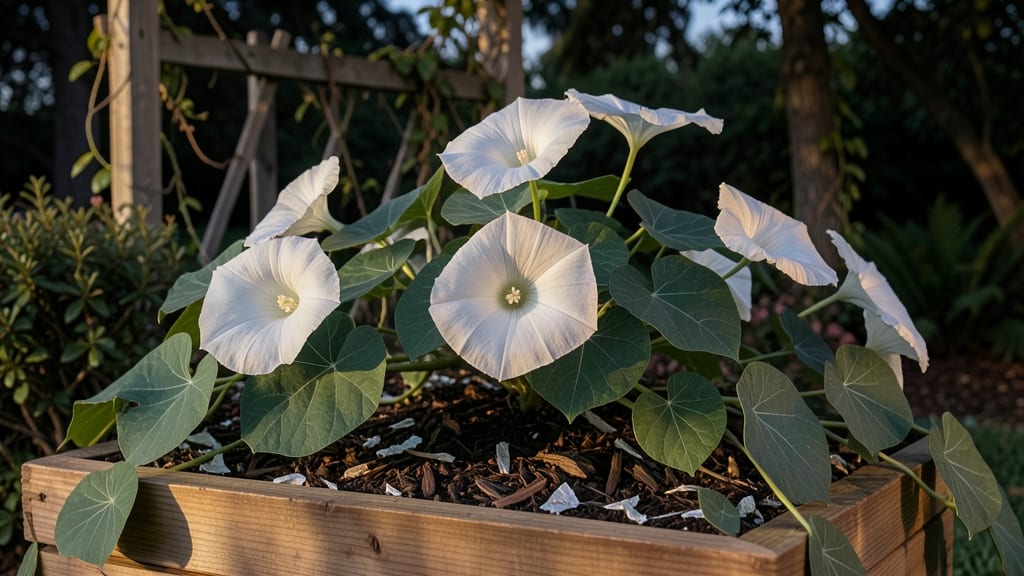
Browse these stunning moonflower vine pictures, then imagine your own garden glowing at dusk with their ethereal white blooms—just like a lantern floating in the dark. 🌙 These vines aren’t just beautiful; they’re effortless climbers that thrive in heat and humidity, making them perfect for trellises or fences.
What makes moonflowers special is their nocturnal magic—flowers open at dusk, releasing a faint, sweet fragrance that draws in moths and hummingbirds. The large, heart-shaped leaves add lush greenery during the day, while the vines can grow 10-15 feet in a single season.
They’re drought-tolerant once established, so they’re low-maintenance yet stunning.
Imagine your garden glowing under moonlight, with vines heavy with blooms that close by morning. You’ll create a serene, dreamy atmosphere that feels like a secret garden. Best of all, they self-seed easily, so you’ll have more each year without extra work.
Whether you’re designing a romantic evening garden or adding vertical interest, moonflowers bring ethereal beauty that’s hard to match. Let’s explore how to make the most of their natural charm in your space.
📚 In This Guide
- What you need
- Instructions
- Tips and common mistakes
- Wrapping up and next steps
What you need
- ● Moonflower vine seeds or plants: Choose high-quality, organic seeds (e.g., Ipomoea alba) or a healthy young vine from a nursery. Quantity: 2–4 seeds (if starting from scratch) or 1–2 plants (for faster growth).
- ● Well-draining potting mix or garden soil: A blend of 60% topsoil, 30% compost, and 10% perlite or sand (for aeration). Volume: 1–2 gallons per plant.
- ● Large containers or garden space: For containers: 5–7 gallon pots with drainage holes (minimum 12" deep).
- ● For gardens: A sunny spot with at least 6–8 feet of vertical space (trellises, fences, or pergolas work perfectly!).
- ○ Trellis, arbor, or sturdy support: A metal, wooden, or plastic trellis (at least 6–10 feet tall) to guide the vine’s rapid growth. Optional: Decorative arbors for a whimsical touch!
- ● Garden trowel or transplanting spade (for digging holes or pots).
- ● Watering can or hose with a gentle spray nozzle (moonflowers love moisture but hate soggy roots!).
- ○ Mulch (optional but recommended): Shredded bark or straw to retain soil moisture and suppress weeds. Spread: 2–3 inches around the base.
- ○ Fertilizer (optional): A balanced, slow-release fertilizer (10-10-10 ratio) or compost tea to boost growth. Apply every 4–6 weeks during the growing season.
- ● Pruning shears (for trimming dead vines or shaping growth).
- ● Gloves (recommended): Protect your hands from thorns (some varieties have mild ones!).
- ● Sunlight: Full sun (6+ hours daily) for optimal blooming. Partial shade (4–6 hours) is tolerable but may reduce flowers.
- ● Climate: Thrives in USDA Zones 10–11. In cooler zones, grow as an annual or overwinter indoors.
- ● Patience: Seeds take 7–10 days to germinate, and vines grow 6–10 feet per season—fast but worth it!
Step-by-step guide to cultivating moonflower vines for stunning nighttime displays
This fast-growing climber transforms any garden into a moonlit sanctuary—here's how to coax its dramatic blooms.
🌱 Step 1: Select the Perfect Planting Site and Prepare Soil
Moonflowers thrive in well-draining soil with full sun exposure—at least 6-8 hours daily. I always choose a location near a trellis, fence, or pergola where the vines can climb 10-15 feet vertically. The soil should be loamy and slightly acidic (pH 6.0-7.0)—amend heavy clay with 2-3 inches of compost to improve drainage.
Here's the thing—moonflowers hate soggy roots. If your garden retains moisture, raise the planting area by 4-6 inches with a mound of soil mixed with coarse sand or perlite. Dig a hole twice as wide as the root ball but only as deep—planting too deep suffocates the stem and delays flowering. Gently loosen the roots before placing the vine in the hole.
🪴 Step 2: Plant and Train the Vine for Optimal Growth
Place the moonflower vine in the hole, spreading the roots outward to encourage a sturdy base. Backfill with soil, pressing lightly to remove air pockets but avoiding compaction. Water deeply until moisture reaches 6 inches down—you'll see the soil surface darken slightly as water penetrates. Mulch around the base with 2-3 inches of organic mulch (like shredded bark) to retain moisture and suppress weeds.
This is the moment that matters: install a trellis or support structure immediately. Moonflowers grow 3-5 feet per season, so secure a 6-foot-tall trellis at planting. Use soft garden twine to loosely tie the main stem to the trellis, allowing room for growth. Never wrap tightly—you'll strangle the vine as it thickens. Watch for new tendrils forming along the stem; these will naturally cling to the trellis as the plant matures.
☀️ Step 3: Water and Fertilize for Vigorous Blooms
Keep the soil consistently moist but not waterlogged—moonflowers wilt dramatically when thirsty but recover quickly once rehydrated. Water deeply 2-3 times per week during dry spells, aiming for 1-1.5 gallons per plant. You'll know you've hit the right moisture level when the top 2 inches of soil feel damp but not soggy. Avoid overhead watering after dark to prevent fungal diseases.
Feed the vine with a balanced, slow-release fertilizer (10-10-10) at planting, then again in early summer when new growth appears. I swear by a half-strength liquid fertilizer applied every 4-6 weeks during the growing season. Too much nitrogen produces lush foliage but delays blooms—moonflowers prioritize flowers over leaves, so light feeding keeps them focused on those 5-inch-wide, silvery-white blossoms.
✂️ Step 4: Prune and Maintain for Year-After-Year Beauty
Deadhead spent blooms immediately after they wilt—this encourages more flowers and prevents the vine from setting seed too early. Use clean, sharp pruners to snip the stem just above a leaf node. Don't worry about heavy pruning; moonflowers are forgiving. In late fall, cut back one-third of the vine to promote bushier growth next season. This also prevents the plant from becoming top-heavy and snapping under winter snow.
Real talk: moonflowers are annuals in most climates, but they self-seed prolifically. If you want perennial growth, protect the base with 4-6 inches of mulch before frost. In USDA Zones 9-11, the vine may return year after year if winter protection is provided. Even in colder zones, the seeds will sprout reliably the following spring—just thin seedlings to 3-4 feet apart for optimal air circulation.
🌿 Step 5: Enjoy the Nocturnal Spectacle (and Troubleshoot Common Issues)
Moonflowers open their fragrant, moon-shaped blossoms at dusk, closing by mid-morning. To extend their display, plant near a porch light or string lights—the artificial light can trick some flowers into staying open longer. Place a bench or seating area nearby so you can enjoy the vanilla-scented blooms without disturbing them. The vines are non-invasive and disease-resistant, making them low-maintenance once established.
If you notice yellowing leaves, it's usually a sign of overwatering or poor drainage. Let the soil dry out slightly between waterings and consider adding more organic matter to improve aeration. Pests are rare, but watch for aphids on new growth—spray with neem oil if you spot clusters. Leggy growth? Your vine needs more light—relocate it to a sunnier spot or provide partial afternoon shade in scorching climates.
Tips & tricks for perfect moonflower vine cultivation
Here's what nobody tells you about growing these enchanting vines—lessons I learned after watching my first batch struggle.
Sunlight Strategy: Those 6-8 hours of full sun are non-negotiable, but timing matters too. Plant moonflowers where they receive morning sun and afternoon shade in hotter climates—this prevents leaf scorch while still giving them the light they need to develop those dramatic blooms. I've noticed the most vibrant flowers come from vines that get bright light but avoid the harshest afternoon rays during peak summer.
Support System Secret: The 6-foot-tall trellis isn't just about aesthetics—it's about growth direction. Install your support structure before planting so the vine can grow toward it naturally. I use a 3-inch diameter PVC pipe wrapped with coconut fiber for a more natural look, and the vines cling beautifully. The key is positioning it 4-6 inches away from the planting hole so the vine doesn't have to stretch awkwardly to reach it.
Watering Wisdom: When I first grew moonflowers, I overwatered them constantly, thinking they needed constant moisture. The truth is, they wilt dramatically when thirsty but recover quickly once watered—this is their natural drought tolerance mechanism. Stick to the 2-3 times per week schedule during dry spells, but always check that top 2 inches of soil are damp rather than soggy. A moisture meter is worth its weight in gold for this.
Fertilizer Fine-Tuning: That half-strength liquid fertilizer every 4-6 weeks is crucial, but timing matters more than most gardeners realize. I've found the best results come from applying fertilizer right after a deep watering—this gives the roots time to absorb nutrients before the next watering dilutes them. And here's the kicker: if you notice more leaves than flowers, you're overdoing it on nitrogen. Switch to a low-nitrogen, high-phosphorus formula (like 5-10-10) to encourage blooming.
Pro Tips for Moonflower Vine Pictures
- Here's what nobody tells you about growing these enchanting vines—lessons I learned after watching my first batch struggle.
- Sunlight Strategy: Those 6-8 hours of full sun are non-negotiable, but timing matters too.
- Support System Secret: The 6-foot-tall trellis isn't just about aesthetics—it's about growth direction.
Frequently asked questions
Got questions about growing and enjoying moonflower vines? Here are some common ones—and their answers—to help you cultivate this enchanting plant with ease!
When is the best time to plant moonflower vine seeds?
Moonflower vines thrive in warm soil, so plant seeds after the last frost when temperatures consistently stay above 60°F (15°C). For faster germination, soak seeds overnight or pre-sprout them indoors 4–6 weeks before transplanting. If you’re in a cooler climate, start seeds indoors in early spring!
How fast does moonflower vine grow, and how tall can it get?
Moonflower vines are fast growers—expect 6–12 inches (15–30 cm) per week in ideal conditions! With proper support (like a trellis or fence), they can climb 10–20 feet (3–6 meters) in a single season. Prune regularly to manage growth and encourage bushier blooms.
Why aren’t my moonflower vines blooming?
If your vines aren’t flowering, check these common issues:
- Not enough sunlight: Moonflowers need full sun (6+ hours daily) for blooms.
- Overcrowding: Thin vines to improve airflow and reduce competition.
- Lack of nutrients: Feed with a balanced fertilizer (like 10-10-10) when new growth appears.
- Early planting: Cold soil can delay flowering—wait until late spring/early summer.
Can moonflower vines survive winter, or do I need to replant every year?
Moonflowers are annuals in most climates, meaning they die back after frost. However, in USDA Zones 9–11 (mild winters), they may self-seed or regrow from the base. Save seeds from dried flowers to replant next year—or treat them as a seasonal spectacle!
What are some alternatives to moonflower vines for night-blooming beauty?
If moonflowers aren’t your style, try these nocturnal garden stars:
- Evening Primrose (Oenothera spp.): Fragrant, drought-tolerant, and blooms in pink/yellow.
- Night-Blooming Jasmine (Cestrum nocturnum): Intense fragrance; thrives in warm climates.
- Four O’Clock Flower (Mirabilis jalapa): Bold colors and self-seeding.
- Angel’s Trumpet (Brugmansia spp.): Dramatic, trumpet-shaped blooms (toxic—wear gloves!).
How do I train moonflower vines to climb a trellis?
Use soft ties (like old T-shirts or garden twine) to gently loop and secure vines to the trellis as they grow. Avoid wire or tight bindings, which can damage tender stems. For a lazy approach, let them sprawl along fences or pergolas—just trim excess growth to keep it tidy!
Wrapping up and next steps
The moonflower vine isn’t just a stunning addition to your garden—it’s a magical experience waiting to unfold under the moonlight. 🌙 With its delicate blooms and easy-care nature, it’s perfect for gardeners of all levels, offering both beauty and low-maintenance charm.
Whether you’re drawn to its ethereal allure or its practical benefits, this vine is sure to inspire your green thumb!
Ready to bring some nocturnal magic to your space? Start by gathering your supplies and dive into planting—your garden (and future moonlit evenings) will thank you!