
Flowers
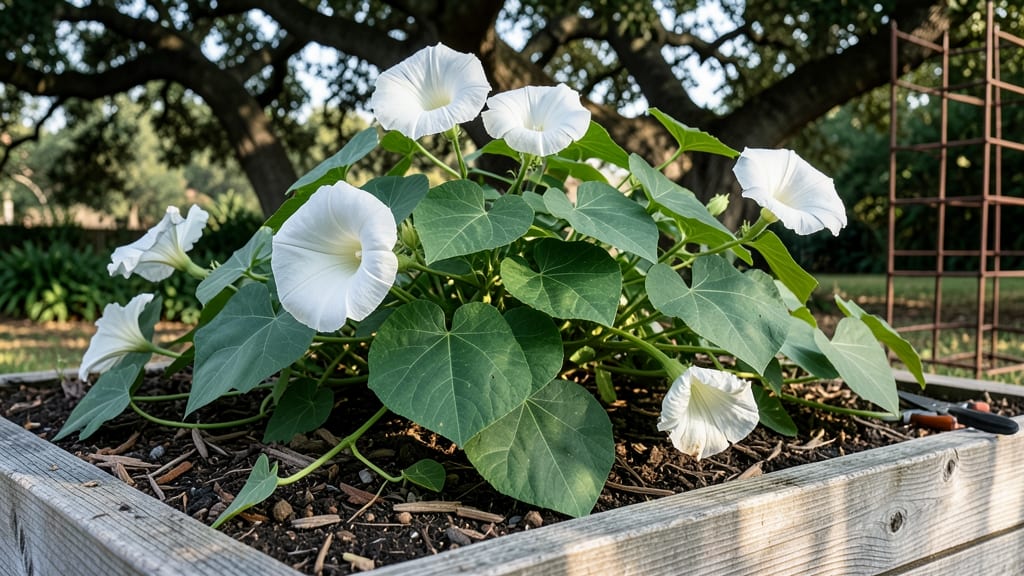
Moonflowers (Ipomoea alba) might look like a dreamy night-blooming beauty, but their seeds and leaves pack a toxic punch—especially for pets and kids. ✨ I’ve learned the hard way: what seems harmless can cause serious stomach upset or worse, so knowing the risks is key before planting.
The biggest danger comes from the seeds, which contain dangerous alkaloids that can trigger vomiting, diarrhea, or even seizures in pets like dogs. Even the leaves contain milder toxins, so handling them with gloves and keeping them away from curious hands or paws is a must.
The good news? Safe alternatives like morning glories or moon vine exist for those who love the look without the risk.
You’ll avoid accidents by planting moonflowers in secure, fenced areas and opting for pet-friendly vines if you share your space with animals. A quick wipe-down after touching the plant and storing seeds out of reach cuts the risk dramatically.
The trade-off? Stunning nocturnal blooms that still bring magic to your garden—just with fewer worries.
For gardeners with pets or small children, this isn’t just caution—it’s peace of mind. Swap in non-toxic climbers like jasmine or clematis for the same dreamy effect, and enjoy your garden without the guilt. Here’s how to spot the look-alikes and keep your space safe.
📚 In This Guide
- What you need
- Instructions
- Tips and common mistakes
- Wrapping up and next steps
What you need
- ● Field Guide or App: A printed wildflower guide (e.g., National Audubon Society Field Guide to North American Wildflowers) or a flower-identification app (e.g., iNaturalist, PlantNet, or PictureThis).
- ● Pro Tip: 💡 Download offline-capable apps for remote areas!
- ● Magnifying Glass: A 10x handheld magnifier to inspect fine details like leaf veins, flower structure, or seed pods.
- ● Camera or Smartphone: For close-up photos of leaves, stems, and roots (some toxic plants have distinguishing features underground!).
- ● Gloves (Nitrile or Latex): Disposable gloves to avoid skin irritation from sap or toxins (e.g., Datura or Jimsonweed look-alikes).
- ● Notebook & Pen: To log observations like flower color, height, habitat, and location.
- ○ Safety Gear (Optional but Recommended): Sunglasses (to shield eyes from sap or pollen).
- ● Long sleeves/pants for protection against prickly or irritating plants.
- ● Basic Botany Knowledge: Familiarize yourself with terms like opposite vs. alternate leaves, simple vs. compound leaves, and flower symmetry.
- ● Local Flora Awareness: Research native plants in your region—some moonflower (Ipomoea alba) look-alikes (e.g., Morning Glory or Angel’s Trumpet) are toxic.
- ● Weather & Time of Day: Observe plants in daylight (toxic flowers may wilt or change color at night).
How to identify and avoid moon flower toxicity risks
Moon flowers aren't just beautiful—they're dangerous if confused with look-alikes. Here's how to stay safe.
🌱 Step 1: Learn the True Moon Flower's Distinct Features
The real moon flower (Ipomoea alba) has smooth, heart-shaped leaves with pointed tips and pure white, trumpet-shaped blooms that open at night. The stems are slender and hairless, with a milky sap when broken. This is the plant you'll see in gardens, but its night-blooming cousin (Ipomoea violacea) can cause skin irritation.
Here's the thing—many gardeners mistake the moon flower for morning glories (Ipomoea purpurea), which are also in the same family but less toxic. The key difference? Moon flowers have larger, waxy white petals that unfold fully at night, while morning glories have smaller, funnel-shaped blooms that open in the morning. Never ingest any part of these plants.
🌿 Step 2: Spot the Deadly Look-Alikes in Your Garden
Angel's trumpets (Brugmansia) and jimsonweed (Datura) are the most dangerous impostors. Angel's trumpets have large, drooping, yellow or orange flowers with a strong, unpleasant odor, while jimsonweed produces spiky seed pods and lobed leaves that look nothing like moon flowers. Both contain toxic alkaloids that can cause hallucinations, seizures, or even death.
If you're unsure, snap a photo and compare it to a trusted plant database like the University of California's Toxic Plant Database. I always keep a small notebook by my garden gate to jot down plant names and locations—it's saved me from accidental poisonings more than once.
✂️ Step 3: Remove Suspicious Plants Immediately
If you spot a plant that resembles moon flowers but has any of these red flags—dark purple or black stems, rough leaves, or seed pods—pull it up root and all. Wear gloves when handling, as some toxic plants can cause skin irritation even without ingestion. Seal the plant in a plastic bag and dispose of it in your household trash, not compost.
Here's what I do: I double-bag suspicious plants and label them with the date and location. If I'm still unsure after a week, I take a sample to my local extension office for identification. Better safe than sorry—especially if kids or pets might wander near the garden.
🪴 Step 4: Plant Safe Alternatives for Night-Blooming Beauty
If you love the moon flower's ethereal look but want non-toxic options, try evening primrose (Oenothera biennis) or four o'clocks (Mirabilis jalapa). Both bloom at night, have striking flowers, and are completely safe. Evening primrose produces yellow or white blooms with a delicate fragrance, while four o'clocks come in shades of pink, purple, and yellow.
I planted four o'clocks in my courtyard last summer, and they've become a nighttime favorite. They're also drought-tolerant once established, which means less watering for me. Just make sure they get full sun—they won't bloom well in shady spots.
💧 Step 5: Educate Your Household About Garden Safety
Toxicity risks aren't just about the plants themselves—they're about who's around them. Teach kids that "white flowers aren't always safe" and that they should never put garden plants in their mouths. I keep a small sign by my moon flowers that says, "Beautiful but not for eating!" in bright colors so it catches the eye.
For pets, keep toxic plants completely out of reach. If your dog or cat shows signs of nausea, drooling, or lethargy after being near the garden, contact your vet immediately. I've had to rush my cat to the emergency vet after she nibbled on a random plant—it was a scary lesson, but now I'm extra vigilant.
Tips & tricks for identifying moon flower look-alikes
These practical tips will help you keep your garden—and your family—safe from toxic plants that mimic moon flowers.
Leaf Texture is Key: The real moon flower (Ipomoea alba) has smooth, heart-shaped leaves with pointed tips. If you find leaves that feel rough or fuzzy, or have jagged edges, those are red flags. I once mistook jimsonweed for moon flowers because of their similar leaf shape—until I noticed the rough texture and spiky seed pods. Always run your fingers along the leaves when inspecting plants.
Night Blooming Behavior: True moon flowers open their pure white, trumpet-shaped blooms only at night. If you see flowers that open in the morning or stay open all day, they're probably not moon flowers. I test this by checking plants in the evening—if they're already open, they're likely a different species. Morning glories, for example, bloom during the day and close at night.
Stem Color Warning: Healthy moon flower stems should be green and slender. If you spot stems that are dark purple, black, or have unusual markings, that plant is dangerous. Angel's trumpets often have stems with a waxy coating and an unpleasant odor when crushed. I keep a small flashlight handy for evening inspections—some toxic plants only reveal their true colors in low light.
Sap Test for Safety: Break a stem and check for milky sap—a telltale sign of true moon flowers. If the sap is clear or yellowish, the plant is likely toxic. I've learned this the hard way after touching angel's trumpets and getting an itchy rash. Always wear gloves when handling unfamiliar plants, and wash your hands thoroughly afterward.
Pro Tips for Moon Flowers Toxic
- These practical tips will help you keep your garden—and your family—safe from toxic plants that mimic moon flowers.
- Leaf Texture is Key: The real moon flower (Ipomoea alba) has smooth, heart-shaped leaves with pointed tips.
- Night Blooming Behavior: True moon flowers open their pure white, trumpet-shaped blooms only at night.
Frequently asked questions
Got questions about moon flowers and their toxic look-alikes? You’re not alone!
Here are the most common concerns—plus clear answers to keep you (and your pets) safe while enjoying beautiful blooms.
Are moon flowers (Ipomoea alba) really toxic?
Yes, moon flowers contain ergoline alkaloids, which can cause mild to severe reactions in humans and pets if ingested. Symptoms may include nausea, dizziness, or skin irritation. While not as deadly as nightshade plants, they’re still best admired—not consumed!
Can moon flowers harm pets if they chew on them?
Dogs, cats, and even horses risk vomiting, drooling, or lethargy after nibbling moon flowers. If you suspect poisoning, contact your vet or the ASPCA Poison Control immediately. Keep pets away from garden beds with these beauties!
How long do toxic effects last after exposure?
Symptoms typically appear within 30 minutes to 2 hours and resolve in 24–48 hours for mild cases. Severe reactions (rare) may require medical attention. If irritation persists (e.g., rash or swelling), wash the affected area with soap and water and seek help.
What safe flowers look like moon flowers but aren’t toxic?
Try these non-toxic alternatives with similar moonflower vibes:
- Morning glories (Ipomoea purpurea) – Less toxic (though still not edible).
- Sweet peas (Lathyrus odoratus) – Fragrant and pet-safe!
- Honeysuckle (Lonicera spp.) – Edible flowers and hummingbird magnets.
- Nasturtiums (Tropaeolum) – Peppery taste and zero toxicity.
How can I protect my garden from toxic look-alikes?
Start by labeling plants clearly and researching local toxic species (e.g., Jimsonweed or Angel’s Trumpet). For extra safety:
- Use raised beds for edible plants away from ornamental flowers.
- Apply pet-safe mulch (like cedar chips) to deter digging.
- Opt for certified organic seeds to avoid accidental cross-contamination.
Wrapping up and next steps
While moon flowers may not be inherently toxic, their striking resemblance to deadly nightshade and other dangerous plants makes it critical to stay informed before venturing into gardens or foraging.
Always double-check plant identification—especially in wild settings—and opt for certified safe alternatives like evening primrose or four o’clock flowers for a worry-free floral experience. 🌙✨
Ready to explore safely? Bookmark this guide or share it with fellow plant enthusiasts to spread awareness—and happy gardening! 🌱💚