
Flowers
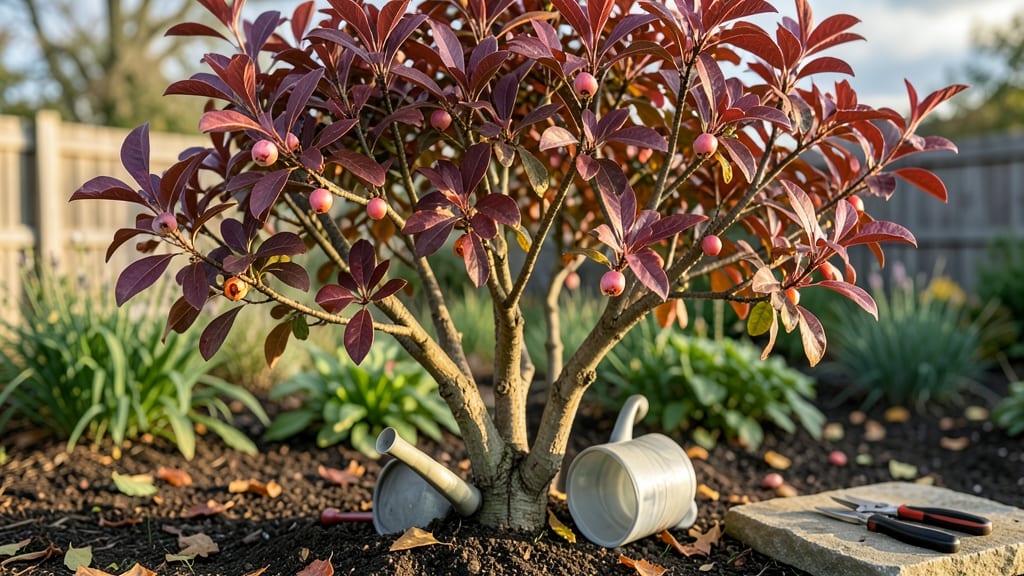
Manhattan euonymus flowers bring four-season interest with their striking pink bracts that pop against glossy green leaves—no pruning drama required. 🌿 I fell for this shrub after seeing how it thrived in my neighbor’s shady corner with zero fuss, blooming from spring through fall and even offering winter color.
The real magic? Those pink-tinged flowers appear in late spring, then transform into vibrant red-orange berries that last into winter, giving you color when most plants have gone dormant.
This tough shrub handles partial shade to full sun and tolerates everything from city pollution to poor soil—perfect for urban gardens or neglected spots. Just plant it where it won’t be cramped (3–5 feet wide at maturity) and water it deeply once a week after the first year.
The minimal pruning promise is real: just shape it lightly in late winter if needed, and it’ll reward you with bold foliage and flowers all season long.
What you’ll love most is how low-maintenance this plant truly is. No deadheading, no fussy fertilizing—just reliable color that outshines most shrubs. The berries alone make it worth growing, but the flowers add that extra pop in spring, and the deep green leaves stay glossy all year.
Once established, it’s basically a set-it-and-forget-it star for any landscape.
Whether you’re filling a shady border, lining a walkway, or adding height to a foundation planting, Manhattan euonymus delivers year-round structure and color with almost no effort. Here’s how to keep yours thriving through every season—no green thumb required.
📚 In This Guide
- What you need
- Instructions
- Tips and common mistakes
- Wrapping up and next steps
What you need
- ● Manhattan Euonymus plants: 1-3 mature shrubs (3-5 ft tall, depending on desired coverage)
- ● OR 50-100 seeds (if starting from scratch)
- ● Well-draining potting mix: 3-5 gallons (for containers) or amended garden soil (for in-ground planting)
- ● Organic compost: 1-2 bags (to enrich soil fertility)
- ● Slow-release fertilizer: 1 lb (balanced 10-10-10 or rose-specific formula)
- ● Mulch: 1-2 yards (pine bark or shredded leaves for moisture retention)
- ● Garden trowel or spade: 1 (for digging)
- ● Pruning shears: 1 pair (sharp, bypass-style for clean cuts)
- ● Gloves: 1 pair (gardening gloves to protect hands)
- ● Watering can or hose: 1 (with adjustable nozzle for gentle watering)
- ● Measuring tape: 1 (to space plants 3-5 ft apart)
- ○ Optional: Container pots (15-20 gallons, 1-2 for each shrub)
- ● Soil pH test kit (to ensure slightly acidic soil, pH 5.5-6.5)
- ● Epsom salt (1 lb, for magnesium boost if leaves show deficiency)
- ● Sunlight: Full sun to partial shade (6+ hours of light daily)
- ● Hardiness zone: 5-8 (verify your local climate zone)
- ● Water access: Regular irrigation (deep watering 1-2x weekly)
- ● Space: Minimum 4 ft of clearance around mature shrubs
How to cultivate vibrant Manhattan euonymus for season-long bloom
This shrub delivers striking foliage and flowers with almost no fuss—here’s how to keep it thriving.
🌱 Step 1: Choose the Right Planting Site
Manhattan euonymus (Euonymus fortunei 'Emerald Gaiety') thrives in partial shade—think 3-6 hours of morning sun and afternoon dappled light. Full sun scorches its leaves, while deep shade dulls its signature variegation. I always plant mine where they’ll catch bright indirect light near a north- or east-facing window or beneath a taller tree’s canopy.
Test your spot by observing how light shifts throughout the day. If leaves start yellowing in summer, your site likely gets too much direct sun. Amend heavy clay soil with 2-3 inches of compost before planting to improve drainage—this shrub hates soggy roots. The ideal soil pH is slightly acidic (6.0-6.5), so a quick soil test kit helps avoid pH-related stress.
☀️ Step 2: Plant with Proper Spacing and Mulch
Dig a hole twice as wide as the root ball but only as deep—planting too deep suffocates roots. Gently loosen the root ball’s edges if it’s tightly bound, then position the shrub so the top of the root ball sits level with the surrounding soil. This prevents water pooling at the stem.
Space plants 4-6 feet apart for mature size, allowing air circulation to prevent fungal issues. Backfill with native soil mixed with 1 part compost, then water deeply to settle it. Top with 2-3 inches of mulch (like shredded bark) to retain moisture and suppress weeds. Keep mulch 2 inches away from the stem to avoid rot.
💧 Step 3: Water Deeply and Adjust for Seasons
Water once a week for the first 2-3 months after planting, soaking the soil to 12 inches deep. You’ll know it’s enough when water runs out the drainage holes. Overwatering causes root rot, so let the top 1-2 inches of soil dry out between waterings. In summer, increase to every 5-7 days if temperatures exceed 85°F.
Here’s the thing—Manhattan euonymus is drought-tolerant once established, but new plants need consistent moisture. Watch for wilting leaves or crispy edges as signs of stress. If you notice yellowing between veins, it’s likely overwatering; brown leaf tips mean underwatering. Adjust based on what you see.
✂️ Step 4: Prune for Shape and Encourage Blooms
Prune late winter or early spring before new growth starts. Remove dead, diseased, or crossing branches first—this improves airflow and prevents pests. For shaping, cut back overly long stems by ⅓ to encourage bushier growth. Avoid heavy pruning in fall, as new growth won’t harden off before winter.
Manhattan euonymus flowers on old wood, so skip drastic cuts after blooming. Instead, focus on light pruning to maintain shape. If a branch looks leggy, trim it back to a bud or side shoot to redirect energy. Use clean, sharp pruners dipped in rubbing alcohol between cuts to prevent spreading disease.
🌿 Step 5: Fertilize and Monitor for Pests
Apply a balanced, slow-release fertilizer (10-10-10) in early spring—just sprinkle ½ cup per plant around the root zone and water it in. Over-fertilizing causes weak growth and fewer flowers. I skip fertilizer in fall, as the plant focuses on root development for winter.
Watch for scale insects or spider mites, which love stressed plants. Treat early infestations with neem oil or a soapy water spray (1 tsp mild dish soap per quart of water). If you see sticky residue on leaves, wipe them down with a damp cloth and check the undersides—pests hide there. Healthy plants rarely have issues, so proper watering and pruning cut down on pest problems significantly.
Tips & tricks for perfect Manhattan euonymus cultivation
Here's what nobody tells you about keeping this shrub thriving with minimal effort—tricks that make all the difference.
Lighting Strategy: The 3-6 hours of morning sun is non-negotiable for that signature variegation. I've seen plants in full afternoon sun develop sunburned patches by midday—trust me, the damage shows up fast. If your garden gets intense afternoon rays, consider a sheer fabric shade cloth during peak hours (12-3 PM). For container growing, position near east-facing windows where light is bright but indirect.
Soil Science: That 2-3 inches of compost isn't just filler—it's the difference between soggy roots and happy growth. For heavy clay soils, mix in perlite or coarse sand to create better drainage channels. I've had the best results with a 50/50 mix of native soil and compost. And here's the thing about pH: while 6.0-6.5 is ideal, this plant is forgiving. If your soil test shows 5.5-6.8, it'll still thrive—just watch for yellowing leaves as your first clue something's off.
Watering Wisdom: The once-weekly watering for new plants might seem generous, but those 12 inches of deep saturation are crucial. I use a moisture meter to verify—if it reads dry at 12 inches, water again. In summer when temps exceed 85°F, I switch to every 5-7 days but always check the soil first. Pro tip: Water at the base rather than overhead to prevent fungal issues. The mulch layer helps retain this moisture while keeping roots cool.
Pruning Precision: That late winter/early spring timing for pruning is critical because it coincides with the plant's natural dormancy period. I mark my calendar for mid-February to be safe. When cutting back overly long stems by ⅓, look for where lateral buds form—these will become your bushier new growth. And here's what nobody tells you: The clean, sharp pruners aren't just about clean cuts, they're about preventing disease spread. I keep a small bottle of rubbing alcohol handy to wipe between cuts on multiple plants.
Pro Tips for Manhattan Euonymus Flowers
- Here's what nobody tells you about keeping this shrub thriving with minimal effort—tricks that make all the difference.
- Lighting Strategy: The 3-6 hours of morning sun is non-negotiable for that signature variegation.
- Soil Science: That 2-3 inches of compost isn't just filler—it's the difference between soggy roots and happy growth.
Frequently asked questions
Got questions about Manhattan Euonymus flowers? You’re not alone!
Here are answers to the most common queries—from care tips to troubleshooting—so you can keep your shrub thriving with stunning year-round color.
When do Manhattan Euonymus flowers bloom, and how long do they last?
The Manhattan Euonymus (Euonymus ‘Manhattan’) is a showstopper with two bloom cycles: pinkish-white flowers appear in late spring to early summer, followed by vibrant pink berries in fall. The flowers last 3–4 weeks, but the berries add seasonal interest until winter. Pro tip: Deadhead spent blooms to encourage bushier growth!
Can Manhattan Euonymus handle cold winters, and how do I protect it?
This hardy shrub thrives in USDA Zones 5–9, tolerating temps down to -20°F. In colder zones, mulch the base with 2–3 inches of shredded bark or leaves to insulate roots. No need for wraps! Its evergreen foliage (in warmer zones) stays lush, but dormant branches may brown in winter—prune them back in early spring for fresh growth.
Why aren’t my Manhattan Euonymus berries turning pink?
Pink berries need full sun (6+ hours/day) and well-draining soil. If they’re green or yellow, check for:
- Shade stress: Move to sunnier spot.
- Overwatering: Let soil dry between waterings.
- Nutrient deficiency: Fertilize in early spring with balanced 10-10-10.
Is Manhattan Euonymus invasive, and how do I control its spread?
Unlike aggressive shrubs, Manhattan Euonymus is non-invasive and grows at a moderate pace (12–24” per year). To keep it tidy:
- Prune once a year after blooming to shape.
- Remove suckers at the base if they pop up.
- Avoid planting near water sources—it prefers dry to medium soil.
What are some low-maintenance alternatives to Manhattan Euonymus?
If you love year-round color but want variety, try these easy-care shrubs:
Plant
Key Features
Zones
Dwarf Fothergilla (‘Mount Airy’)
Fragrant spring blooms, orange fall foliage, evergreen in warm zones.
4–8
Boxwood (‘Green Mountain’)
Neat, evergreen mounds; drought-tolerant; deer-resistant.
5–9
Inkberry Holly (‘Winter Gold’)
Glossy golden foliage, red berries, thrives in shade.
5–9
Wrapping up and next steps
Manhattan euonymus flowers bring year-round beauty and low-maintenance charm to any garden, with their striking foliage and seasonal berries. Whether you’re drawn to their pink spring blooms or deep red winter fruit, this hardy shrub proves that stunning landscapes don’t require endless pruning or fuss.
Ready to transform your outdoor space? Start by selecting your favorite cultivar—like 'Emerald 'n' Gold' or 'Wichita'—and give your garden a vibrant, effortless upgrade!