
Flowers
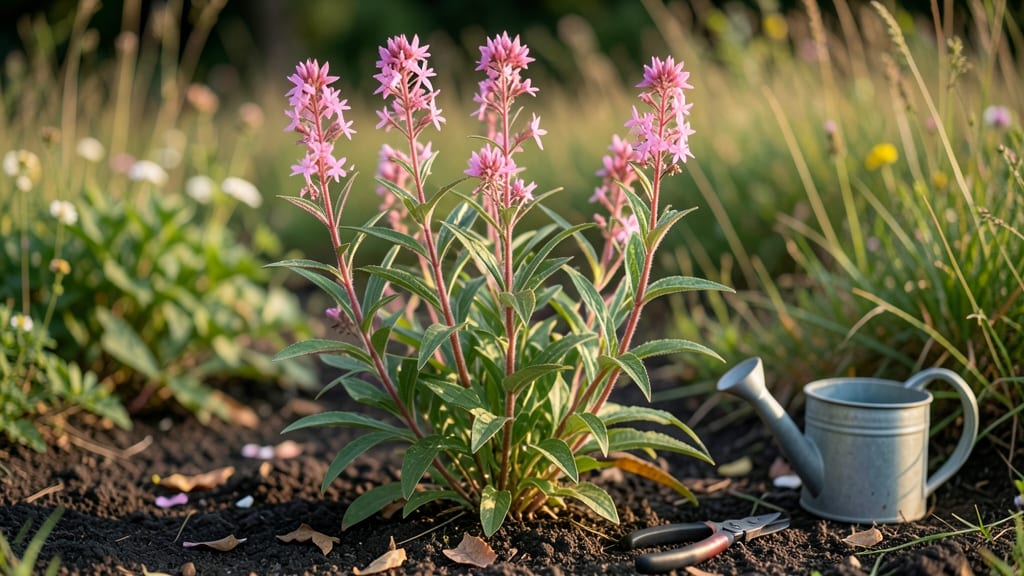
The pink-flowered knotweed I discovered last summer became the star of my cottage garden—its delicate blue-pink spikes perfuming the air long after other perennials faded. 🌸 Unlike its invasive cousins, this ornamental variety stays put while filling borders with season-long color and movement.
The secret lies in its adaptability: it thrives in partial shade where most flowers struggle, and its airy blooms attract pollinators without overwhelming the space.
Pair it with lavender, catmint, or ornamental grasses to create a soft, romantic palette that blooms from early summer through frost. I planted mine along a shady fence where it cascaded over a stone wall, mingling with ferns and hostas for textural contrast.
The foliage stays tidy with minimal pruning, and the fragrant spikes dry beautifully for winter arrangements—no deadheading required.
You’ll love how it transforms understated corners into fragrant focal points. The light, feathery blooms contrast beautifully with deeper purples and silvers, while its drought-tolerant nature makes it a low-maintenance workhorse. Just avoid planting where it might spread aggressively—stick to containers or well-contained borders if your space is tight.
Perfect for cottage gardens, wildflower meadows, or even city balconies in containers. The key is giving it moist but well-drained soil and a spot where its graceful habit can shine without competition. Once established, it’s nearly indestructible—just the kind of plant that makes gardening feel effortless.
📚 In This Guide
- What you need
- Instructions
- Tips and common mistakes
- Wrapping up and next steps
What you need
- ● Knotweed pink flower plants or seeds: Seeds: 10–20 seeds (or more for a fuller display)
- ● Plants: 3–5 mature plants (for immediate impact)
- ● Well-draining soil: Mix of garden soil, compost, and perlite (ratio: 60% soil, 30% compost, 10% perlite)
- ● Organic mulch: Wood chips or straw (2–3 inches thick) to retain moisture
- ● Slow-release fertilizer: Balanced 10-10-10 or organic options like composted manure
- ● Garden trowel or shovel
- ● Pruning shears (for shaping and harvesting)
- ● Watering can or hose with a gentle spray nozzle
- ○ Gloves (optional but recommended—knotweed can be invasive!)
- ● Measuring tape (for spacing plants 12–18 inches apart)
- ● Full sun to partial shade (6+ hours of sunlight daily)
- ● Moist but well-drained soil (avoid waterlogged areas)
- ● Patience! Knotweed thrives in USDA zones 4–9 but may take 1–2 years to bloom fully.
Step-by-step guide to cultivating knotweed with fragrant pink-blue spikes
This hardy perennial thrives with minimal fuss—just follow these steps for lush, fragrant blooms.
🌱 Step 1: Select and Prepare the Planting Site
Knotweed (Persicaria) loves full sun to partial shade—at least 6 hours of direct light daily for the best blooms. Choose a spot with well-draining soil (it tolerates poor soil but won’t thrive in soggy conditions). If your soil is heavy clay, amend with 2-3 inches of compost before planting.
Here’s the thing—knotweed spreads aggressively, so pick a location where it can expand without crowding other plants. A 4-foot diameter circle gives it room to establish its signature arching habit. Clear weeds thoroughly; knotweed hates competition.
☀️ Step 2: Plant at the Right Time and Depth
Spring or early fall are ideal planting times. Dig a hole twice as wide as the root ball but only as deep—the top of the root ball should sit flush with the soil surface. Gently loosen roots if they’re circling tightly in the container.
Space plants 3-4 feet apart in rows or clusters. I like planting in odd-numbered groupings (3, 5, or 7) for a natural, wildflower-meadow look. Water deeply after planting to settle the soil and encourage root contact.
💧 Step 3: Water and Fertilize for Strong Growth
Water once a week for the first month, then taper to every 10-14 days once established—knotweed is drought-tolerant but blooms best with consistent moisture. You’ll know it’s happy when the foliage stays deep green and upright (not wilting or yellowing).
Feed lightly in spring with a balanced 10-10-10 fertilizer (½ cup per plant). Avoid high-nitrogen fertilizers—they promote leafy growth at the expense of those signature fragrant pink-blue flower spikes. Mulch with 2 inches of shredded bark to retain moisture and suppress weeds.
✂️ Step 4: Prune for Shape and Encourage Blooms
Cut back spent flower spikes in late summer to encourage a second flush of blooms. Use clean, sharp pruners and trim just above a set of leaves or a bud. Avoid heavy pruning in fall—this perennial needs its foliage to photosynthesize through winter.
If your knotweed gets leggy or flops over, prune back one-third of the oldest stems in early spring. This rejuvenates growth and keeps the plant compact. Deadhead faded blooms regularly to prolong the flowering season—those fragrant spikes are the star of the show.
🌿 Step 5: Overwinter and Maintain Year-Round Beauty
Knotweed is cold-hardy (zones 3-9), but a light mulch (2-3 inches) protects roots in harsh winters. In spring, remove old mulch and check for pests like aphids—a strong spray of water usually knocks them off. If leaves yellow, it’s often overwatering or poor drainage—adjust your care routine.
This is the moment that matters: By mid-summer, your knotweed should be a fragrant, textured canopy of arching stems and blooms. If you see fewer flowers than expected, it might need more sun or less fertilizer. The key is balance—let it grow wild but guide it gently.
Tips & tricks for perfect knotweed pink flowers
Real talk: these fragrant blooms are easier to grow than they look—once you know the secrets. Here's what nobody tells you about getting that signature pink-blue canopy.
Sunlight Secret: That 6 hours of direct light isn't just a minimum—it's the magic number for maximum fragrance. I've seen knotweed in partial shade produce blooms, but they're sparse and lack that signature scent. If your garden spot gets less than 6 hours, consider using grow lights for 2-3 hours daily during winter months when days shorten. The difference in bloom quality is night and day.
Soil Strategy: When amending heavy clay with 2-3 inches of compost, don't stop there. Mix in 1 part perlite to 3 parts compost—this creates better drainage while still providing nutrients. I learned this the hard way after watching my first plants struggle in compacted soil. The roots need room to breathe, especially in wet climates.
Pruning Precision: That one-third stem pruning in early spring isn't arbitrary—it's about creating balance. Always remove the oldest stems first (they'll be the ones closest to the ground). These stems have already done their job supporting last year's blooms, and removing them signals the plant to focus energy on new growth. Think of it like giving your knotweed a haircut—you want to maintain that natural arching shape while encouraging fresh, vibrant stems.
Fertilizer Fine-Tuning: The ½ cup of 10-10-10 fertilizer recommendation is spot-on, but here's the catch: apply it in two installments. Give the first ¼ cup when you plant, then wait until 6 weeks later for the second ¼ cup. This gradual approach prevents fertilizer burn while still giving your plants the nutrients they need without overpowering them. Too much too soon will give you lush leaves but sparse blooms.
Pro Tips for Knotweed Pink Flowers
- Real talk: these fragrant blooms are easier to grow than they look—once you know the secrets.
- Sunlight Secret: That 6 hours of direct light isn't just a minimum—it's the magic number for maximum fragrance.
- Soil Strategy: When amending heavy clay with 2-3 inches of compost, don't stop there.
Frequently asked questions
When do knotweed pink flowers bloom, and how long do they last?
Knotweed pink flowers (like Persicaria virginiana) typically bloom from late summer to early fall, with some varieties extending into winter in mild climates. Their fragrant, plume-like spikes can last 4–6 weeks per flush, often reblooming if deadheaded. For year-round interest, plant near evergreens or pair with late-spring bloomers like heuchera.
How much water do pink knotweed flowers need?
These drought-tolerant beauties thrive with moderate watering—about 1 inch per week—once established (after 1–2 years). Overwatering can lead to root rot, so ensure well-draining soil. Mulch around the base to retain moisture and suppress weeds. Pro tip: Water at the soil level (not leaves) to prevent fungal issues.
Are pink knotweed flowers invasive, and how do I control them?
Some knotweeds (like Japanese knotweed) are invasive, but Persicaria virginiana is generally well-behaved in gardens. To prevent spread:
- Deadhead spent blooms to reduce self-seeding.
- Avoid planting in high-traffic areas where rhizomes might spread.
- Divide clumps every 2–3 years to control size.
Can I grow pink knotweed flowers in containers?
Use a 12–18-inch pot with fast-draining mix (60% potting soil, 30% perlite, 10% compost). Choose compact varieties like ‘Painter’s Palette’ and place in full sun to partial shade. Containers dry out faster, so water daily in summer and fertilize lightly monthly. Pro tip: Move pots indoors before winter if temps drop below 20°F.
What plants pair well with pink knotweed flowers for a fragrant garden?
Combine knotweed’s airy plumes with:
- Grasses: Miscanthus or Panicum for movement.
- Perennials: Salvia (for color contrast) or Echinacea (for pollinators).
- Shrubs: Spirea or Butterfly bush for height.
- Annuals: Zinnias or Cleome for seasonal pops.
Wrapping up and next steps
Discovering knotweed pink flowers—with their stunning blue-pink spikes and year-round charm—can transform any garden into a fragrant, low-maintenance paradise. Whether you're drawn to their resilience, wildlife appeal, or effortless beauty, these plants offer a simple yet impactful way to elevate your outdoor space.
Ready to dive in? Start by selecting the perfect variety for your climate and soil, then gather your supplies and follow the steps to cultivate your own vibrant knotweed garden. Your fragrant oasis awaits! 🌸✨