
Vegetables
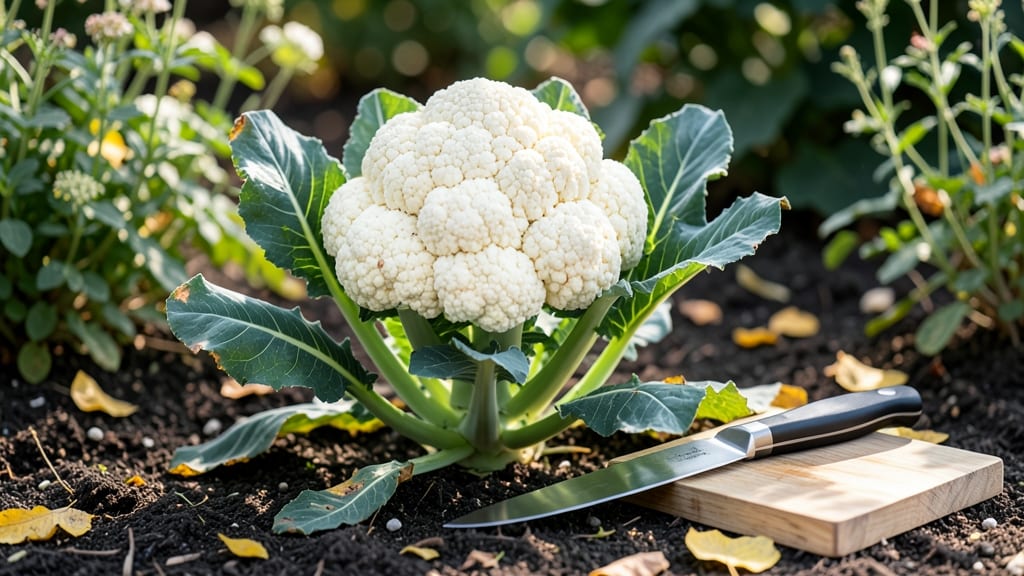
Cutting cauliflower at the right time transforms a heady mess into perfect, uniform florets—and keeps your plant happy for more harvests. I learned this the hard way when my first head split open from overgrowth, but now I harvest with precision.
The key is timing: wait until the head reaches 6-8 inches across, feels firm to the touch, and the outer leaves stay tightly closed.
You’ll need just three things: a sharp knife or pruning shears, a pair of gloves (cauliflower can stain), and a clean bucket of water to keep cut florets fresh.
Never twist the head off—always cut cleanly 1-2 inches below the base to avoid damaging the stem. This small detail makes all the difference for future regrowth.
After cutting, leave the central stalk intact—it’ll often produce 3-5 smaller side shoots within weeks. Just keep the area clean, water consistently, and watch as your plant rewards you with a second (or third!) harvest. The first florets will stay crisp for 5-7 days if stored properly in the fridge.
Fair warning: overcrowded plants struggle to form new heads, so thin seedlings early if you’re growing multiple. And if your cauliflower bolts (sends up a flower stalk), don’t panic—just pull it and compost it. The lesson? Cutting right is the secret to abundant, repeat harvests all season long.
📚 In This Guide
- What you need
- Instructions
- Tips and common mistakes
- Wrapping up and next steps
What you need
- ● 1 head of fresh cauliflower: Choose a firm, compact head with tightly packed florets (avoid any with yellowing or soft spots). A medium-sized head (about 1–2 lbs) works well for most recipes.
- ● 1 sharp chef’s knife: An 8-inch chef’s knife is ideal for clean cuts. A dull knife can crush the florets—safety first!
- ● 1 cutting board: Use a stable, non-slip board (wood, bamboo, or high-quality plastic) to protect your knife and prevent accidents.
- ○ 1 bowl or plate: For holding cut florets or trimmings (optional: a colander if rinsing).
- ● Paper towels or clean kitchen towel: To pat dry any excess moisture from the cauliflower.
- ● Kitchen shears: Great for trimming stubborn stems or larger pieces quickly.
- ● Food processor or mandoline: For uniformly sized florets or cauliflower rice (if you prefer speed over precision).
- ● Citrus juicer or lemon wedge: To prevent browning—squeeze a little lemon juice over cut florets if storing for later.
- ● Plastic wrap or airtight container: For storing pre-cut cauliflower in the fridge (up to 3–4 days).
Step-by-Step instructions for harvesting cauliflower florets
Perfect florets start with the right knife work and timing—here's how to do it.
Select the Right Cauliflower Head
Choose a head that feels firm and heavy for its size—this means it's fully mature. The outer leaves should be tightly wrapped, and the floret itself should be a solid, compact shape. Avoid heads with brown or yellowing spots, as these indicate overmaturity or pest damage.
Gently squeeze the head to check for softness. A perfectly ripe cauliflower will yield slightly under pressure but won't feel mushy. If it feels rock-hard, it's not ready yet; if it's too soft, it's past its prime. The ideal texture is like a firm apple—just enough give to know it's ready for harvest.
Prepare Your Tools and Workspace
Use a sharp, 8-inch chef's knife or a serrated utility knife—dull blades crush the florets and leave jagged edges. Wipe the blade with a damp cloth before cutting to prevent cross-contamination if you've been cutting other vegetables. Lay out a clean cutting board and place a large bowl nearby to collect the trimmed leaves and stems.
Work in a well-lit area where you can see the floret's structure clearly. A bright overhead light helps you spot any hidden discoloration or pest activity. Keep a paper towel handy to blot up any moisture that might seep from the cut surface—this prevents the florets from becoming soggy and spoiling faster.
Remove the Outer Leaves
Start by pulling back the outermost leaves, one at a time, until you expose the white or pale green core of the floret. These leaves are edible but often tough, so removing them makes the floret look cleaner and improves texture. Use your fingers to gently peel them away—don't tear them, as this can damage the delicate head underneath.
Discard any leaves that are yellowed, wilted, or have holes from pests. If the floret is still tightly wrapped, you can leave a few of the innermost leaves attached for now—they’ll come off easily during trimming. The goal is to reveal the compact, unbroken head beneath, which is what you’ll be cutting into florets.
Cut the Floret Into Even Pieces
Place the exposed floret on the cutting board and hold it firmly with one hand. With your dominant hand, make a horizontal cut about 1 inch below the base of the floret to separate it from the stem. This creates a flat surface for further trimming. Discard the stem or save it for stock—it’s packed with flavor.
Next, divide the floret into 4 equal wedges by making two vertical cuts from the top to the base. Press the knife down firmly but evenly to avoid crushing the florets. For larger heads, you can make 3 wedges instead, but aim for uniformity—this ensures even cooking later. Each wedge should have a flat base where it meets the cutting board.
Trim the Wedges for Uniformity
Examine each wedge and trim away any loose or discolored outer layers with a light, diagonal cut. This step refines the shape and removes any parts that might be past their prime. Keep the cuts clean and even—this not only looks better but also ensures the florets cook uniformly.
For smaller florets, you can leave the wedges whole. For larger ones, cut each wedge lengthwise into 2 equal halves to create 8 perfect florets total. The goal is to end up with pieces that are similar in size and shape, which makes them easier to cook and serve. If you’re prepping for roasting, aim for florets that are about 2-3 inches wide at the base.
Store or Cook Immediately
If you’re not cooking the cauliflower right away, place the trimmed florets in a sealed container lined with a paper towel to absorb moisture. Store them in the crisper drawer of your refrigerator where they’ll stay fresh for 3-4 days. For longer storage, blanch the florets for 3 minutes in boiling water, then shock them in ice water before freezing in a single layer on a tray before transferring to a bag.
For immediate cooking, you’ve got options: roast the florets at 425°F for 20-25 minutes until golden and crispy, or steam them for 5-7 minutes until tender but still bright green. The key is to cook them quickly over high heat to preserve their texture and nutrients. Avoid overcooking—they should be firm with a slight bite, not mushy.
Tips & tricks for perfect cauliflower florets
Here's what nobody tells you about cutting cauliflower that'll make all the difference in your kitchen.
Knife Selection Matters: The instructions mention an 8-inch chef's knife or serrated utility knife, but I've found that a sharp 10-inch chef's knife gives me more control for larger heads. The serrated edge is ideal for cutting through the tougher outer layers in Step 3, but a straight blade gives cleaner cuts for the wedges in Step 4. Always test your knife's sharpness by slicing through a paper towel—it should glide through without resistance. A dull knife will crush the florets, making them look messy and cook unevenly.
Visual Cues for Perfect Cuts: When making those two vertical cuts in Step 4 to create 4 wedges, imagine dividing the floret into quarters like a pie. The cuts should be straight from the top to the base, meeting at the center. For larger heads, the 3-wedge option works best when you can visually divide the head into three equal thirds. Pro tip: Place a ruler or measuring tape against the cutting board as a guide for perfectly straight cuts—this ensures uniform cooking later.
Storage Wisdom: The instructions mention storing florets for 3-4 days in the fridge, but I've found an even better method: place them in a single layer on a tray lined with parchment paper before transferring to a sealed container. This prevents them from sticking together, which can lead to sogginess. For freezing, after blanching for 3 minutes, let them cool completely before freezing—this prevents ice crystals from forming and ruining the texture. When ready to use, simply toss frozen florets directly into hot oil for roasting without thawing.
Cooking Consistency: The roasting time of 20-25 minutes at 425°F assumes you've cut florets that are 2-3 inches wide. If your pieces vary in size, cook the smaller florets first and add the larger ones later in the process. For steaming, the 5-7 minute range can be tricky—start checking at 5 minutes. They're done when you can pierce them easily with a fork and they still hold their shape. Overcooked florets lose their vibrant color and become mushy, which is why uniform size matters so much.
Pro Tips for How Do You Cut Cauliflower
- Here's what nobody tells you about cutting cauliflower that'll make all the difference in your kitchen.
- Knife Selection Matters: The instructions mention an 8-inch chef's knife or serrated utility knife, but I've found that a sharp 10-inch chef's knife gives me more control for larger heads.
- Visual Cues for Perfect Cuts: When making those two vertical cuts in Step 4 to create 4 wedges, imagine dividing the floret into quarters like a pie.
Frequently asked questions
Got questions about cutting cauliflower? You’re not alone! Here are some of the most common queries—plus quick, foolproof answers to help you slice like a pro.
Do I need to wash cauliflower before cutting it?
Yes! Rinse it under cool water to remove dirt or debris, especially if it’s pre-packaged. Pat it dry with a clean towel or paper towels to avoid soggy florets. Pro tip: Use a vegetable brush for stubborn grime on organic cauliflower.
How long does it take to cut a whole head of cauliflower?
For a medium head (about 2–3 lbs), expect 5–10 minutes if you’re a beginner. Speed up the process by trimming the core first, then working outward. Practice makes perfect—soon, you’ll slice it in under 3 minutes!
Can I use a knife other than a chef’s knife for cauliflower?
A serrated knife works great for separating florets cleanly, while a paring knife is ideal for trimming small stems. Avoid dull knives—they crush the florets instead of cutting them smoothly.
What’s the best way to store cut cauliflower?
Wrap florets in a damp paper towel and place them in an airtight container or resealable bag. Store in the fridge for 3–4 days or freeze for up to 3 months. For longer storage, blanch first to preserve texture.
Why does my cauliflower turn brown after cutting?
Cauliflower oxidizes when exposed to air, turning brown or yellow. To prevent this, soak florets in cold water with lemon juice or vinegar for 5–10 minutes before cooking. For storage, keep them submerged in water in the fridge.
Wrapping up and next steps
Mastering how to cut cauliflower opens up a world of culinary possibilities—from crispy roasts to creamy soups!
Whether you're a beginner or a seasoned chef, patience and practice will make you a pro in no time. 🌟 Now that you’ve got the perfect florets down, why not experiment with recipes like cauliflower rice, grilled florets, or even a cheesy bake?
Your kitchen (and taste buds) will thank you!
Pro tip: Keep a small bowl of water nearby to rinse your florets—it’ll help them stay fresh longer!