
Shrubs
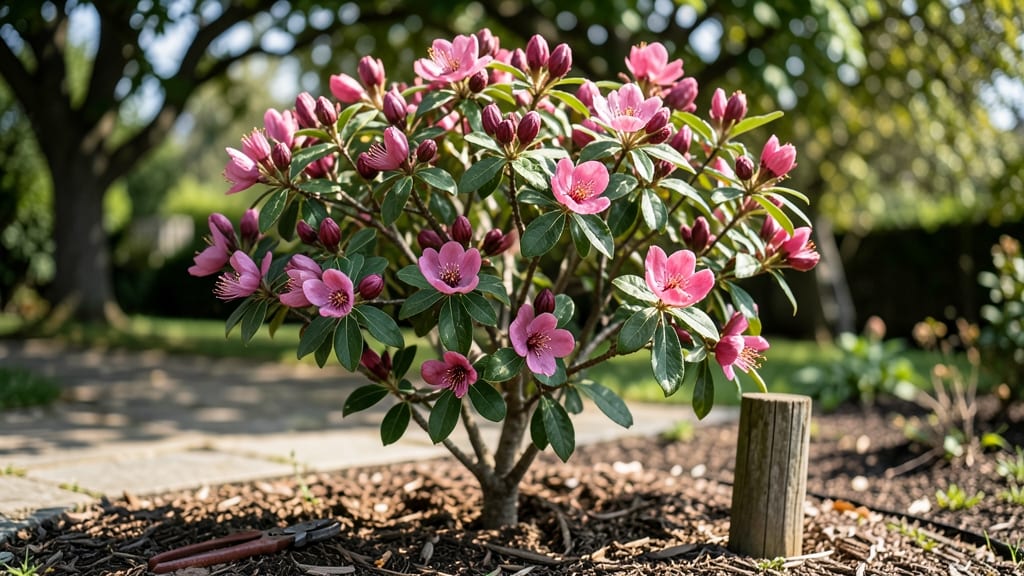
Flowering quince care starts with one secret: three strategic trims turn this tough shrub into a year-round bloomer. 🌸 I’ve watched mine explode with fragrant blossoms from late winter through spring—while most shrubs are still sleeping.
The key isn’t complicated, but it’s not what you’d expect from a plant this hardy.
This shrub thrives in full sun to partial shade and handles poor soil like a champ. Water it deeply once established, and fertilize lightly in early spring—no fancy amendments needed.
The real magic happens with pruning: cut back old wood in late winter, shape in summer, and tidy up after blooming. It’s foolproof once you know the timing.
What you’ll end up with is a shrub covered in rosy-pink or white blooms that smell like cotton candy, followed by edible (though tart) fruit. The foliage stays glossy green all season, and it’s nearly pest-free. Even better? It rebounds from pruning mistakes—something I’ve tested more than once.
Works in zones 4-9, from city sidewalks to country gardens. The only rule? Don’t over-prune—this shrub rewards patience with bold, long-lasting color when you let it do its thing. Let’s get those blooms going!
📚 In This Guide
- What you need
- Instructions
- Tips and common mistakes
- Wrapping up and next steps
What you need
- ● Flowering quince plant: 1-2 healthy nursery-grown plants (bare-root or containerized, 1–2 years old).
- ● Well-draining soil: Amend heavy clay with compost (5–10 lbs per plant) or sand (1 part sand to 3 parts soil) if needed.
- ● Pruning tools: 1 pair bypass pruners (for small branches, ¼–½ inch thick).
- ● 1 pair loppers (for thicker branches, ½–1½ inches).
- ● 1 pruning saw (for stubborn, woody stems >1½ inches).
- ● Mulch: 2–3 inches of organic mulch (e.g., shredded bark, pine straw, or wood chips) to retain moisture and suppress weeds.
- ○ Fertilizer (optional but helpful): 1 balanced, slow-release fertilizer (10-10-10 or 20-20-20, 1–2 lbs per plant) applied in early spring.
- ● OR 1 organic option like composted manure (5 lbs per plant) or fish emulsion.
- ● Gloves: 1 pair gardening gloves (heavy-duty for thorns!).
- ● Watering can or hose: With a soaker hose attachment for deep watering (1–2 gallons per plant, 2–3 times per week in dry spells).
- ● Staking (if needed): 1–2 bamboo stakes or metal supports for young plants in windy areas.
- ● Plant tags: 1–2 waterproof labels to track variety and planting date.
- ● Disinfectant: Rubbing alcohol (70% or higher) or bleach solution (1 part bleach to 9 parts water) to clean pruning tools between cuts.
- ● Sunlight: A full-sun to partial-shade location (6+ hours of sunlight daily for optimal blooms).
- ● Spacing: Plant 6–10 feet apart (allows airflow and reduces disease risk).
- ● pH preference: Slightly acidic to neutral soil (pH 6.0–7.0). Test soil with a pH kit if unsure.
- ● Drainage: Avoid soggy spots—flowering quince hates waterlogged roots!
How to keep your flowering quince blooming all year
Three strategic trims will keep your quince producing flowers nonstop—no complicated techniques required.
✂️ Step 1: First Trim After Spring Blooms
Wait until after the first flush of flowers fades—usually late spring or early summer. This is the only trim where you remove about one-third of the plant's height, cutting just above a leaf node where three leaves meet. I always use clean, sharp pruners to avoid crushing stems.
Real talk: You might feel nervous cutting back so much, but this forces new growth that will produce more flowers. The key is cutting at a 45-degree angle just above a leaf node—this prevents water from pooling and keeps the plant healthy.
✂️ Step 2: Light Summer Trim to Encourage Fall Flowers
About 6-8 weeks after the first trim, give your quince a lighter touch. Remove only the dead or crossing branches—these are easy to spot because they're brown or growing inward. Never cut more than 10% of the plant's total growth in this step.
Here's the thing—quince responds to light trims by producing side shoots that bloom later. Watch for new growth emerging from the sides of old branches. These are your future flower producers, so leave them alone unless they're clearly weak or diseased.
✂️ Step 3: Final Winter Prune for Spring Renewal
In late winter or early spring, before any buds appear, do one final trim. Remove any dead wood or branches growing inward, cutting back to a healthy leaf node. This is also when you shape the plant—you can lightly trim to maintain its form, but keep at least half the plant's height.
I like to do this trim on a dry day when the plant's dormant. The fresh cuts will callus over quickly, and you'll see vigorous new growth by early spring. Don't skip this—it's what keeps your quince producing flowers year after year.
⏰ Step 4: Ongoing Care Between Trims
Between these three main trims, your quince needs minimal attention. Water deeply once a week during dry spells, but never let it sit in soggy soil. A 2-inch layer of mulch around the base helps retain moisture and keeps roots cool.
Watch for any branches that look weak or diseased—remove them immediately with clean pruners. Healthy quince growers have thick stems and bright green leaves. If you see yellowing or spots, that's your cue to act fast before it spreads.
Tips & tricks for perfect flowering quince care
Keeping your flowering quince blooming year-round doesn't have to be intimidating—just a few simple adjustments can make all the difference.
Timing is Everything: The first trim after spring blooms is the most critical. Wait until the flowers have completely faded—don't rush it! I've seen gardeners trim too early, which can remove next year's flower buds. The key is patience: once the petals have fallen and the flower stalks start turning brown, that's your cue. This timing ensures you're cutting back old growth that won't produce flowers anyway.
Tool Selection Matters: Never use dull pruners—they crush stems and create jagged cuts that invite disease. Invest in a good pair of bypass pruners and sharpen them regularly. I also recommend disinfecting your tools with rubbing alcohol between cuts, especially when removing diseased branches. This simple step prevents spreading problems throughout your quince.
Visual Cues for Healthy Growth: When doing your light summer trim, look for branches that are growing directly toward the center of the plant—these are the "crossing branches" you want to remove. Healthy side shoots will emerge from the sides of remaining branches, and these are your future flower producers. Think of it like opening a window for fresh air—you're creating space for new growth to thrive.
Winter Pruning Wisdom: That final winter trim might feel counterintuitive since the plant appears dormant, but it's essential. Cutting back to half the plant's height might seem drastic, but quince is remarkably resilient. The fresh cuts will callus over quickly in dry winter conditions, and you'll see vigorous new growth by early spring. This is when you shape the plant—think of it as giving your quince a haircut to maintain its form while encouraging healthy new growth.
Pro Tips for Flowering Quince Care
- Keeping your flowering quince blooming year-round doesn't have to be intimidating—just a few simple adjustments can make all the difference.
- Timing is Everything: The first trim after spring blooms is the most critical.
- Tool Selection Matters: Never use dull pruners—they crush stems and create jagged cuts that invite disease.
Frequently asked questions
Got questions about keeping your Chaenomeles speciosa thriving? Here are the answers to the most common concerns—from pruning puzzles to pest problems—so you can enjoy those fragrant blooms year after year!
When is the best time to prune flowering quince for maximum blooms?
Prune your flowering quince right after flowering (late spring to early summer) to encourage next year’s blooms. Avoid heavy pruning in fall or winter, as this can reduce spring flowers. A light trim in late winter (if needed) is fine, but focus on shaping rather than heavy cuts.
Why aren’t my flowering quince blooms as vibrant as they used to be?
Faded blooms often signal overcrowding, poor sunlight, or nutrient deficiencies. Thin out dense branches, ensure it gets 6+ hours of sun daily, and fertilize in early spring with a balanced 10-10-10 formula. Deadheading spent blooms can also prolong flowering.
Can flowering quince grow in containers? What size pot do I need?
Yes! Choose a 15-20 gallon container with drainage holes and use well-draining soil. Dwarf varieties like ‘Coccinea’ work best. Repot every 2-3 years and prune annually to control size. Just remember—container-grown quince may need extra winter protection in cold climates.
How do I protect flowering quince from pests like aphids or scale insects?
Start with cultural care: Healthy plants resist pests better. For infestations, blast off aphids with a strong water spray or use neem oil (mix 1 tbsp per gallon of water). For scale, scrape them off with a stiff brush and apply horticultural oil in dormant season. Monitor leaves regularly for early signs.
Is flowering quince deer-resistant? Can I plant it near my garden’s edge?
Yes! Flowering quince is deer-resistant thanks to its thorns and bitter foliage. It’s a great privacy hedge or border plant. Just avoid planting near high-traffic areas where thorns might be a nuisance—opt for a 3-4 foot spacing from walkways for easier maintenance.
Wrapping up and next steps
Caring for your flowering quince is simpler than you think—just a little pruning love and attention to its needs can reward you with stunning, year-round blooms! 🌸 Whether you’re trimming for shape, health, or fresh flowers, these three easy steps keep your shrub thriving.
Now that you’re armed with the know-how, why not grab your shears and give your quince the care it deserves?
Ready to level up your garden game? Next, check out our guide to propagating quince cuttings—because who doesn’t love free plants? 🌱