
Container Gardens
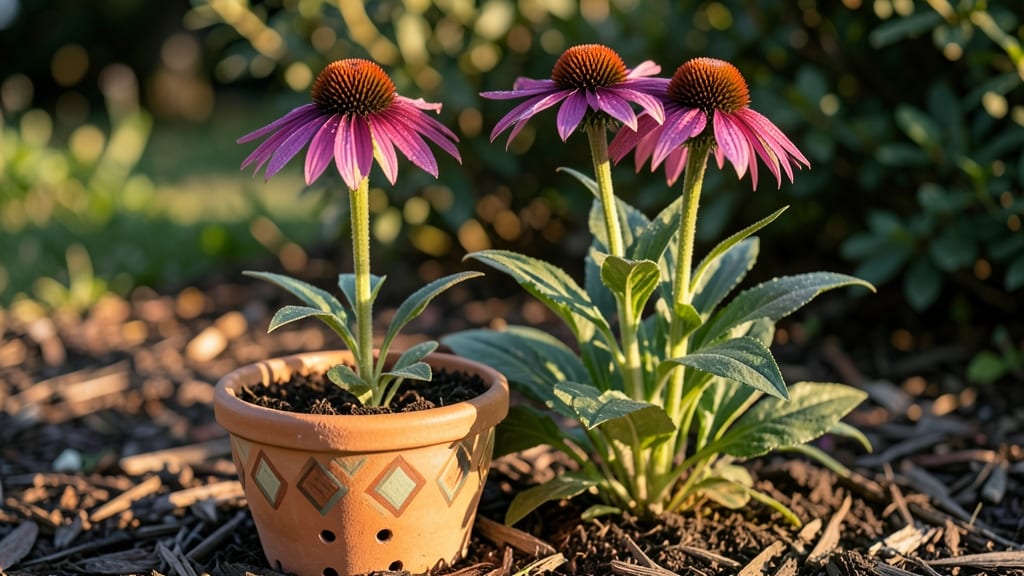
Growing coneflowers in containers turns your patio into a pollinator paradise with bold purple blooms that last from summer through frost. 🌿 I’ve watched these tough perennials transform small spaces into vibrant displays—even on city balconies where soil is scarce.
The key isn’t just the right pot size (think 12-18 inches wide for mature plants) but how you pair them with companions like lavender or sedum for texture and color contrast.
Container coneflowers need well-draining soil and a spot with at least 6 hours of sunlight daily, but they reward you with minimal fuss. Unlike in-ground plants, you’ll control watering—letting the top inch dry between drinks prevents root rot.
A slow-release fertilizer in spring keeps blooms lush without overpowering their natural elegance. The real magic? Their drought tolerance once established, making them perfect for forgetful gardeners.
Imagine a tiered arrangement with coneflowers as the star—tall purple spikes framed by silver foliage or trailing white alyssum. The blooms attract butterflies all season, and their long stems make stunning cut flowers too.
Even in winter, the dried seed heads add rustic charm. For year-round interest, swap summer pots for winter pansies or evergreen heuchera beneath them.
Urban gardeners love this setup because it eliminates weeds and soil-borne diseases while maximizing small spaces. Just watch for powdery mildew in humid summers—spraying with neem oil keeps them healthy.
Whether you’re a balcony gardener or a patio designer, these containers prove beauty and resilience go hand in hand. Ready to create your own? Here’s how to start.
📚 In This Guide
- What you need
- Instructions
- Tips and common mistakes
- Wrapping up and next steps
What you need
- ● Container: At least 12–15 inches deep and 12–18 inches wide (larger for multiple plants). Choose pots with drainage holes (or DIY by drilling them yourself!).
- ● Potting Mix: 1–2 bags (5–10 quarts) of high-quality, well-draining container mix (avoid garden soil—it compacts!).
- ● Coneflower Plants: 1–3 plants (depending on container size). Opt for Echinacea purpurea (purple) or Echinacea 'White Swan' (white) for bold contrast.
- ● Container-grown seedlings (transplant shock is less likely than with bare-root plants).
- ● Fertilizer: Slow-release granular fertilizer (10-10-10 or 20-20-20) or balanced liquid fertilizer (diluted to half-strength).
- ● Mulch: 1–2 cups of organic mulch (e.g., shredded bark or coconut coir) to retain moisture and suppress weeds.
- ● Watering Can or Hose: With a gentle spray nozzle to avoid displacing soil.
- ● Self-watering system: A wicking reservoir or self-watering pot to reduce maintenance (ideal for vacations!).
- ● Decorative stones: 1–2 cups of pebbles or gravel for a polished look (place on top of mulch).
- ● Echinacea-specific fertilizer: A low-phosphorus formula (e.g., fish emulsion) to boost bloom production.
- ● Support stakes: For tall varieties (e.g., Echinacea 'Magnus'), use 3–4 ft bamboo stakes tied gently with twine.
- ● Container liner: A breathable fabric liner (e.g., landscape fabric) to protect pots from root damage (great for terracotta or clay).
How to grow stunning coneflowers in containers
Here's how I keep these hardy perennials blooming beautifully in pots year after year.
🪴 Step 1: Choose the Right Containers and Drainage
Coneflowers need 5-gallon or larger containers for their deep root systems. I use unglazed terra cotta pots because they breathe better and prevent root rot. Make sure each container has multiple drainage holes—at least three—so excess water escapes freely. If your pots only have one hole, drill two more on opposite sides to improve airflow.
Place a 2-inch layer of gravel or coarse sand at the bottom before adding soil. This creates a reservoir for water while preventing clogged drainage. The extra space also gives roots room to establish before hitting the bottom of the pot. Real talk: Skipping this step leads to soggy roots and stunted growth within weeks.
🌱 Step 2: Prepare Soil and Plant at the Right Depth
Fill containers with a well-draining potting mix (avoid garden soil—it compacts and suffocates roots). I blend equal parts potting mix, perlite, and compost for optimal aeration and nutrients. Leave 1 inch of space at the top for watering. Press the soil down lightly but don't compact it—coneflowers hate dense soil.
Dig a hole twice as wide as the root ball but only as deep as the container's original soil line. Coneflowers grow best when planted at the same depth they were in their nursery pot. Gently loosen the roots if they're circling and place the plant in the hole. Fill around the base with soil, pressing firmly to remove air pockets. Water deeply right after planting to settle everything.
☀️ Step 3: Position for Maximum Sun and Airflow
Coneflowers thrive in full sun (6+ hours daily). Place containers on a south or west-facing patio where they get unfiltered light. If you notice stems stretching or leaves turning pale, your spot isn't sunny enough—move them closer to the light source. I rotate pots a quarter turn weekly so plants grow evenly rather than leaning toward the sun.
Space containers 12-18 inches apart to allow airflow between plants. Good circulation prevents fungal diseases like powdery mildew, which loves damp foliage. If your patio is windy, anchor pots with stakes or weights—coneflowers can get top-heavy as they grow. Watch for drooping leaves after watering; this signals the pot is too heavy for its base.
💧 Step 4: Water and Feed for Continuous Blooms
Water when the top 2 inches of soil feel dry—stick your finger in to check. Coneflowers hate soggy roots but also need consistent moisture. I water deeply in the morning so the soil has time to dry slightly before evening. Overwatering leads to root rot, while underwatering causes buds to drop before opening. Aim for 1-2 gallons per container weekly, adjusting for heat or rain.
Feed with a balanced liquid fertilizer (10-10-10) every 4-6 weeks during the growing season. I switch to a low-phosphorus formula (5-1-5) in late summer to encourage more blooms instead of foliage. Stop fertilizing in fall—coneflowers need time to harden off for winter. Yellowing leaves usually mean overfeeding; flush the soil with water if this happens.
✂️ Step 5: Prune and Winterize for Next Year's Blooms
Deadhead spent blooms by cutting stems back to the first set of healthy leaves below the flower head. This encourages more blooms and keeps plants tidy. I prune every 2-3 weeks during the growing season—don't wait until flowers fade completely. Cut back one-third of the plant height in early fall to promote bushier growth next year.
For winter, move containers to a protected spot (like a garage or under an eave) where temps stay above 20°F. Water sparingly—just enough to keep soil from drying out completely. In spring, trim back any dead foliage and fertilize lightly before new growth appears. Coneflowers reward patience with bold blooms for years—just keep them happy in containers!
Tips & tricks for perfect container-grown coneflowers
Here's what nobody tells you about keeping these perennials thriving in pots for years.
Container Size and Root Space: The 5-gallon minimum isn't just about volume—it's about root development. Coneflowers have deep taproots that need room to grow downward. I've seen plants in 3-gallon pots struggle after just one season, while 7-gallon containers keep them robust for years. If you're using decorative pots, nest them inside sturdy grow bags for stability and root support.
Soil Mix Secrets: That equal parts potting mix, perlite, and compost blend isn't just arbitrary—it's about balance. The perlite creates air pockets that prevent compaction, while compost provides slow-release nutrients. For extra insurance, add a handful of worm castings to the mix; they introduce beneficial microbes that strengthen roots. Confession: I skipped this for years and wondered why my plants looked stressed.
Winter Protection Strategy: The 20°F minimum isn't just about avoiding freeze damage—it's about preventing moisture loss. In colder climates, I wrap containers in bubble wrap before moving them to protected spots. This creates an insulating barrier while still allowing airflow. For extra protection, place containers on wooden boards or pallets rather than cold concrete, which draws heat from the roots.
Pruning Timing: The 2-3 week deadheading schedule might seem frequent, but it's crucial for continuous blooms. I've found that removing faded blooms before they turn brown prevents seed production, which diverts energy from new flowers. For fall pruning, I cut back one-third of the plant height in early October—this gives the plant time to harden off before winter while still promoting bushier growth next spring.
Pro Tips for Coneflowers In Containers
- Here's what nobody tells you about keeping these perennials thriving in pots for years.
- Container Size and Root Space: The 5-gallon minimum isn't just about volume—it's about root development.
- Soil Mix Secrets: That equal parts potting mix, perlite, and compost blend isn't just arbitrary—it's about balance.
Frequently asked questions
Got questions about growing coneflowers in containers? You’re not alone! Here are answers to the most common ones to help you keep your blooms thriving all year.
Can coneflowers grow in small containers?
Yes! While they prefer at least 12-inch-deep pots for better root growth, dwarf varieties like Echinacea purpurea ‘White Lustre’ thrive in smaller containers (8–10 inches). Just ensure proper drainage and use a high-quality potting mix to prevent root rot.
How often should I water potted coneflowers?
Water when the top inch of soil feels dry—usually 2–3 times per week in hot weather, but less in cooler months. Containers dry out faster than garden beds, so check soil moisture regularly. Overwatering is the #1 killer! Use saucers to catch excess water and improve drainage.
Do coneflowers need full sun in containers?
Coneflowers love 6+ hours of direct sun daily for vibrant blooms. In containers, place them near south- or west-facing windows or balconies. If shade is unavoidable, opt for Echinacea ‘Green Envy’, which tolerates partial shade slightly better.
What pests should I watch for in container-grown coneflowers?
Keep an eye out for aphids, spider mites, and Japanese beetles, which love tender new growth. Spray off pests with water or use neem oil for organic control. Prevention tip: Avoid overcrowding plants and prune regularly to improve airflow.
Can I overwinter coneflowers in containers?
Yes! Move pots to a sheltered spot (like a garage or under eaves) before frost. Wrap containers in burlap or bubble wrap for insulation, and reduce watering. In mild climates, mulch heavily with straw. Pro tip: Trim back dead foliage in early spring to encourage fresh growth.
Wrapping up and next steps
Growing coneflowers in containers is a rewarding way to bring bold color and easy-care beauty to patios, balconies, or small spaces—no green thumb required! 🌸 With the right mix of well-draining soil, sunlight, and occasional TLC, these perennials will reward you with stunning blue-purple blooms for years.
Whether you’re a beginner or a seasoned gardener, container gardening makes it simple to enjoy their resilience and charm.
Ready to transform your space? Start by picking your favorite coneflower variety, grab a container, and follow the steps above. Then, watch your garden flourish—and don’t forget to share your progress with fellow plant lovers! 🌿