
Shrubs
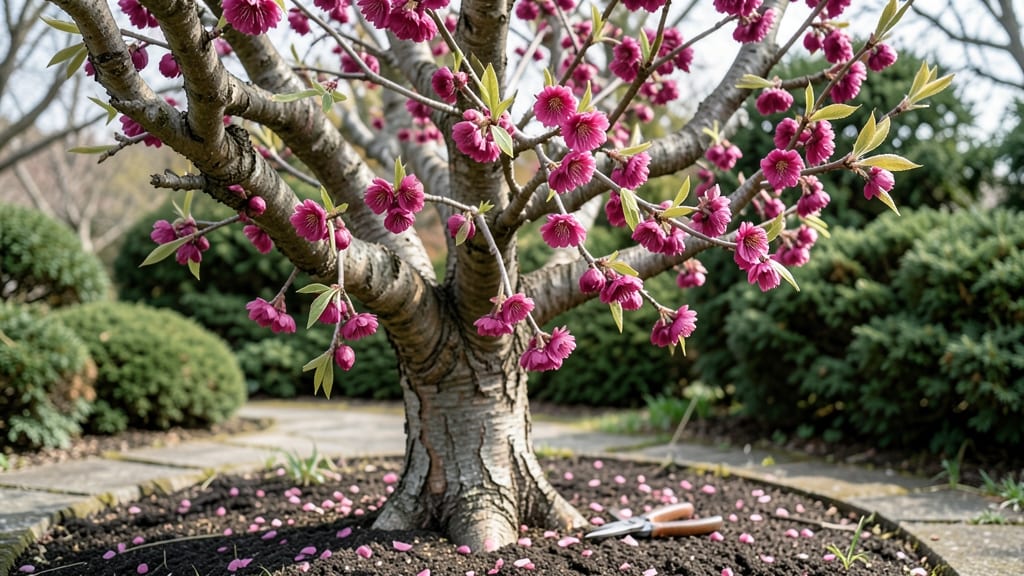
That first blush of pink in February is worth every minute of care. 🌸 The flowering plum shrub (Prunus cerasifera) transforms your Ozark landscape into a fragrant dream—its velvety blossoms appear before most trees even think about waking up.
I planted mine on a crisp March morning, and by April, neighbors were stopping to ask what I'd done to "make the whole yard smell like spring." The secret isn't complicated: full sun, well-draining soil, and a little patience.
My first mistake was planting too deep—now I dig a hole twice as wide as the root ball but only as deep. Water deeply after planting, then let the roots establish before regular checks.
Mulch keeps moisture in and weeds out, and that's where the magic happens—roots spread freely when they're not competing with grass. By late spring, you'll have a canopy of blooms that last 2-3 weeks, followed by edible (but messy) plums that birds adore.
The shrub stays compact enough for small yards but dramatic enough to anchor a landscape. Just watch for powdery mildew—spray with neem oil if you see white dust on leaves. Works beautifully alongside roses, lavender, or boxwood for a layered spring display. Let's get yours growing!
📚 In This Guide
- What you need
- Instructions
- Tips and common mistakes
- Wrapping up and next steps
What you need
- ● Flowering plum shrub (Prunus cerasifera) – Choose a healthy, disease-free specimen (bare-root or potted, 1-3 years old). Pro tip: Look for varieties like ‘Kwanzo’ or ‘Newport’ for vibrant blooms!
- ● Well-draining soil mix – 60% topsoil, 30% compost, and 10% perlite or coarse sand (for Ozark zones, amend clay-heavy soil with organic matter).
- ● Organic mulch – 2–3 inches of shredded bark, pine straw, or wood chips to retain moisture and suppress weeds.
- ● Slow-release fertilizer – 10-10-10 or a balanced organic option (e.g., fish emulsion) for early planting.
- ● Garden trowel or spade – For digging holes (12–18 inches wide/deep for mature shrubs).
- ● Pruning shears – Sharp, clean shears (sterilize with rubbing alcohol between cuts).
- ● Watering can or hose with nozzle – Gentle watering is key, especially after planting.
- ● Garden gloves – Protect your hands from thorns and soil.
- ● Measuring tape – Ensure proper spacing (10–15 feet apart for mature shrubs).
- ● Epsom salt – 1 tablespoon mixed into planting hole for magnesium (boosts bloom health).
- ● Tree stakes & ties – If planting in windy Ozark areas.
- ● Drip irrigation system – For consistent moisture (especially in dry spells).
- ● Pest/disease control – Neem oil spray (preventative for aphids or fungal issues).
Step-by-step instructions for planting and caring for a flowering plum shrub
Here's how to establish a fragrant, long-lived plum shrub that will become the star of your Ozark landscape.
🌱 Step 1: Choose the Perfect Planting Location
Flowering plum thrives in full sun to partial shade, with at least 6 hours of direct sunlight daily for optimal blooming. In the Ozarks, a south-facing spot gets the most sun exposure. Avoid low-lying areas where cold air settles—this shrub needs good air circulation to prevent fungal issues.
Test your spot by observing it for a week. If the ground stays soggy for more than 24 hours after rain, amend with 2-3 inches of compost to improve drainage. The ideal soil is slightly acidic to neutral (pH 6.0-7.0), which most Ozark native soils already provide.
Here's the thing—planting too close to structures or other shrubs reduces airflow. Give your plum 10-15 feet of clearance on all sides. This ensures strong growth and minimizes disease pressure, which is especially important in humid Ozark summers.
🪴 Step 2: Prepare the Planting Hole and Transplant
Dig a hole twice as wide as the root ball but only as deep as the container's root base. This prevents burying the trunk too deeply, which can cause rot. Gently remove the shrub from its container and loosen any circling roots with your fingers—don't trim them unless they're severely compacted.
Place the shrub in the hole so the top of the root ball sits 1 inch above ground level. Backfill with the native soil you removed, mixing in 1-2 inches of compost at the bottom of the hole. Water deeply as you fill to eliminate air pockets, then firm the soil gently with your hands.
Don't skip the mulch layer. Spread 2-3 inches of wood chips over the root zone, keeping it 3 inches away from the trunk to prevent moisture buildup. This mimics natural forest conditions and helps retain moisture during Ozark summers while protecting roots from temperature swings.
☀️ Step 3: Establish Watering and Fertilizing Routines
Water deeply 2-3 times per week for the first 6-8 weeks after planting to encourage strong root development. You'll know it's enough when water drains 6-8 inches deep—stick your finger in the soil to check. Overwatering is a common mistake that leads to root rot in heavy clay soils.
After the initial establishment period, reduce watering to once weekly unless experiencing extreme heat (over 90°F). Flowering plum is drought-tolerant once established, but consistent moisture during the first growing season prevents transplant shock. Look for wilting leaves as a sign it needs water.
Fertilize lightly in early spring with 10-10-10 granular fertilizer applied at ½ the recommended rate. Too much nitrogen promotes leafy growth at the expense of flowers. I've found that established Ozark plum shrubs often don't need additional fertilizer—just healthy soil and proper watering. Watch for yellowing leaves as a sign of over-fertilization.
✂️ Step 4: Prune for Shape and Health
Prune immediately after flowering to maintain shape and encourage next year's blooms. Remove dead, diseased, or crossing branches first using clean, sharp pruners. Cut just outside the branch collar where the branch meets the trunk—this prevents unsightly stubs and promotes faster healing.
For shaping, limit pruning to no more than 25% of the shrub's total growth in a single season. Flowering plum blooms on old wood, so avoid heavy pruning that removes last year's growth. You'll see new growth emerge from the sides within 2-3 weeks—this is your signal the shrub is recovering well.
Real talk: Don't prune in late summer or fall. New growth won't harden off before winter, and you'll lose those beautiful spring blooms. The best time is late winter to early spring, just as buds begin to swell but before new growth starts.
Tips & tricks for perfect flowering plum shrub care
Took me years of trial and error to figure out these secrets—here's how to skip the mistakes and get that fragrant Ozark plum thriving from day one.
Sunlight Secret: That 6 hours of direct sunlight isn't just a minimum—it's the sweet spot for maximum blooms. I've seen plum shrubs in partial shade produce flowers, but they're sparse and lack fragrance. In the Ozarks, morning sun with afternoon shade works best, especially during our intense summer afternoons. If your spot gets less than 6 hours, consider supplementing with a reflective surface like a white wall to bounce extra light onto the shrub.
Root Development Hack: The first 6-8 weeks are critical for root establishment, but don't just water when you think about it. Set a timer for every other day and check that water's draining 6-8 inches deep—this is when roots grow fastest. I use a long screwdriver to test depth. If water pools at the surface, you're overwatering, which causes more problems than underwatering in our clay soils.
Pruning Timing: That late winter to early spring window for pruning is non-negotiable. I learned this the hard way by pruning too early—new growth froze in our Ozark winters. Look for swollen buds as your cue to start pruning. And here's what nobody tells you: If you must prune in summer, do it immediately after flowering and avoid cutting more than 10% of the plant to preserve next year's blooms.
Fertilizer Strategy: The ½ rate recommendation for 10-10-10 fertilizer is perfect, but timing matters just as much. Apply it when you see new growth in early spring—about the same time you'd see daffodils blooming in your yard. I've found that established Ozarks plums often don't need fertilizer at all if you've amended the soil properly during planting. The key is watching for yellowing leaves, which means you've either over-fertilized or have a nutrient deficiency.
Pro Tips for Flowering Plum Shrub
- Took me years of trial and error to figure out these secrets—here's how to skip the mistakes and get that fragrant Ozark plum thriving from day one.
- Sunlight Secret: That 6 hours of direct sunlight isn't just a minimum—it's the sweet spot for maximum blooms.
- Root Development Hack: The first 6-8 weeks are critical for root establishment, but don't just water when you think about it.
Frequently asked questions
Got questions about your flowering plum shrub? You’re not alone! Here are answers to the most common queries—from blooming secrets to care hacks—so you can keep your fragrant beauty thriving in the Ozarks.
When does a flowering plum shrub bloom, and how long do the flowers last?
A flowering plum typically bursts into color in late winter to early spring (February–March in Ozark Zones), often before leaves emerge. With proper care, blooms can last 2–3 weeks, though some varieties may rebloom lightly in fall. Chilly nights enhance fragrance—so embrace those Ozark winters!
How fast does a flowering plum shrub grow, and how big will it get?
These shrubs grow at a moderate pace: about 12–24 inches per year. Mature size varies by variety, but most reach 10–15 feet tall and wide. Prune annually after flowering to maintain shape and encourage dense blooms—just avoid heavy cuts in late summer.
Can flowering plum shrubs handle Ozark winters, and do they need protection?
Yes! Flowering plums are hardy to USDA Zones 5–9, making them perfect for the Ozarks. They tolerate cold snaps down to -15°F. However, young shrubs may benefit from mulch (3–4 inches) around the base to insulate roots. Avoid wrapping burlap—it can trap moisture and harm the plant.
What’s the best way to prune a flowering plum shrub to encourage more flowers?
Prune right after blooming (April–May) to shape the shrub and remove dead wood. Avoid cutting back old wood—new blooms form on last year’s growth. For a bushier look, trim 1/3 of the oldest stems every few years. Never prune in late summer or fall, as this can reduce next year’s flowers.
Are flowering plum shrubs prone to pests or diseases, and how do I prevent them?
These shrubs are generally pest-resistant, but watch for aphids, scale, or powdery mildew in humid Ozark summers. Prevent issues by:
- Ensuring 6+ hours of sunlight for airflow.
- Watering at the base (not overhead) to avoid fungal spores.
- Removing fallen leaves/debris in autumn.
What are some flowering plum shrub alternatives if mine isn’t thriving?
If your plum struggles, try these fragrant, cold-hardy Ozark-friendly shrubs:
- Forsythia – Bright yellow blooms in early spring; thrives in Zones 5–8.
- Dwarf Korean Lilac – Compact, purple blooms; great for small spaces.
- Winter Honeysuckle (Lonicera fragrantissima) – Early spring fragrance; Zone 4–8.
- Weigela – Pink/red flowers; tolerates poor soil.
Wrapping up and next steps
The flowering plum shrub is a stunning addition to any Ozark garden, offering vibrant blooms, fragrant beauty, and year-round interest. With the right care—sunlight, well-draining soil, and occasional pruning—you’ll enjoy its cheerful display for seasons to come. 🌸
Ready to transform your landscape? Start by selecting the perfect spot and gather your supplies—then dive in! Whether you’re a seasoned gardener or just beginning, this shrub’s resilience and charm make it a rewarding project. Happy planting! 🌱