
Flowers
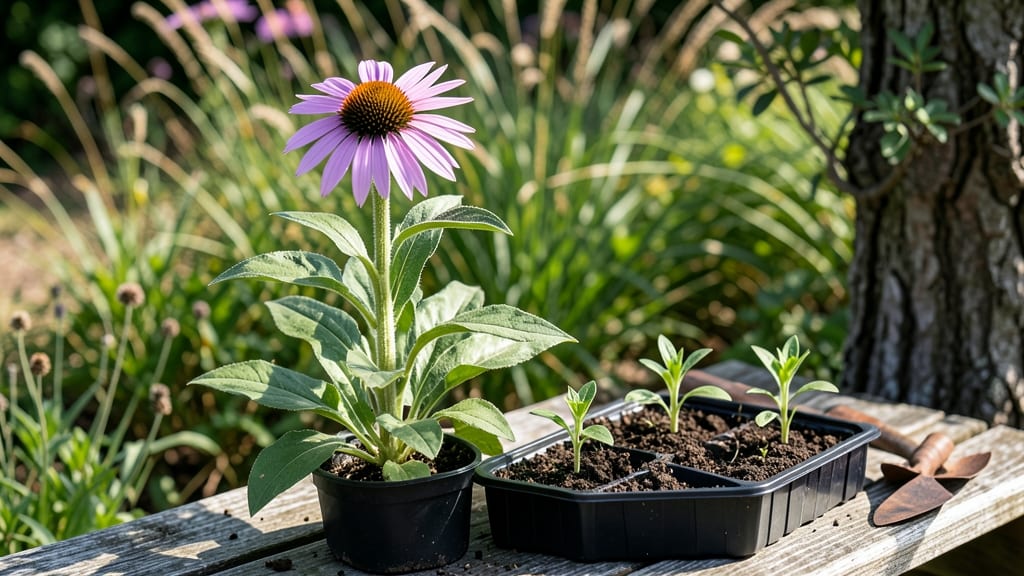
Growing the echinacea flower seeds gives you fast germination and those iconic purple blooms that hummingbirds adore. 🌿 I’ve started hundreds of echinacea seeds, and the key to success isn’t complicated—it’s about timing, soil, and patience.
The first true leaves appear in just 10-14 days when conditions are right, and once established, these plants thrive for years with minimal fuss.
You’ll need well-draining soil, a sunny spot with at least 6 hours of light daily, and a little extra warmth to kickstart those seeds. The trick is keeping them consistently moist until they sprout, then letting them dry slightly between waterings once they’re up.
Most beginners overwater, which leads to damping off—so resist the urge to pamper them too much.
By midsummer, you’ll have sturdy stems topped with bold, daisy-like blooms that last from July through frost. The flowers attract pollinators like crazy, and the deep roots make these plants drought-tolerant once they’re settled in.
Plus, they’re perennials, so you’ll enjoy them for seasons to come with almost no effort after the first year.
Works beautifully in borders, wildflower gardens, or even containers—just give them space to grow (18-24 inches apart). Here’s how to get those seeds sprouting strong and keep them blooming like crazy.
📚 In This Guide
- What you need
- Instructions
- Tips and common mistakes
- Wrapping up and next steps
What you need
- ● Echinacea flower seeds – Choose Echinacea purpurea (purple coneflower) or Echinacea pallida (pale purple coneflower) for best results. Buy 1–2 packets (50–100 seeds) for a small garden or 3–5 packets for larger patches.
- ● Seed-starting mix or potting soil – A lightweight, well-draining mix (e.g., 50% peat moss + 50% perlite/vermiculite) works best. Avoid garden soil—it’s too dense!
- ● Seed trays or small pots – Use biodegradable pots (2–3 inches deep) or a seed tray with cell inserts (at least 6–12 cells).
- ● Plastic wrap or humidity dome – Keeps moisture in while seeds germinate. A clear plastic bag or a humidity lid works perfectly.
- ● Spray bottle – For gentle watering (avoid over-saturating the soil).
- ○ Gloves (optional but recommended) – Protects hands from soil and seeds.
- ● Small hand trowel – For planting seeds at the correct depth (¼ inch).
- ● Grow lights or sunny windowsill – Echinacea seeds need 6–8 hours of light daily for strong germination. A LED grow light (12–15W) is ideal if natural light is limited.
- ○ Heat mat (optional) – Speeds up germination if your home is below 65°F (18°C). A seedling heat mat set to 70–75°F (21–24°C) works wonders!
- ● Transplanting supplies (later stage) – If moving seedlings outdoors, grab gardening stakes, fertilizer (balanced 10-10-10), and mulch.
- ● 🌡️ Soil temperature matters! Echinacea seeds germinate best in 60–70°F (15–21°C) soil. Use a soil thermometer if unsure.
- ○ ✨ Pre-soak seeds (optional) – Soak in lukewarm water for 24 hours to boost germination speed (especially in cooler climates).
- ● 🔄 Thin seedlings carefully – Once sprouts have 2–3 true leaves, thin to 12–18 inches apart to prevent overcrowding.
Step-by-step guide for germinating echinacea seeds successfully
Here's how to coax those stubborn echinacea seeds into sprouting quickly—no cold frames or fancy tricks required.
🌱 Step 1: Prep Seeds for Faster Germination
Echinacea seeds have a tough outer coating that slows germination. To speed things up, I soak the seeds in lukewarm water for 12-24 hours before planting. Place them in a small bowl or jar, cover with water, and let them sit on your counter. You'll see the water cloud slightly as the seeds absorb moisture—this is your signal they're ready.
After soaking, drain the seeds and gently pat them dry with a paper towel. This prevents them from rotting once planted. I like to do this step the night before planting so the seeds are ready to go in the morning. The goal is to soften that hard shell without overhydrating the seed itself.
💧 Step 2: Plant Seeds in Moist, Well-Draining Mix
Fill your seed-starting containers with the sterile seed-starting mix and moisten it until it's damp but not soggy. Press the mix down gently so the surface is firm—this helps seeds make good contact with the soil. You want the mix to hold moisture but still allow excess water to drain freely.
Scatter the echinacea seeds on the surface, spacing them about ¼ inch apart. Unlike some flowers, echinacea seeds don't need to be buried—they need light to germinate. Lightly press them into the soil with your finger, just enough so they stay in place. A gentle misting with a spray bottle ensures the surface stays moist without disturbing the seeds.
☀️ Step 3: Provide Warmth and Indirect Light
Echinacea seeds germinate best in 70-75°F soil. Place your containers in a warm spot, like on top of the fridge or near a sunny window where the air stays consistently warm. A seedling heat mat set to 75°F can cut germination time by nearly half if you have one.
Keep the soil consistently moist but never waterlogged. The surface should feel damp to the touch, but not wet enough to leave puddles. You'll see the first tiny sprouts in 14-21 days, though some seeds may take up to 30 days—patience is key here. Once sprouts appear, move them to a spot with bright, indirect light to prevent leggy growth.
🌿 Step 4: Thin Seedlings and Harden Off Gradually
When seedlings develop their first true leaves (the second set after the initial cotyledons), it's time to thin them. Use a small pair of scissors to snip the weaker seedlings at soil level, leaving the strongest one in each spot. Space them about 6 inches apart to give their roots room to grow.
After thinning, wait 2-3 weeks before hardening off. Start by placing the seedlings outside in a sheltered spot for 1-2 hours the first day, gradually increasing their time outdoors over 7-10 days. This slow transition helps them adjust to wind, sun, and temperature fluctuations. You'll know they're ready for the garden when they look vibrant and don't wilt after a full day outside.
Tips & tricks for perfect echinacea germination
Real talk: Those tough echinacea seed coats can test your patience. Here's how to turn that frustration into fast, reliable sprouts every time.
Soaking Strategy: The 12-24 hour soak is your secret weapon against those stubborn seed shells. I've found that using a small jar with just enough lukewarm water to cover the seeds completely works best—no need for fancy equipment. After soaking, I give them a quick rinse and pat them dry with a paper towel. This prevents any moisture from lingering between the seeds, which could lead to mold. The slight cloudiness in the water? That's your confirmation they're ready for planting.
Light Requirements: Echinacea seeds are photoblastic, meaning they need light to germinate. Unlike many seeds, you shouldn't bury them—just press them gently into the soil surface. I like to use clear plastic domes or even plastic wrap to create a mini greenhouse effect right after planting. This maintains humidity while still allowing light penetration. Remove the cover once you see sprouts emerging to prevent fungal growth.
Heat Management: Maintaining that 70-75°F soil temperature range is crucial, but don't stress if your home doesn't stay that warm. I've had success using a simple seedling heat mat under my containers, but even placing them on top of the fridge can work in a pinch. The key is consistency—fluctuations can delay germination. If your home runs cooler, consider using a small space heater with a thermostat to create a dedicated warm spot for your seeds.
Thinning Technique: When it's time to thin those seedlings, I recommend using small scissors rather than pulling by hand. This prevents disturbing the roots of your remaining plants. Space them 6 inches apart to give their roots room to develop properly. I've noticed that echinacea seedlings are surprisingly delicate at this stage—handle them with care to avoid shock. The first true leaves are your signal that it's time to thin, not the initial cotyledons.
Pro Tips for Echinacea Flower Seeds
- Real talk: Those tough echinacea seed coats can test your patience. Here's how to turn that frustration into fast, re...
- Soaking Strategy: The 12-24 hour soak is your secret weapon against those stubborn seed shells. I've found that using...
- Light Requirements: Echinacea seeds are photoblastic, meaning they need light to germinate. Unlike many seeds, you sh...
Frequently asked questions
Got questions about growing echinacea flower seeds? You’re not alone! Here are answers to the most common queries—from germination tips to troubleshooting—so your purple coneflowers thrive with confidence.
How long does it take for echinacea seeds to germinate?
Echinacea seeds are slow starters—expect germination in 14–30 days (sometimes longer!). Cold stratification (chilling seeds for 2–4 weeks) speeds this up. Keep soil consistently moist but not soggy, and place trays in a warm (70°F) spot with indirect light. Patience pays off!
Do echinacea seeds need cold stratification?
Yes! While not always required, cold stratification mimics winter and breaks seed dormancy. Place dry seeds in a sealed bag with damp sand, then refrigerate for 2–4 weeks. Skip this step only if using pre-stratified seeds (check the packet). Pro tip: Plant outdoors in fall for natural stratification!
Can I grow echinacea from seeds indoors?
Start seeds 6–8 weeks before your last frost in pots with well-draining soil. Use a heat mat (70–75°F) to boost germination. Transplant seedlings outdoors after hardening off (acclimating to outdoor temps for 7–10 days). Warning: Seedlings grow slowly—be patient!
Why aren’t my echinacea seeds sprouting?
Try these fixes:
- Check moisture: Soil should stay evenly damp (not dry or waterlogged).
- Test temperature: Seeds need warmth (70°F+). Move trays to a sunny windowsill or use a heat mat.
- Verify freshness: Old seeds (2+ years) may fail. Buy new packets!
- Light exposure: Cover trays with plastic wrap to retain humidity until sprouts appear.
What’s the best echinacea variety for beginners?
Start with ‘Magnus’ or ‘White Swan’—both are hardy, disease-resistant, and bloom reliably. For height, try ‘Green Envy’ (tall purple); for compact gardens, ‘Kim’s Knee High’ is perfect. All thrive in full sun and average soil!
Can I save echinacea seeds from my plants?
Yes! Let 3–5 flower heads dry on the stem, then harvest seeds from the cone-like centers. Store them in a cool, dry place for up to 1 year. Note: Seed viability drops over time—grow fresh ones for best results.
Wrapping up and next steps
Growing echinacea flower seeds is a rewarding journey that brings vibrant blooms and natural beauty to your garden. With the right preparation—like proper soil, patience, and a little sunlight—you’ll enjoy hardy, long-lasting flowers that attract pollinators.
Whether you’re a beginner or a seasoned gardener, these seeds are a fantastic choice for adding color and resilience to your outdoor space.
Ready to dive in? Start by gathering your supplies and follow the steps to nurture your echinacea from seed to stunning bloom. Happy gardening! 🌱✨