
Pruning
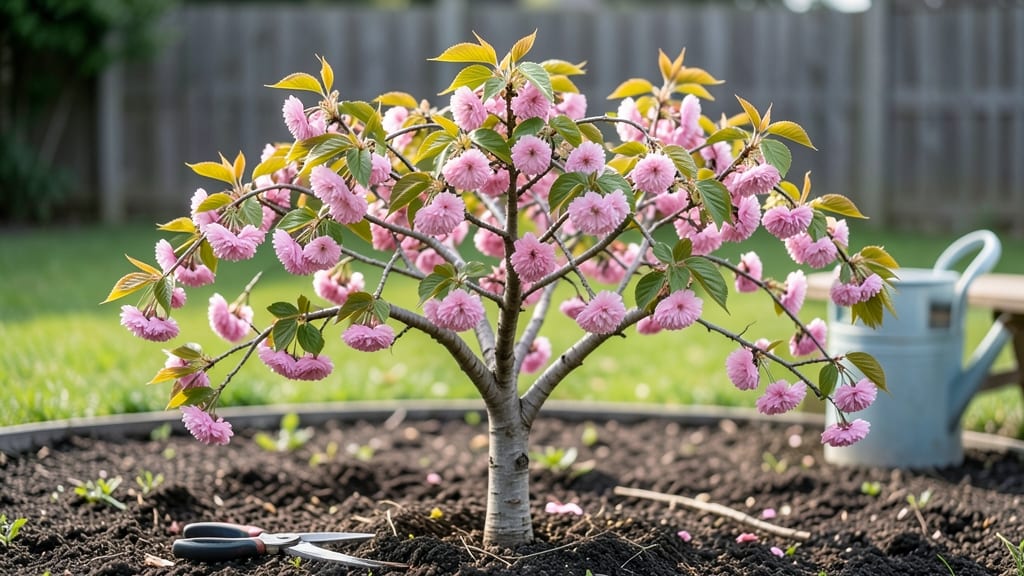
The dwarf flowering cherry tree brings spring's pink magic to any garden—without taking over your yard. 🌸 I’ve used these trees to create stunning focal points in tight spaces, their delicate blossoms spilling like confetti over patios and walkways.
The key to keeping them looking their best lies in strategic pruning, which isn’t just about trimming branches but shaping them into living art that complements your outdoor space.
These trees thrive when placed where their cascading blooms can be admired from multiple angles—think near seating areas, along pathways, or as a dramatic centerpiece in containers.
Pair them with low-growing perennials like hostas or ferns to highlight their ethereal branches, or tuck them into cottage-style gardens where their romantic blooms blend seamlessly with roses and peonies. The right placement turns pruning from a chore into a design feature.
With the right cuts, you’ll transform your tree into a year-round star: vibrant pink bursts in spring, lush green foliage in summer, and even subtle winter interest when the branches catch the light.
The goal isn’t just to keep it neat—it’s to create a living sculpture that enhances your garden’s personality, whether you’re going for a serene Japanese-inspired retreat or a lively urban courtyard.
Here’s how to prune for maximum impact while keeping the tree healthy and full of life. We’ll focus on techniques that preserve that dreamy, cascading habit—because the best pruning should feel like an extension of your garden’s design, not a battle against it.
📚 In This Guide
- What you need
- Instructions
- Tips and common mistakes
- Wrapping up and next steps
What you need
- ● Pruning shears: Bypass pruners (sharp, clean, and 1.5–2.5-inch blade capacity for small branches). 1 pair required.
- ● Loppers: For thicker branches (up to 1-inch diameter). 1 pair required.
- ○ Hand saw: Pruning saw with 8–10-inch blade (for stubborn, woody stems). 1 optional.
- ● Disinfectant: 70% isopropyl alcohol or pruning sealant (to prevent disease spread). Small bottle required.
- ● Gloves: Gardening gloves (cut-resistant for safety). 1 pair recommended.
- ○ Pruning sealant: Optional but helpful for large cuts (e.g., Tanglefoot Tree Wound Pruning Seal).
- ● Weather: Prune on a dry, overcast day (avoid extreme heat or frost).
- ● Time of year: Late winter/early spring: Best for major structural pruning (before buds swell).
- ● Summer/fall: Light pruning to shape and encourage blooms.
- ● Tree health: Ensure your dwarf cherry is free of pests/diseases (treat issues before pruning).
- ○ Safety gear: Safety glasses (optional but wise for debris).
Step-by-step pruning guide for your dwarf flowering cherry tree
Here's how to keep your tree blooming beautifully while shaping it just right.
✂️ Step 1: Prune Immediately After Spring Blooming
Wait until 2-3 weeks after flowering when all blossoms have fallen naturally. This timing ensures you don't cut off next year's flower buds, which form on last year's growth. I always prune in early May—just as the leaves are fully unfurling but before new growth gets too vigorous.
Start by removing any dead, diseased, or crossing branches first. These are easy to spot—they'll be brown, mushy, or rubbing against other branches. Use clean, sharp pruning shears to make cuts at a 45-degree angle just above a bud or branch collar. Never leave stubs, as they invite rot and disease.
Next, thin out about 20% of the oldest branches from the center of the tree. This opens up the canopy for better air circulation and light penetration. Look for branches that grow straight up or inward—they'll compete with others for sunlight and nutrients. Aim to create an open vase shape that lets sunlight reach all parts of the tree.
🌿 Step 2: Shape the Tree During Summer Growth
In late June or early July, when your tree is in full leaf but before fall, do a light shaping prune. This is where you'll refine the tree's form rather than remove large branches. I focus on keeping the natural shape while encouraging a slightly wider spread—dwarf cherries can get top-heavy if they grow too tall.
Use hand pruners to trim back any branches that are growing too long or leggy. Cut just above a leaf bud or side branch to encourage bushier growth. For branches that are too thick for hand pruners, use your loppers. Remember to sterilize your tools between cuts with rubbing alcohol to prevent spreading disease between branches.
Here's the thing—don't overdo it. You're not trying to drastically reshape the tree in one session. Just make small adjustments to maintain balance. A good rule of thumb is to never remove more than 25% of the tree's foliage in any single pruning session. Your goal is to encourage more blooms next spring, not stress the tree.
⏰ Step 3: Light Winter Pruning for Structure
In late winter or early spring, just before buds begin to swell, do a final structural prune. This is your chance to address any issues that became apparent over the past year. I always do this in February when temperatures are above freezing but before the sap starts flowing vigorously.
First, remove any dead, broken, or weak branches. Then, look for branches that are growing in the wrong direction. If a branch is growing downward or inward, you can shorten it by cutting back to a lateral bud. For branches that are too low on the trunk, you can remove them entirely to improve air circulation and light penetration at the base.
This is also the time to adjust the height of your tree if needed. If it's getting too tall for its spot, you can make a heading cut just above a strong lateral branch. Just be careful—heading cuts stimulate vigorous growth, so only do this if absolutely necessary. Your dwarf cherry will bloom best when its energy goes into producing flowers rather than excessive new growth.
💧 Step 4: Post-Pruning Care for Healthy Growth
After pruning, your tree will need some special attention to recover and prepare for next year's blooms. Water deeply right after pruning to help the tree recover from the stress. Then, apply a 2-3 inch layer of mulch around the base, keeping it several inches away from the trunk to prevent rot.
Fertilize lightly with a balanced, slow-release fertilizer in early spring. I use a 10-10-10 formula at about half the recommended rate. This gives your tree just enough nutrients to support new growth without encouraging too much foliage at the expense of flowers. Avoid high-nitrogen fertilizers—they'll make your tree grow lots of leaves but few blooms.
Finally, keep an eye on your tree over the next few weeks. If you notice any signs of stress—yellowing leaves, wilting, or oozing sap—your pruning cuts might have been too severe. In that case, hold off on any more pruning until the tree has recovered. With proper care, your dwarf flowering cherry should reward you with an even more spectacular bloom next spring.
Tips & tricks for perfect dwarf flowering cherry tree pruning
A few simple tricks can transform your pruning routine from stressful to effortless—keeping your tree blooming like crazy year after year.
Timing is Everything: The 2-3 week window after flowering is critical because that's when your tree has already set next year's buds on last year's wood. If you prune too early, you risk cutting off potential blooms. I mark my calendar for early May—just when the leaves are unfurling but before new growth gets too vigorous. This timing ensures you're working with the right branches while giving your tree time to recover before summer heat sets in.
Tool Prep Saves You: Sterilizing your pruning tools between cuts with rubbing alcohol isn't just a good idea—it's a must. I keep a small spray bottle of 70% isopropyl alcohol handy during every pruning session. This prevents spreading diseases like silver leaf fungus, which can turn your beautiful tree into a sad, leaf-less skeleton. Sharp tools also make cleaner cuts that heal faster, so take 5 minutes to hone your blades before you start.
Visual Pruning Cues: When thinning branches in Step 1, look for the classic "three D's"—dead, dying, and diseased branches. These are your first targets. For healthy branches, use the "one-third rule": never remove more than one-third of a branch's length in a single cut. This maintains the tree's energy balance. I also check for branches that cross or rub against each other—they'll create wounds that invite pests and diseases.
Post-Pruning Recovery: After your pruning session, the 2-3 inch layer of mulch isn't just decoration—it's protection. Keep it several inches away from the trunk to prevent rot, but spread it generously to retain moisture and regulate soil temperature. I always water deeply right after pruning to help the tree recover from stress. This combination gives your tree the best chance to bounce back strong for next year's spectacular blooms.
Pro Tips for Dwarf Flowering Cherry Tree
- A few simple tricks can transform your pruning routine from stressful to effortless—keeping your tree blooming like crazy year after year.
- Timing is Everything: The 2-3 week window after flowering is critical because that's when your tree has already set next year's buds on last year's wood.
- Tool Prep Saves You: Sterilizing your pruning tools between cuts with rubbing alcohol isn't just a good idea—it's a must.
Frequently asked questions
When is the best time to prune my dwarf flowering cherry tree?
Prune your tree right after flowering (late spring to early summer). This ensures you don’t cut off next year’s blossoms. Avoid heavy pruning in fall or winter, as it can stress the tree and reduce spring blooms. Light shaping in late summer is fine, but keep it minimal.
Can I prune my dwarf flowering cherry tree in winter?
Winter pruning is not ideal—it can stimulate new growth that’s vulnerable to cold damage or pests. If you must prune in winter, do so very lightly (just removing dead or crossing branches). Wait until after flowering to do any major shaping or rejuvenation pruning.
How do I encourage more flowers on my dwarf flowering cherry tree?
To boost blooms, prune selectively—focus on removing dead, diseased, or overcrowded branches rather than random cuts. Also, ensure your tree gets full sun (6+ hours/day) and well-draining soil. Fertilize lightly in early spring with a balanced, acid-loving plant formula.
Why aren’t my dwarf flowering cherry tree’s flowers lasting long?
Short-lived blooms are normal, but pests, disease, or stress can worsen the issue. Check for aphids, spider mites, or fungal spots on leaves. Improve airflow by pruning dense areas, and water deeply (but not excessively) to avoid root stress. Mulching helps retain moisture and reduce temperature fluctuations.
What’s a good alternative if my dwarf flowering cherry tree isn’t thriving?
If your tree struggles with pests, poor blooms, or harsh climates, consider these low-maintenance alternatives:
- Kwanzan cherry (Prunus serrulata ‘Kwanzan’) – More disease-resistant with abundant pink flowers.
- Yoshino cherry (Prunus × yedoensis) – Cold-hardy and prolific bloomer.
- Dwarf Japanese maple (Acer palmatum) – Stunning foliage and compact size.
Wrapping up and next steps
Transforming your outdoor space with a dwarf flowering cherry tree is a rewarding experience—its vibrant pink blooms and compact size make it a standout addition to any garden. By mastering the art of pruning, you’ll ensure healthy growth, stunning flowers, and a well-shaped tree year after year.
Now that you’re armed with the right techniques and tools, go ahead and give your tree the care it deserves!
Ready to take the next step? Mark your calendar for your first pruning session—spring is the perfect time to start. And if you’re feeling inspired, why not share your progress with fellow gardening enthusiasts? Happy pruning! 🌸✂️