
Flowers
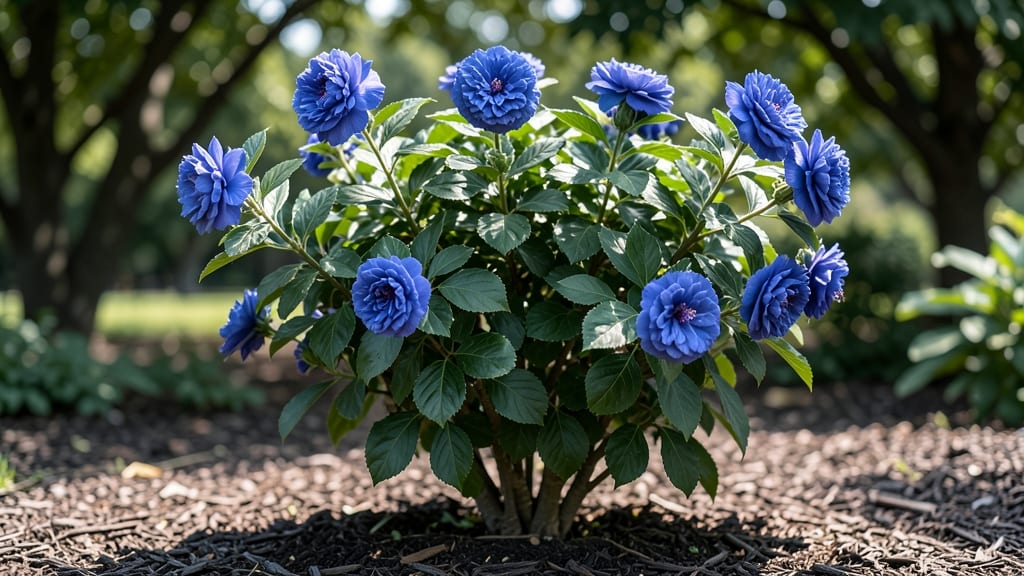
Double flower Rose of Sharon creates a breathtaking blue canopy that lasts all summer—with half the pruning work of traditional roses. 🌿 I planted mine last spring, and by July, the branches were heavy with layered petals instead of the single blooms I’d seen elsewhere.
The secret lies in its sturdy growth habit and how it responds to minimal shaping.
This shrub thrives in full sun with well-draining soil—no fancy amendments needed—just good old compost mixed in at planting. Water deeply once a week after establishment, and you’ll see those velvety blue-purple blooms emerge in early summer, lasting until frost.
Unlike single-flower varieties, the double blooms stay showier longer and attract hummingbirds like crazy.
Pruning is where it gets easy: just trim back one-third of the oldest stems in late winter, and you’ll encourage fresh growth and even more flowers. The branches are sturdy enough to hold up under the weight of those layered petals, so no staking required.
By fall, you’ll have a living privacy screen that’s both functional and stunning.
Perfect for small yards, urban gardens, or as a focal point along fences. The double flowers also make incredible cut blooms—longer vase life than most roses. Let’s get yours growing strong!
📚 In This Guide
- What you need
- Instructions
- Tips and common mistakes
- Wrapping up and next steps
What you need
- ● Double Flower Rose of Sharon Plants: 1-3 bare-root or potted plants (choose Hibiscus syriacus cultivars like 'Blue Bird,' 'Blue Chiffon,' or 'Minerva' for dramatic blooms).
- ● Well-Draining Soil: Mix 60% native soil with 30% compost and 10% perlite or sand (aim for a pH of 6.5–7.5).
- ● Sunlight Spot: A location with full sun (6+ hours/day) or partial shade (4–6 hours) in hot climates.
- ● Watering Can or Hose: With a gentle spray nozzle for hydration.
- ● Organic Mulch: 2–3 inches of wood chips or shredded bark to retain moisture.
- ● Fertilizer: Slow-release granular fertilizer (10-10-10 or 5-10-10) or compost tea (apply in early spring).
- ● Pruning Shears: Sharp, clean bypass pruners (sterilize with rubbing alcohol).
- ○ Stakes or Trellis: For young plants in windy areas (optional for support).
- ● Plant Ties: Soft fabric strips to secure stakes.
- ● Disease Control: Copper fungicide (preventative for powdery mildew) or neem oil.
- ● Slow-Release Granules: For extra nutrients (e.g., Osmocote).
Step-by-step instructions for cultivating a stunning Rose of Sharon canopy
Here's how to transform your landscape into a year-round blue paradise with minimal effort.
🌱 Step 1: Choose and Prepare the Perfect Planting Site
Select a location with full sun exposure—at least 6-8 hours daily—where the soil drains well. Rose of Sharon thrives in average garden soil but performs best when planted in a spot with 60-70°F daytime temperatures and protection from harsh winter winds. I always dig a hole twice as wide as the root ball but only as deep as the container's base—this prevents stem burial, which causes rot.
Amend the native soil with 2-3 inches of compost mixed into the bottom of the hole. The reason for this is that Rose of Sharon's deep roots need organic matter to establish quickly. Tap the plant from its container to loosen roots, then place it in the hole so the top of the root ball sits 1 inch below soil level. This slight burial helps stabilize the plant and encourages stronger root growth.
☀️ Step 2: Plant and Water for Immediate Establishment
Backfill the hole with native soil, pressing gently around the roots to eliminate air pockets. Avoid compacting the soil too firmly—you want it firm enough to support the plant but loose enough for roots to spread. Water deeply right after planting to settle the soil and remove any air gaps. I use a garden hose with a gentle spray attachment to deliver 1-2 gallons of water directly to the root zone.
Watch for the soil to absorb the water completely—you'll notice it when the surface looks slightly damp but not glistening. Mulch the base with 2-3 inches of organic mulch (like shredded bark) to retain moisture and regulate soil temperature. Keep the mulch 3-4 inches away from the plant stem to prevent rot. This step is crucial for establishing a strong root system before the first flowers appear.
✂️ Step 3: Minimal Pruning for Year-Round Blooms
Rose of Sharon is famous for its low-maintenance blooms, but a little strategic pruning keeps it lush and flowering. After the first year, prune in late winter or early spring—just as new growth begins—by cutting back one-third of the oldest stems to the ground. This encourages fresh, vigorous growth and prevents the plant from becoming too woody. I always make clean cuts at a 45-degree angle just above an outward-facing bud to promote healthy branching.
During the growing season, remove only the spent blooms—this is called deadheading—and any crossing or rubbing branches. The goal is to maintain an open, airy structure that allows sunlight to reach all parts of the plant. You'll see new flower buds forming within 4-6 weeks of proper pruning, signaling that the plant is responding well to the minimal intervention.
💧 Step 4: Water and Feed for Continuous Color
Water deeply once a week during the first growing season, delivering 3-5 gallons per plant at the base. You'll know you've watered enough when the soil feels moist 6 inches deep. Once established, Rose of Sharon is drought-tolerant, but consistent moisture during the first year ensures robust growth. I always water in the early morning to reduce evaporation and fungal risks.
Feed with a balanced, slow-release fertilizer (like 10-10-10) in early spring and again in mid-summer. Apply it according to package instructions, usually every 6-8 weeks. The key here is moderation—over-fertilizing leads to lush foliage but fewer blooms. You'll notice the plant's vibrant blue flowers lasting from mid-summer through fall, with some varieties even blooming into winter in milder climates.
Tips & tricks for perfect double flower Rose of Sharon
Creating that dreamy blue canopy doesn't have to be guesswork—these insider tricks will help your Rose of Sharon thrive with less effort.
Sunlight Strategy: While the instructions call for 6-8 hours of daily sun, I've found that morning sun (especially east-facing exposure) is even more beneficial. The cooler morning light reduces stress on the plant while still providing the energy it needs for those vibrant blooms. If you're in a hot climate, consider providing afternoon shade during peak summer months to prevent leaf scorch.
Soil Preparation Secret: The 2-3 inches of compost recommendation is perfect, but here's what nobody tells you—mix in a handful of bone meal at planting time. This adds phosphorus, which directly supports root development and flower production. The roots will thank you with stronger establishment and more abundant blooms next season.
Watering Wisdom: Those 1-2 gallons of initial watering are crucial, but I've learned the hard way that consistency matters more than quantity. Set a reminder to check soil moisture weekly by sticking your finger 6 inches deep—if it's dry at that depth, it's time to water again. The goal is to keep the soil evenly moist but never soggy, especially during the first growing season.
Pruning Precision: When you're cutting back one-third of the oldest stems in late winter, focus on the thickest, most woody branches first. These are the ones that have outlived their usefulness and are now competing with younger growth for nutrients. The 45-degree angle cut above an outward-facing bud isn't just tradition—it creates a natural shield that protects the bud from winter winds while encouraging new growth in the right direction.
Pro Tips for Double Flower Rose Of Sharon
- Creating that dreamy blue canopy doesn't have to be guesswork—these insider tricks will help your Rose of Sharon thrive with less effort.
- Sunlight Strategy: While the instructions call for 6-8 hours of daily sun, I've found that morning sun (especially east-facing exposure) is even more beneficial.
- Soil Preparation Secret: The 2-3 inches of compost recommendation is perfect, but here's what nobody tells you—mix in a handful of bone meal at planting time.
Frequently asked questions
Is the Double Flower Rose of Sharon easy to grow for beginners?
This beauty is a drought-tolerant superstar that thrives in USDA Zones 5-9 with minimal fuss. Plant it in well-draining soil, give it full sun to partial shade, and water occasionally—it’s forgiving even if you forget a week or two. Just avoid soggy roots, and you’re golden.
When is the best time to prune my Double Flower Rose of Sharon?
The key is late winter or early spring (before new growth starts). Prune to shape, remove dead wood, and thin out crowded branches. For double blooms, cut back about ⅓ of the plant—this encourages lush, fuller flowers. Skip fall pruning unless you’re in a cold climate and need to protect tender stems.
Why aren’t my Double Flower Rose of Sharon blooms as vibrant as in the pictures?
Faded blooms often mean too much shade or poor soil nutrition. Ensure it gets 6+ hours of sunlight daily and feed it with balanced fertilizer in spring. Overwatering can also dilute colors—let the soil dry slightly between waterings. Pro tip: Deadhead spent blooms to encourage more vibrant regrowth!
Can I grow Double Flower Rose of Sharon in containers? Yes—but with a twist!
While it’s not ideal (they’re big growers!), you can try it in a large container (20+ gallons) with fast-draining soil. Use a trellis or sturdy support to manage its sprawl, and repot every 2-3 years to refresh the soil. Just know: Container-grown plants may bloom less prolifically than in-ground ones.
Are there pests or diseases I should watch for with Double Flower Rose of Sharon?
Generally hardy, but keep an eye out for aphids, spider mites, or powdery mildew in humid climates. Treat pests with neem oil or insecticidal soap, and improve airflow to prevent mildew. Overwatering is the #1 enemy—stick to deep but infrequent watering to keep roots happy.
Bonus Tip: How do I get my Double Flower Rose of Sharon to rebloom?
To coax multiple bloom cycles, prune lightly after the first flush of flowers and fertilize mid-season with a low-phosphorus, high-potassium blend. Deadheading regularly also signals the plant to keep producing! Think of it like giving your shrub a little encouragement to show off its talents again.
Wrapping up and next steps
The Double Flower Rose of Sharon is a stunning, low-maintenance star for any garden, offering vibrant blooms and year-round interest with minimal effort. Its hardy nature and striking blue hues make it a dream for both beginners and seasoned gardeners alike—just plant, water, and enjoy! 🌸
Ready to transform your outdoor space? Start by selecting your favorite shade of blue and give your garden the effortless elegance it deserves. Happy planting! 🌿