
Flowers
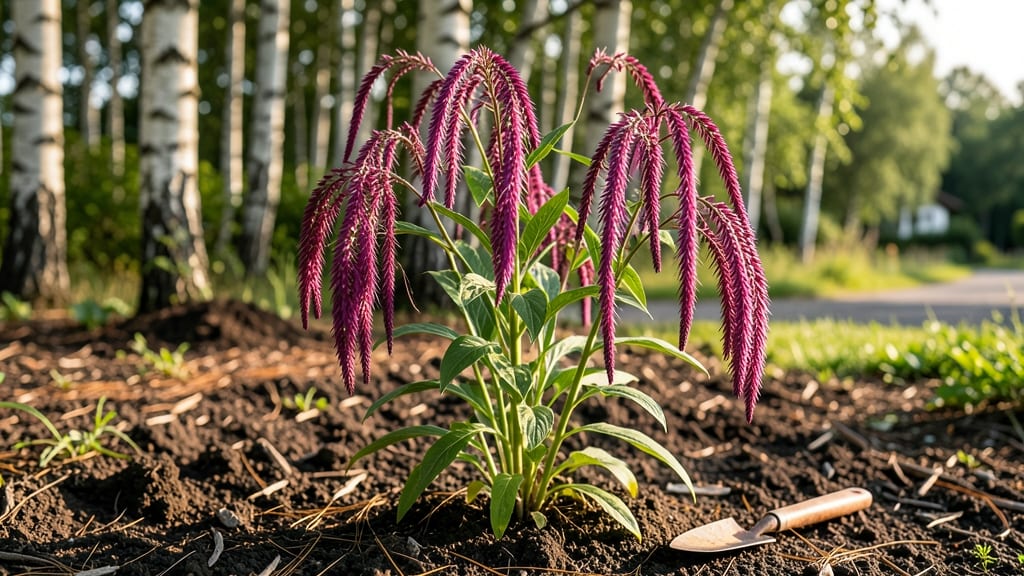
The amaranth flower, known as Love Lies Bleeding, creates a dramatic blue-green waterfall that transforms any garden into a living sculpture. 🌿 I first fell for its cascading tendrils when they spilled over a rusted metal trellis, turning an ordinary corner into a focal point that neighbors couldn’t stop admiring.
The deep, velvety plumes aren’t just striking—they last from summer through frost, offering seasonal interest without extra work.
This plant thrives in full sun to partial shade, making it perfect for borders, containers, or even hanging baskets where its graceful arch can truly shine. Pair it with purple salvia for a bold contrast or golden grasses to highlight its rich color.
The key to its visual impact? Planting in clusters of 3-5 stems—this creates that lush, cascading effect that makes it look like a professional designer did the work.
Imagine your garden in late summer: the air thick with the faint, earthy scent of drying blooms, sunlight filtering through the feathery blue-green plumes like a natural curtain.
It’s the kind of plant that makes passersby pause and ask, "What’s that?"—then spend minutes admiring how it softens hard edges or draws the eye to a specific spot. Once you see it in person, you’ll understand why it’s a garden designer’s secret weapon.
Works equally well in modern, cottage, or wildflower gardens, and its drought tolerance means less fuss once established. Whether you’re filling a corner, adding height to a container, or creating a vertical garden, Love Lies Bleeding delivers effortless drama with minimal care.
Let’s talk placement—this is where the magic happens.
📚 In This Guide
- What you need
- Instructions
- Tips and common mistakes
- Wrapping up and next steps
What you need
- ● Seeds: 10–20 Love Lies Bleeding (Amaranthus caudatus) seeds (non-GMO, heirloom varieties for best results).
- ● Growing Containers (if indoors): 1–2 large pots (12+ inches deep) with drainage holes, or a raised bed (if outdoors).
- ● Potting Mix: 1 bag of high-quality, well-draining seed-starting mix (or garden soil amended with compost for outdoor planting).
- ● Watering Can or Spray Bottle: For gentle hydration (avoid overwatering!).
- ○ Fertilizer (optional but recommended): Balanced organic fertilizer (5-5-5 or 10-10-10 NPK ratio) for seedlings.
- ● Slow-release granular fertilizer (like 14-14-14) for mature plants.
- ○ Gloves (optional): To protect hands while handling soil or seeds.
- ● Trowel or Small Shovel: For transplanting seedlings outdoors.
- ● Pruning Shears: To trim dead flowers and encourage bushier growth.
- ● Sunlight Access: Outdoors: Full sun (6+ hours daily).
- ● Indoors: A south-facing window or grow lights (12–16 hours/day).
- ● Patience! 😊 Amaranth grows fast but needs consistent care for those show-stopping blooms.
- ● 🌡️ Temperature: Ideal germination range is 70–85°F (21–29°C)—keep seeds warm!
- ● ✨ Bonus: Add Epsom salt (1 tbsp/gallon) to water every 2 weeks for vibrant blooms.
- ● 🔄 Rotation: If growing in pots, rotate them weekly for even sunlight exposure.
How to grow amaranth 'Love Lies Bleeding' for a stunning year-round display
This striking ornamental grass thrives with minimal fuss—here's how to coax its dramatic cascades.
🌱 Step 1: Choose the Perfect Planting Spot
Select a location with full sun exposure (6+ hours daily)—this variety won't tolerate shade. The deep blue plumes need intense light to develop their signature color. I always check the site in late afternoon when shadows are longest to ensure the spot gets true sunlight.
Well-draining soil is critical. Amaranth hates soggy roots, so avoid low-lying areas where water pools. If your soil is heavy clay, amend it with 2-3 inches of compost mixed into the top 12 inches to improve drainage and fertility. The roots should spread easily without hitting compacted layers.
🌱 Step 2: Plant at the Right Time and Depth
Start seeds indoors 8-10 weeks before your last frost date or sow directly after all danger of frost has passed. The seeds are large and easy to handle—I like to plant them ½ inch deep and 12-18 inches apart in rows 18 inches apart for mature plants.
Here's the thing—these seeds germinate quickly in warm soil. I always keep a heat mat nearby to maintain soil temperatures above 70°F until sprouts appear, which usually takes 7-14 days. Thin seedlings to the strongest plant per spot once they reach 2 inches tall, pulling weaker ones at soil level to avoid disturbing roots.
☀️ Step 3: Provide Consistent Care for Maximum Impact
Water deeply once weekly during establishment, then taper to every 10-14 days once established—this plant is surprisingly drought-tolerant once mature. The key is to let the top 2 inches of soil dry out between waterings. Overwatering causes the stems to weaken and flop before the plumes even develop.
Fertilize lightly with a balanced 10-10-10 formula at planting and again when the plants reach 12 inches tall. Too much nitrogen will produce leafy growth at the expense of those stunning plumes. I always use half-strength fertilizer to avoid burning the tender new growth.
✂️ Step 4: Maintain and Extend the Display
Deadhead spent plumes by cutting back to 6-8 inches above the base in late fall. This encourages fresh growth in spring and keeps the plant looking tidy. The new shoots will produce fresh plumes within 4-6 weeks if given enough light and warmth.
For year-round interest, I prune lightly after each bloom cycle. The plant responds beautifully to this treatment, producing multiple flushes of color. In colder climates, mulch heavily with 3-4 inches of straw to protect the crown through winter—these plants are surprisingly hardy once established.
🪴 Step 5: Overwinter for Next Season's Drama
In zones with cold winters, cut back the foliage to 2 inches above ground level after the first hard frost. The plant will go dormant but will regrow vigorously in spring. I always mark the location with a stake so I don't accidentally disturb the crown when preparing the bed for spring planting.
Here's where it gets fun—watch for new shoots in early spring. They emerge with a fresh, vibrant green color that contrasts beautifully with the mature blue plumes. Once they reach 6 inches tall, you can begin fertilizing lightly to encourage robust growth for the season ahead.
Tips & tricks for perfect amaranth 'Love Lies Bleeding' growth
Transforming your garden into a striking blue oasis starts with these insider strategies for growing 'Love Lies Bleeding' that will have neighbors stopping to admire.
Lighting Secret: The 6+ hours of direct sunlight requirement isn't just about quantity—it's about quality. Position your plants to receive morning sun and afternoon light without harsh midday shadows. I've found that placing them slightly east of center in the garden captures the best light balance, especially in regions with intense afternoon sun. This positioning prevents the delicate plumes from bleaching under prolonged exposure.
Soil Preparation Strategy: When amending heavy clay soil with 2-3 inches of compost, don't just scratch it in—dig it down to at least 12 inches. This creates proper root channels while preventing compaction. I like to mix in a handful of perlite or coarse sand for additional drainage. The goal is to replicate the loose, well-draining conditions these plants thrive in, particularly in their native habitats.
Germination Game-Changer: That 70°F soil temperature threshold is non-negotiable for reliable germination. If your spring soil runs cooler, consider using a seedling heat mat or even a simple black plastic mulch to warm the soil. I've seen germination rates jump from 50% to nearly 90% when maintaining consistent warmth during those critical first 7-14 days. The payoff is worth the small investment in equipment.
Fertilizer Timing: The half-strength 10-10-10 application at planting and again when plants reach 12 inches tall serves two purposes: it provides balanced nutrition without overwhelming the plant, and it establishes a routine that prevents over-fertilization. I've learned the hard way that amaranth responds poorly to nitrogen excess—it'll produce lush foliage at the expense of those stunning blue plumes we're after.
Pro Tips for Amaranth Flower Love Lies Bleeding
- Transforming your garden into a striking blue oasis starts with these insider strategies for growing 'Love Lies Bleeding' that will have neighbors stopping to admire.
- Lighting Secret: The 6+ hours of direct sunlight requirement isn't just about quantity—it's about quality.
- Soil Preparation Strategy: When amending heavy clay soil with 2-3 inches of compost, don't just scratch it in—dig it down to at least 12 inches.
Frequently asked questions
Got questions about growing and caring for Love Lies Bleeding (Amaranth flower)? You’re not alone!
Here are answers to the most common queries—from planting to troubleshooting—so you can cultivate this striking blue-green beauty with confidence.
How long does it take for Love Lies Bleeding to flower after planting?
With proper care, Love Lies Bleeding typically blooms 6 to 8 weeks after planting from seeds. If grown from transplants, expect flowers in 4 to 6 weeks. Patience pays off—these dramatic cascades are worth the wait! For faster results, opt for established plants in spring or early summer.
Can Love Lies Bleeding survive winter in cold climates?
While this tropical-looking plant thrives in USDA Zones 9-11, it’s not frost-hardy. In colder regions (Zones 7-8), grow it as an annual or bring potted plants indoors before temperatures drop below 30°F (-1°C). Mulch heavily in fall to extend its life, but expect it to die back in freezing temps.
What’s the best way to revive a drooping or leggy Love Lies Bleeding plant?
Leggy or floppy stems often signal underwatering or poor light. Revive it by:
- Water deeply (keep soil consistently moist but not soggy).
- Move to full sun (6+ hours daily)—it thrives in heat but wilts in shade.
- Prune leggy stems to encourage bushier growth (cut just above a leaf node).
Are there any low-maintenance alternatives to Love Lies Bleeding?
If you love the dramatic, trailing look but want easier care, try these low-maintenance alternatives:
- Black Mondo Grass (Ophiopogon planiscapus) – Dark, lush foliage with minimal upkeep.
- Sweet Potato Vine (Ipomoea batatas) – Fast-growing, drought-tolerant, and colorful.
- Creeping Jenny (Lysimachia nummularia) – Golden cascades that thrive in partial shade.
- Dusty Miller (Jacobaea maritima) – Silvery foliage for contrast (but not a trailing plant).
Do Love Lies Bleeding flowers attract pollinators like bees or butterflies?
While Love Lies Bleeding isn’t a heavy pollinator magnet (its true flowers are small and hidden), the showy bracts can attract butterflies and beneficial insects like ladybugs. For a pollinator powerhouse, pair it with zinnia, cosmos, or salvia nearby. Bonus: Its seed heads add winter interest for birds!
Wrapping up and next steps
The amaranth Love Lies Bleeding isn’t just a stunning blue-green showstopper—it’s a resilient, low-maintenance plant that rewards gardeners with year-round drama.
Whether you’re drawn to its striking foliage, its drought tolerance, or its ability to thrive in containers, this plant proves that beauty and ease can go hand in hand. 🌿
Ready to bring this easy-care stunner into your space? Start small—try a single pot on your patio or balcony, or mix it into your garden beds for instant impact. Watch it grow, and let its bold charm inspire your next gardening adventure!