
Flowers
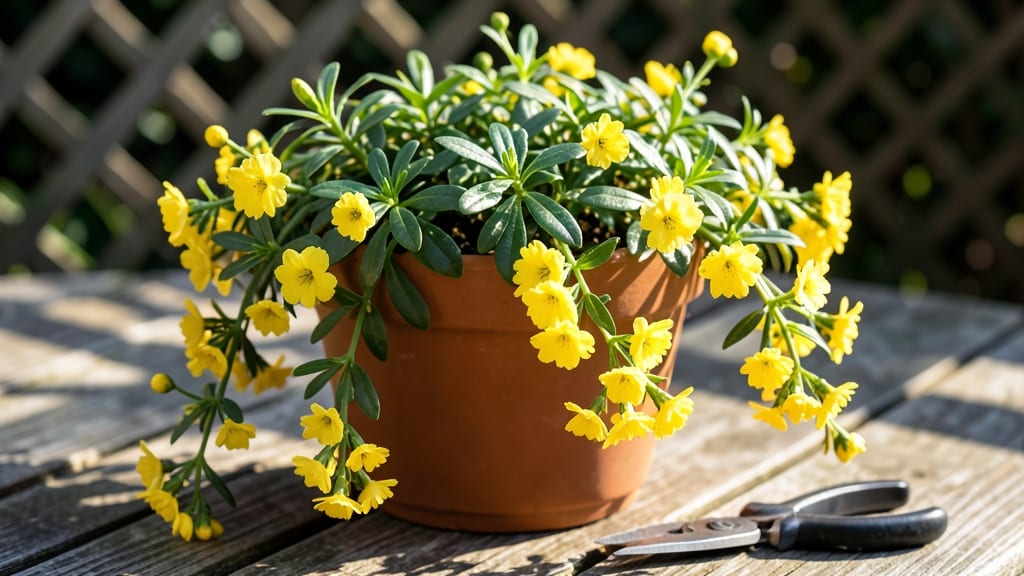
Nothing brightens a garden like the golden glow of yellow flowered jasmine cascading over trellises or spilling from containers. 🌸 Its intoxicating fragrance and cheerful blooms transform even the simplest space into a sunlit retreat, whether you're framing a patio or softening a bare wall.
This hardy climber thrives in partial shade to full sun, making it perfect for borders, arbors, or containers where its vines can weave through latticework.
Pair it with deep purple salvias or silvery eucalyptus for striking color contrast, or let it mingle with roses for a fragrant, romantic garden corner that blooms from spring through fall.
📚 In This Guide
- What you need
- Instructions
- Tips and common mistakes
- Wrapping up and next steps
What you need
- ● Yellow Flowered Jasmine Plant: Choose from Jasminum mesnyi (Primrose Jasmine) or Jasminum officinale (Yellow Jasmine). Opt for a healthy, well-established plant from a reputable nursery.
- ● Well-Draining Soil: 5–10 gallons of a mix of 60% garden soil, 30% compost, and 10% perlite or coarse sand to prevent root rot.
- ● Container (if potted): A 10–15 gallon pot with drainage holes (terracotta or fabric pots work best). For climbing varieties, add a trellis or sturdy support.
- ● Organic Fertilizer: Balanced 10-10-10 or 20-20-20 (diluted to half-strength) or a slow-release granular fertilizer (follow package instructions).
- ● Pruning Shears: Sharp, bypass pruners (sterilized with rubbing alcohol) for shaping and maintenance.
- ● Mulch: 2–3 inches of organic mulch (wood chips, straw, or shredded bark) to retain moisture and suppress weeds.
- ● Gloves: Heavy-duty gardening gloves to protect hands from thorns (jasmine can be prickly!).
- ● Watering Can or Hose: A gentle spray nozzle to avoid damaging delicate blooms.
- ○ pH Test Kit: Optional but helpful—jasmine thrives in slightly acidic to neutral soil (pH 6.0–7.0).
- ● Epsom Salt: 1 tablespoon per gallon of water (monthly spray for magnesium-rich foliage).
- ● Trellis or Arbor: For climbing varieties, install a 6–10 foot tall support (metal, wood, or lattice).
- ● Slow-Release Granules: Osmocote or similar for seasonal feeding (spring and fall).
Step-by-Step guide for planting and cultivating yellow flowered jasmine
Here's how to establish this fragrant climber for a lush, aromatic display that thrives season after season.
🌱 Step 1: Choose the Perfect Planting Location
Yellow flowered jasmine (Jasminum officinale or Jasminum mesnyi) thrives in partial shade to full sun, but afternoon shade prevents leaf scorch in hot climates. I always scout the site first—look for a spot with 6+ hours of morning sunlight and dappled shade after noon. A trellis, arbor, or sturdy fence within 3-6 feet of a south or east-facing wall works perfectly.
This vine grows 10-15 feet tall and spreads aggressively, so ensure it has 8-10 feet of unobstructed vertical space. If planting near a patio, position it at least 5 feet away from walkways to prevent tangled stems. The roots appreciate well-draining soil—amend heavy clay with 2-3 inches of compost before planting to improve aeration.
🪴 Step 2: Plant at the Right Time and Depth
Spring or early fall are ideal planting windows—after the last frost date but before summer heat sets in. Dig a hole twice as wide as the root ball but only as deep as the container's base. This prevents burying the stem too deeply, which can cause rot. Gently remove the plant from its container and loosen any circling roots with your fingers—never trim them unless they're severely compacted.
Place the plant in the hole so the top of the root ball sits level with the surrounding soil. Backfill with native soil mixed with 1 part compost, tamping lightly to eliminate air pockets. Water deeply until moisture reaches 6 inches down—you'll know it's enough when water pools briefly on the surface before draining away. Mulch with 2-3 inches of organic mulch (like shredded bark) to retain moisture and regulate soil temperature.
☀️ Step 3: Provide Support and Prune for Bushier Growth
Install a 5-gauge galvanized wire trellis or wooden arbor immediately after planting—jasmine sends out aggressive tendrils that need something to cling to. I like to weave the main stems through the structure in a spiral pattern to encourage even growth. Avoid plastic or flimsy supports; they'll snap under the vine's weight as it matures.
Prune in late winter or early spring before new growth begins. Cut back one-third of the oldest stems to the ground to stimulate fresh, flowering growth. For established plants, trim leggy stems back to a leaf node (the bump where leaves attach) to encourage branching. Deadhead spent blooms regularly—this redirects energy to new flowers instead of seed production. Watch for new shoots emerging from the base; these are your plant's insurance for vigorous regrowth.
💧 Step 4: Water and Fertilize for Continuous Blooms
Water deeply once a week during the first growing season, soaking the soil to 12 inches deep. Yellow jasmine is drought-tolerant once established, but young plants need consistent moisture to develop strong roots. You'll know it's time to water when the top 2 inches of soil feel dry to the touch. Avoid overhead watering—it promotes fungal diseases like powdery mildew. Instead, water at the base of the plant in the early morning.
Feed with a balanced, slow-release fertilizer (10-10-10) in early spring and mid-summer. I use ½ cup per plant for mature vines, spread evenly around the root zone and lightly scratched into the top inch of soil. Avoid high-nitrogen fertilizers—they encourage leafy growth at the expense of flowers. A light application of bone meal in early spring also boosts phosphorus, which promotes blooming. Stop fertilizing by mid-August to allow the plant to harden off for winter.
✂️ Step 5: Overwinter and Maintain Year-Round Health
In USDA Zones 8-10, yellow jasmine is evergreen and needs minimal winter care. In colder zones (5-7), protect young plants by wrapping the trellis and stems in burlap after the first frost. I also mound 4-6 inches of mulch around the base to insulate roots. Prune lightly in late winter to remove any dead or damaged stems, but avoid heavy pruning—this stimulates new growth too late in the season.
Watch for jasmine beetles or spider mites in summer—they suck sap and weaken vines. Spray with neem oil at the first sign of infestation, focusing on the undersides of leaves where pests hide. For established plants, a weekly misting in dry climates keeps humidity levels high and deters pests naturally. With proper care, your jasmine will reward you with fragrant yellow blooms from late spring through fall, and sometimes even into winter in mild climates.
Tips & tricks for perfect yellow flowered jasmine cultivation
Transforming your garden into a fragrant sanctuary with yellow jasmine requires a few strategic moves—here's how to ensure your climber thrives.
Location Strategy: When selecting your planting site, prioritize the 6+ hours of morning sunlight mentioned in Step 1, but also consider microclimates. If your garden has hot afternoons, position your jasmine near a north-facing wall or under a deciduous tree that provides natural shade during peak sun hours. I've found that vines planted against brick walls bloom more prolifically because the wall radiates heat back to the roots during cooler evenings, creating an ideal growing environment.
Planting Depth Secret: The instructions emphasize placing the root ball so its top sits level with the surrounding soil, but here's what nobody tells you—if your soil is particularly sandy, you can plant the root ball ½ inch deeper to help anchor the vine. For clay-heavy soils, keep it exactly level to prevent waterlogging. I learned this the hard way after watching a newly planted jasmine struggle in my backyard's compacted clay until I adjusted the planting depth.
Support System Upgrade: While the instructions recommend a 5-gauge galvanized wire trellis, I've had great success with a combination support system for established vines. Install a sturdy wooden arbor for the main structure, then weave bamboo stakes between the posts to provide additional climbing surfaces. This creates more surface area for the aggressive tendrils and results in a fuller, more lush canopy. The bamboo stakes also help distribute the vine's weight more evenly, preventing sagging over time.
Pruning Precision: The instructions suggest cutting back one-third of the oldest stems during late winter pruning, but timing is everything. I've found that the best results come from pruning on a dry, overcast day when temperatures are above 50°F. This reduces stress on the plant and minimizes the risk of fungal infections through fresh cuts. Additionally, always make your cuts at a 45-degree angle just above a leaf node—this encourages faster healing and promotes more vigorous regrowth from that point.
Pro Tips for Yellow Flowered Jasmine
- Transforming your garden into a fragrant sanctuary with yellow jasmine requires a few strategic moves—here's how to ensure your climber thrives.
- Location Strategy: When selecting your planting site, prioritize the 6+ hours of morning sunlight mentioned in Step 1, but also consider microclimates.
- For clay-heavy soils, keep it exactly level to prevent waterlogging.
Frequently asked questions
Got questions about growing and caring for yellow flowered jasmine? You’re not alone—this fragrant beauty is full of surprises! Here are some of the most common queries from gardeners just like you.
How fast does yellow jasmine grow, and how big does it get?
Yellow jasmine (Jasminum officinale ‘Primrose’ or ‘Aureum’) is a fast grower, often climbing 10–15 feet per year if given the right support (like a trellis or arbor). Mature plants can reach 15–20 feet tall with a spread of 5–10 feet—perfect for covering fences or pergolas! Prune in late winter to control size and encourage bushier growth.
When is the best time to plant yellow jasmine for maximum blooms?
Plant your yellow jasmine in early spring or early fall when temperatures are mild (50–70°F). This gives roots time to establish before extreme heat or cold. If planting in summer, water deeply daily for the first 2 weeks to reduce transplant shock. Blooms typically appear in late spring to early summer, but with proper care, you may see sporadic flowers year-round.
Why isn’t my yellow jasmine flowering, even though it’s healthy-looking?
Lack of blooms often stems from over-fertilizing with high-nitrogen feed (which encourages foliage over flowers) or insufficient sunlight. Ensure your plant gets at least 6 hours of direct sun daily and use a balanced, bloom-boosting fertilizer (10-10-10 or 5-10-5) in early spring. Deadhead spent flowers to encourage new blooms, and avoid heavy pruning in fall.
Can yellow jasmine thrive in containers, or does it need to be planted in the ground?
Yes! Yellow jasmine can grow in large containers (15+ gallons), but it’ll need regular pruning to control its vigorous growth. Use a well-draining potting mix and a trellis for support. Move containers to a sunny spot in summer and bring them indoors (or protect from frost) in winter if you’re in a cold climate. Water when the top inch of soil feels dry.
How cold-hardy is yellow jasmine, and how do I protect it in winter?
Yellow jasmine is hardy to USDA zones 7–10. In colder zones (below 10°F), mulch the base heavily with straw or leaves and wrap the plant in burlap or frost cloth. For container-grown plants, move them to an unheated garage or shed and reduce watering. Prune back dead or damaged growth in early spring once frost danger has passed.
Are there any alternatives to yellow jasmine with similar fragrance and climbing habits?
If you love the look and scent of yellow jasmine but want alternatives, consider:
- Star jasmine (Trachelospermum jasminoides): Highly fragrant, evergreen, and drought-tolerant (zones 7–10).
- Clematis: Many varieties (like ‘Jackmanii’) climb vigorously and offer seasonal blooms (zones 4–9).
- Honeysuckle (Lonicera): Sweetly scented and fast-growing, with options for sun or shade (zones 4–9).
- Passionflower (Passiflora): Exotic blooms and fragrant foliage (zones 6–11).
Wrapping up and next steps
Incorporating yellow flowered jasmine into your garden isn’t just about adding beauty—it’s about creating a fragrant, low-maintenance haven that thrives year-round. 🌸 Whether you’re drawn to its delicate blooms, hardy nature, or intoxicating scent, this versatile plant is a game-changer for any outdoor space.
With the right care and a little creativity, you can turn your garden into a serene retreat that keeps giving back.
Ready to take the next step? Start by sketching a simple layout for your jasmine plants, mixing them with complementary foliage or climbing structures. Then, grab your gardening tools and plant your first stems this weekend—your future fragrant canopy awaits! 🌿