
Flowers
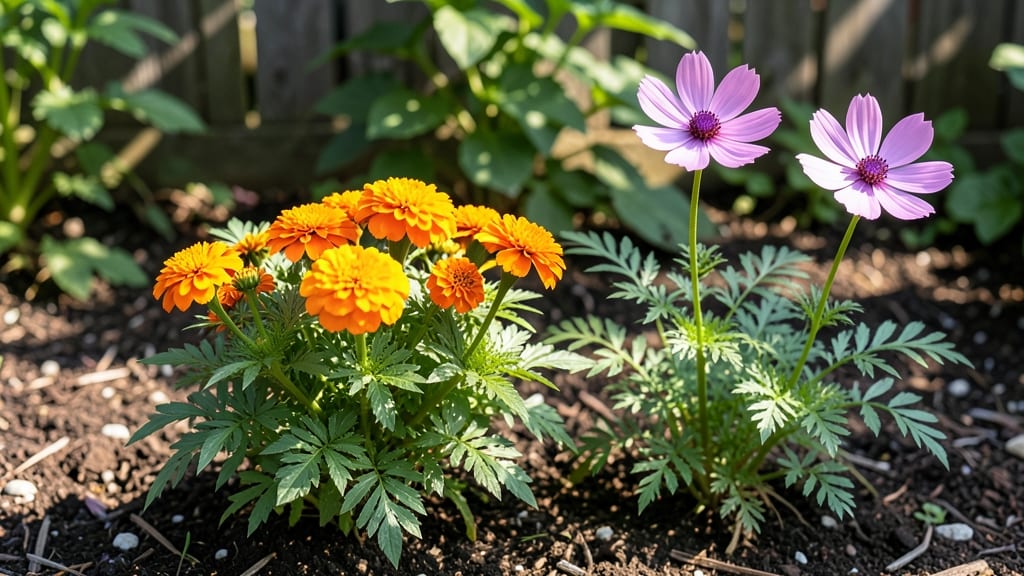
Marigolds and cosmos flowers create a pollinator paradise that never stops blooming. 🌻 Their golden-orange and pink-purple blooms contrast perfectly, drawing bees, butterflies, and hummingbirds while adding year-round color—cosmos return every season, while marigolds keep flowering until frost.
The secret lies in their heights: cosmos tower at 3-4 feet, while marigolds stay compact, creating natural layers that catch the eye from every angle.
My garden beds burst with color when I pair these two together, and the best part? They thrive in the same conditions—full sun, average soil, and minimal fuss. Plant cosmos in the back for height, then edge with marigolds for a warm border.
Add a few sunflowers for extra drama, and you’ve got a low-maintenance showstopper that blooms from summer through fall.
You’ll love how effortlessly they fill empty spaces with movement and life. The cosmos sway in the breeze while marigolds hold their blooms steady, creating a dynamic display that changes with the light. Plus, their scent attracts pollinators like crazy—your garden becomes a buzzing, fluttering ecosystem without any extra work.
Works in borders, containers, or mixed flower beds—just give them space to spread. For extra impact, try white cosmos with orange marigolds for a high-contrast look. The combinations are endless, and the results? Pure, cheerful beauty that keeps giving all season.
📚 In This Guide
- What you need
- Instructions
- Tips and common mistakes
- Wrapping up and next steps
What you need
- ● Seeds: Marigold seeds – 100–200 seeds (French, African, or Mexican varieties for best results)
- ● Cosmos seeds – 50–100 seeds (choose Cosmos bipinnatus or Cosmos sulphureus for variety)
- ● Soil: Well-draining potting mix or garden soil (amend with compost for nutrient-rich soil)
- ● Containers or Garden Space: Containers: 6–12-inch pots (1–2 plants per pot) with drainage holes
- ● Garden Beds: Full sun (6+ hours/day) and space for plants to spread (12–24 inches apart)
- ● Watering Can or Hose: With a gentle spray nozzle for even moisture
- ● Hand Trowel – For planting seeds or transplanting seedlings
- ○ Gloves – Optional but helpful for handling soil and seeds
- ● Mulch – Organic mulch (straw or shredded leaves) to retain moisture and suppress weeds
- ○ Fertilizer (Optional): Balanced, water-soluble fertilizer (5-10-5 ratio) for seedlings
- ● Slow-release granules (like 10-10-10) for established plants
- ○ Pollinator-Friendly Additions (Optional): Small rocks or pebbles for drainage in containers
- ● Eggshells or crushed rock for added calcium (boosts soil health)
Step-by-Step guide to planting marigolds and cosmos for season-long color
Here’s how to create a vibrant, pollinator-friendly garden that blooms from spring through frost.
🌱 Step 1: Choose the Perfect Planting Site
Marigolds and cosmos thrive in full sun—at least 6-8 hours daily—but they tolerate light shade in hot climates. Test your spot by observing how much direct sunlight it gets throughout the day. If your garden is shady, opt for cosmos varieties like 'Bright Lights' that handle partial shade better than marigolds.
Loosen the soil to a depth of 12 inches with a garden fork or tiller, breaking up any compacted layers. These plants hate soggy roots, so if your soil drains poorly, amend it with 2-3 inches of compost mixed into the top 6 inches. A well-draining site prevents root rot, especially for marigolds, which are more sensitive to moisture than cosmos.
🌿 Step 2: Plant Seeds or Transplants at the Right Time
Direct-sow marigold seeds 2-3 weeks after your last frost date when soil temperatures reach at least 60°F. Cosmos seeds, however, can handle cooler soil—plant them 1-2 weeks before the last frost if you’re in a mild climate. Press seeds ¼ inch deep for marigolds and ½ inch deep for cosmos, spacing them 12-18 inches apart to allow airflow and prevent fungal issues.
If using transplants, harden them off for 5-7 days before planting by gradually exposing them to outdoor conditions. Look for sturdy stems and dark green leaves—avoid leggy seedlings, which struggle to establish. Plant marigolds 12 inches apart and cosmos 18-24 inches apart to give them room to mature.
☀️ Step 3: Water Deeply and Maintain Consistent Moisture
Water newly planted seeds or transplants deeply right after planting to settle the soil around roots. Keep the soil evenly moist but not soggy for the first 2-3 weeks, which is critical for seedling establishment. Cosmos are more drought-tolerant once established, but marigolds need consistent moisture to prevent blossom drop.
After the initial phase, water 1-2 times per week, depending on rainfall. Check soil moisture by sticking your finger 1 inch deep—if it feels dry, it’s time to water. Mulch with 2-3 inches of organic mulch (like straw or shredded leaves) to retain moisture and suppress weeds. This also keeps soil temperatures stable, which encourages steady blooming.
✂️ Step 4: Deadhead and Prune for Longer Blooms
Deadheading—removing spent blooms—is the secret to nonstop color. Pinch off faded flowers just above the next set of leaves with clean pruners or your fingers. For marigolds, this encourages bushier growth, while cosmos may produce more blooms if you trim back leggy stems by ⅓ of their length in early summer.
In late summer, give cosmos a light pruning to remove any woody or damaged stems. This redirects energy to new growth and prevents the plants from becoming too rangy. Avoid heavy pruning, though—cosmos bloom on new wood, so cutting back too much late in the season reduces fall interest.
🪴 Step 5: Extend the Season with Simple Care
To keep marigolds and cosmos blooming until frost, fertilize lightly every 4-6 weeks with a balanced, water-soluble fertilizer (like 10-10-10). Over-fertilizing leads to lush foliage but fewer flowers, so follow package rates closely. Cosmos, in particular, appreciate a low-nitrogen feed to promote blooms over leaves.
Watch for pests like aphids or spider mites, which can stress plants. A strong spray of water often dislodges them, but for severe infestations, use neem oil as a natural remedy. In fall, leave the stems in place for winter interest or cut back to 4-6 inches and compost the debris. Many cosmos self-seed, so you’ll likely wake up to cheerful volunteers next spring!
Tips & tricks for perfect marigold and cosmos plantings
Real talk: the difference between a garden that merely survives and one that thrives with vibrant blooms often comes down to these details. Let me share what I've learned after watching marigolds wilt from overwatering and cosmos struggle in compacted soil.
Sunlight Strategy: While both plants love full sun, marigolds demand at least 6-8 hours daily, while cosmos can tolerate slightly less in hot climates. I've seen marigolds in partial shade turn leggy and sparse—don't make that mistake. For maximum impact, place them where they'll get morning sun and afternoon shade if temperatures exceed 90°F. This prevents stress during heatwaves while still delivering those bold blooms.
Soil Preparation Secret: The 12-inch deep loosening in Step 1 isn't just about breaking up compacted layers—it's about creating an oxygen-rich environment for roots. I've found that adding 2-3 inches of compost to the top 6 inches creates the perfect moisture balance. For heavy clay soils, mix in perlite or coarse sand to improve drainage, especially for moisture-sensitive marigolds. This prevents the root rot that can silently kill your plants before they even bloom.
Planting Depth Cues: Those ¼-inch and ½-inch depth measurements for marigolds and cosmos respectively might seem arbitrary, but they're critical. For marigolds, press seeds just enough so they're covered but still visible—this ensures they get light to germinate. With cosmos, which have larger seeds, the deeper planting helps protect them from drying out. A good rule of thumb: you should be able to see the seeds' outline through the soil when pressed firmly.
Watering Wisdom: The first 2-3 weeks are make-or-break for seedling establishment. I've learned to check soil moisture daily during this period by sticking my finger 1 inch deep—if it feels dry at that depth, water immediately. After establishment, let the soil dry slightly between waterings, especially for cosmos. Overwatering is the #1 reason marigolds drop buds before they open, and I've seen it happen more times than I can count!
Pro Tips for Marigold And Cosmos Flowers
- Real talk: the difference between a garden that merely survives and one that thrives with vibrant blooms often comes ...
- Sunlight Strategy: While both plants love full sun, marigolds demand at least 6-8 hours daily, while cosmos can toler...
- Soil Preparation Secret: The 12-inch deep loosening in Step 1 isn't just about breaking up compacted layers—it's abou...
Frequently asked questions
Got questions about growing marigolds and cosmos?
You’re not alone! Here are some of the most common queries—plus quick, practical answers to help your garden bloom with confidence.
How do I keep marigolds and cosmos blooming all season?
Deadhead spent blooms regularly (pinch or snip flowers just above a set of leaves) to encourage nonstop blooms. For cosmos, avoid heavy fertilizing—they thrive in lean soil. Marigolds, especially French varieties, love a light feed with low-nitrogen fertilizer every 4–6 weeks. Pro tip: Mulch with straw to retain moisture and deter weeds!
When is the best time to plant marigolds vs. cosmos?
Marigolds are warm-season powerhouses—plant after the last frost (when soil temps hit 50°F/10°C). Cosmos, however, are cool-tolerant and can handle light frosts. Sow cosmos seeds directly in spring or fall (they self-seed easily!). For marigolds, start indoors 4–6 weeks before transplanting for earlier blooms.
Are marigolds and cosmos good for pollinators year-round?
Both flowers attract bees, butterflies, and beneficial insects like ladybugs. Marigolds repel pests (thanks to their pyrethrin compounds), while cosmos provide nectar for migrating monarchs. For extended pollinator support, pair them with sunflowers (early season) and zinnia (late season) for a nonstop buffet.
What do I do if my cosmos flowers flop over or look leggy?
Leggy cosmos? They’re stretching for sunlight! Thin seedlings to 12–18 inches apart and ensure they get 6+ hours of sun daily. For flopping stems, stake them gently with bamboo stakes or plant near a fence/trellis. Avoid overwatering—cosmos prefer dry soil and may wilt slightly in heat (a normal response!).
Can I grow marigolds and cosmos in containers?
Yes! Both thrive in containers if given well-draining soil and 5-gallon pots or larger (cosmos need space to sprawl). Use a lightweight potting mix with perlite, and water when the top inch of soil is dry. For marigolds, choose dwarf varieties like ‘Tangerine Gem’ to save space. Bonus: Container-grown flowers deter aphids better than ground-planted ones!
What’s a low-maintenance alternative if I’m too busy for deadheading?
Try self-cleaning cosmos varieties like ‘Bright Lights’ or ‘Sensation Mix,’ which drop petals naturally. For marigolds, opt for ‘Bonanza’ or ‘Janie’ series—they bloom prolifically with minimal care. Both also self-seed, so you’ll get free plants next year! Just let some seed heads stay until they dry.
Wrapping up and next steps
Transforming your garden into a vibrant pollinator paradise with marigolds and cosmos is easier—and more rewarding—than you think! 🌸 These hardy, low-maintenance blooms not only attract bees, butterflies, and hummingbirds but also bring year-round color and effortless beauty.
Whether you’re a seasoned gardener or a beginner, their resilience and versatility make them the perfect addition to any outdoor space.
Ready to take the next step? Start small—plant a few marigolds or cosmos in a sunny spot, experiment with companion planting, or even share your newfound knowledge with fellow gardening enthusiasts. Your garden (and the pollinators!) will thank you. Happy planting! 🌻✨