
Flowers
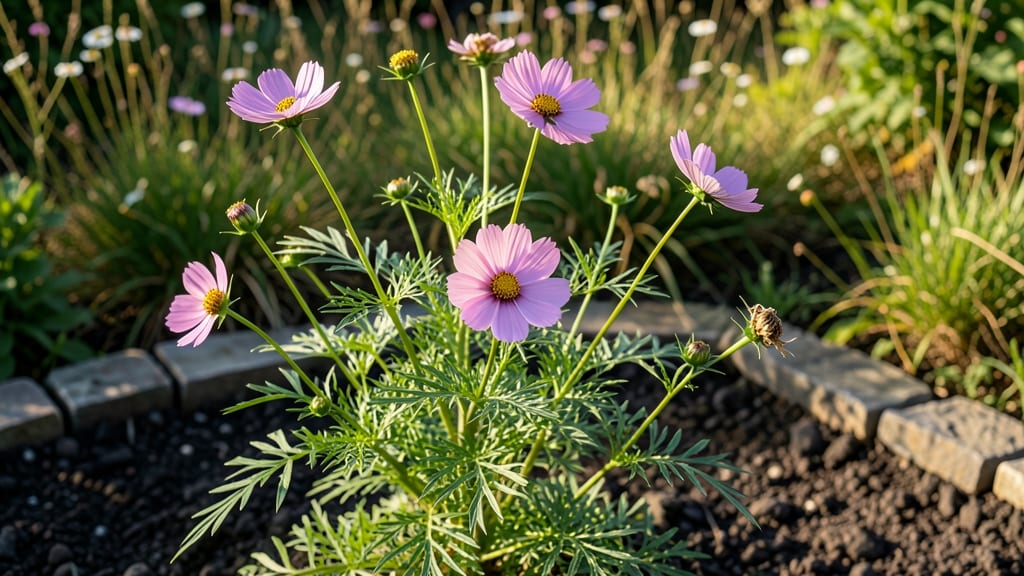
Growing giant cosmos flowers transforms your garden into a dreamy, cloud-like paradise with minimal fuss—and I’ve finally cracked the code after years of trial and error. 🌻 These towering beauties reach 6 feet tall with almost no pruning, their papery petals swaying in summer breezes like nature’s own chandeliers.
The secret? A little patience and the right conditions, which I’ll share so you skip the guesswork.
You’ll need full sun (at least 6 hours daily), well-draining soil, and a spot where they can stretch their legs—these aren’t the compact cosmos you might expect. Plant seeds directly in spring after the last frost, or start indoors 4-6 weeks early for a head start.
Water consistently but avoid soggy soil, and watch those stems thicken into sturdy stalks ready to support their massive blooms.
By midsummer, you’ll be rewarded with 3-inch-wide flowers in shades of pink, white, and deep red that attract pollinators all season. The best part? Deadheading spent blooms encourages more flowers, but even if you forget, the plants keep producing.
These are the kind of flowers that make neighbors stop and ask, “What are those?”—and you’ll get to say, “I grew them myself.”
Works in borders, cottage gardens, or even as dramatic cut flowers. Whether you’re a first-timer or a seasoned grower, giant cosmos deliver effortless drama with almost no trade-offs. Let’s get those seeds in the ground!
📚 In This Guide
- What you need
- Instructions
- Tips and common mistakes
- Wrapping up and next steps
What you need
- ● Seeds: Cosmos bipinnatus or Cosmos sulphureus (choose varieties labeled "giant" or "tall" for maximum height). Quantity: 10–20 seeds per plant (or pre-sprouted seedlings from a nursery).
- ● Well-draining potting mix: A blend of 50% garden soil, 30% compost, and 20% perlite or sand (for loose, airy texture). Quantity: 2–3 cubic feet per plant.
- ● Containers or garden beds: Containers: 12–18" diameter pots with drainage holes (for patio/balcony growing). Quantity: 1 pot per plant.
- ● Garden beds: Full sun exposure (6+ hours/day) with loose, fertile soil. Spacing: 18–24" apart in rows.
- ● Watering can or hose: With a gentle spray nozzle (to avoid disturbing seedlings).
- ● Fertilizer: Balanced 10-10-10 NPK or organic options like compost tea or fish emulsion. Application: Lightly at planting and monthly thereafter.
- ○ Stakes or supports (optional but recommended): 3–4 ft bamboo stakes or tomato cages to prevent flopping in windy areas.
- ● Mulch: Straw or shredded leaves to retain moisture and suppress weeds.
- ● Slow-release granules: Osmocote or similar for low-maintenance nutrition.
- ● Pruning shears: For shaping (though cosmos thrive with minimal pruning!).
- ● Drip irrigation system: For automated watering in larger gardens.
Step-by-step guide to growing towering cosmos blooms
Here's how to coax those dramatic, airy cosmos blooms to reach their full height with almost no fuss.
🌱 Step 1: Choose the Right Location and Prepare the Soil
Cosmos thrive in full sun, so pick a spot that gets at least 6-8 hours of direct sunlight daily. They tolerate poor soil better than most flowers, but amending with 2-3 inches of compost before planting gives you bigger blooms. I like to work the compost into the top 6 inches of soil—this encourages deep root growth, which supports those towering stems.
Loosen the soil to a depth of 12 inches with a garden fork, breaking up any compacted layers. Cosmos hate soggy roots, so if your soil drains poorly, mix in 1-2 inches of coarse sand or perlite. You'll know you've done enough when the soil crumbles easily between your fingers and water drains away within 10-15 minutes after watering.
🌱 Step 2: Plant Seeds at the Right Depth and Spacing
Sow seeds ¼ inch deep in early spring, after the last frost date. I plant mine in rows spaced 18-24 inches apart—this gives stems room to grow without crowding. The seeds are tiny, so I use a seed starter tool to make small holes, then drop 2-3 seeds per spot (they germinate easily, and you can thin later). Cover lightly with soil, but don't press down—cosmos seeds need light to germinate.
Keep the soil consistently moist until germination, which usually happens in 7-14 days. Here's the thing—don't be tempted to water from above once the seeds sprout. Instead, water at the base to avoid disturbing the delicate seedlings. You'll see the first true leaves appear as small, fern-like shapes—that's your signal to start thinning.
☀️ Step 3: Provide Consistent Water and Minimal Fertilizer
Once seedlings reach 3-4 inches tall, thin them to 12-18 inches apart in the row. This prevents overcrowding and gives each plant room to develop strong stems. Cosmos are drought-tolerant once established, but young plants need 1 inch of water per week during dry spells. Water deeply in the morning so the foliage has time to dry before evening—this prevents fungal issues.
Skip heavy fertilizing. Cosmos grow best in lean soil, and too much nitrogen leads to lush foliage but fewer blooms. Instead, side-dress with 1 tablespoon of 5-10-5 fertilizer per plant in early summer, or scatter ½ cup of compost around the base. You'll notice the difference when stems stay sturdy and blooms multiply—no floppy, weak growth here.
✂️ Step 4: Enjoy the Blooms and Prune Strategically
Here's where cosmos shine—they bloom nonstop with almost no effort. Deadhead spent blooms by pinching off the flower head just above the next set of leaves. This encourages more flowers and keeps the plant looking tidy. I do this every 2-3 days during peak bloom, and the plant rewards me with continuous new buds.
If stems get too leggy, cut them back by ⅓ in early summer. This triggers bushier growth and prevents the plant from flopping over. Cosmos are forgiving—even if you forget to prune, they'll still produce stunning blooms. The key is to let them grow tall naturally; their airy stems hold up better than you'd expect.
Tips & tricks for growing towering cosmos blooms
Real talk: the difference between garden-center cosmos and the towering varieties you dream about comes down to these simple adjustments.
Sunlight Secret: While 6-8 hours of sunlight is the minimum, I've found that cosmos grown in full sun (8+ hours) produce stems that can reach 5-6 feet tall with minimal support. If your garden has partial shade, choose a spot that gets the most direct sunlight possible—even an hour or two more makes a noticeable difference in height. The more sunlight, the stronger those stems become, and the better they'll hold up in windy conditions.
Thinning Technique: When it's time to thin seedlings to 12-18 inches apart, don't just yank them out—use clean scissors to snip at soil level. This prevents disturbing the roots of your remaining plants, which can stress them and slow their growth. I also recommend thinning on a cloudy day; the cooler temperatures are gentler on the plants, and they recover faster. You'll notice your cosmos grow more vigorously after proper thinning.
Watering Wisdom: That 1 inch of water per week guideline works perfectly, but here's what nobody tells you—cosmos actually prefer deep, infrequent watering over frequent shallow watering. Instead of daily sprinkles, give them a good soaking once a week. This encourages deep root growth, which directly supports those towering stems. Just make sure the soil dries out slightly between waterings to prevent root rot.
Pruning Payoff: The "cut back by ⅓" advice works, but here's my upgrade: when you're pruning leggy stems, make your cuts just above a leaf node where new growth can emerge. This not only prevents flopping but also triggers bushier growth. I do this pruning in early summer when the plants are about 3 feet tall—it's like hitting the reset button for more compact, flower-filled growth later in the season.
Pro Tips for Giant Cosmos Flowers
- Real talk: the difference between garden-center cosmos and the towering varieties you dream about comes down to these simple adjustments.
- Sunlight Secret: While 6-8 hours of sunlight is the minimum, I've found that cosmos grown in full sun (8+ hours) produce stems that can reach 5-6 feet tall with minimal support.
- Thinning Technique: When it's time to thin seedlings to 12-18 inches apart, don't just yank them out—use clean scissors to snip at soil level.
Frequently asked questions
Got questions about growing giant cosmos flowers? You’re in the right place! Here are answers to the most common queries to help you cultivate these stunning blooms with ease.
How tall can giant cosmos flowers actually grow?
Giant cosmos (Cosmos bipinnatus) typically reach 4 to 6 feet tall, but with ideal conditions—full sun, well-draining soil, and consistent watering—they can even hit 7+ feet. Their towering stems make them perfect for cut flowers or dramatic garden backdrops!
When is the best time to plant giant cosmos seeds?
For most climates, direct-sow seeds in late spring (after the last frost) for summer blooms. They’re frost-tolerant, so you can also plant 2–3 weeks before the first frost in fall for early spring flowers. No need to start indoors—these seeds germinate quickly in warm soil!
How often should I water giant cosmos flowers?
Water deeply 1–2 times per week once established (they’re drought-tolerant!). Focus on keeping the soil moist during germination and flowering. Overwatering can cause root rot, so ensure your soil drains well. Mulch around the base to retain moisture and suppress weeds.
Do giant cosmos flowers need much pruning?
Not at all! These low-maintenance beauties thrive with minimal pruning. Deadhead spent blooms to encourage more flowers, but avoid heavy trimming. If stems get leggy, a light trim can promote bushiness. Their self-cleaning habit means less work for you!
Can I grow giant cosmos in containers?
Yes! Choose a large container (at least 12–18 inches wide) with drainage holes and fill it with well-draining potting mix. They’ll need more frequent watering in pots but still require full sun. Just ensure the container is sturdy—they can get top-heavy!
Wrapping up and next steps
The giant cosmos flowers are a stunning, low-maintenance addition to any garden, offering towering blooms with minimal fuss. Whether you're a seasoned gardener or just starting, their resilience and beauty make them a perfect choice for effortless elegance.
Ready to transform your outdoor space? Start planting today—your future floral masterpiece awaits!
- Next step: Gather your supplies and pick a sunny spot in your garden.
- Bonus tip: Share your progress with fellow gardeners for extra motivation!